Barbell exercises can look intimidating when you are new to strength training. The bar, plates, racks, and unfamiliar movements may make the free-weights area feel reserved for experienced lifters. It is not.
Beginners can train safely when the load, exercise, and setup match their ability. First learn stable positions, control the bar, and repeat sound technique. Strength develops through consistent practice.
This guide covers six full-body movements, a two-day program, and practical ways to progress. Start with manageable versions and ask for help when a setup is unfamiliar.
Why Barbell Exercises Work Well for Beginners
A barbell trains several muscle groups at once. Squats involve the legs, hips, and trunk. Rows train the back and arms, while presses use the chest, shoulders, and triceps.
It also allows measurable changes. Practise with an empty training bar, then add light plates as control improves. Dumbbells, machines, bands, and bodyweight movements remain useful alternatives when they suit you better.
The current Australian movement guidelines for adults recommend muscle-strengthening activity on two or more days each week. The guidance also calls for all main muscle groups to be trained. A full-body program can help meet that aim while leaving recovery time between sessions.
Before You Start a Beginner Barbell Workout
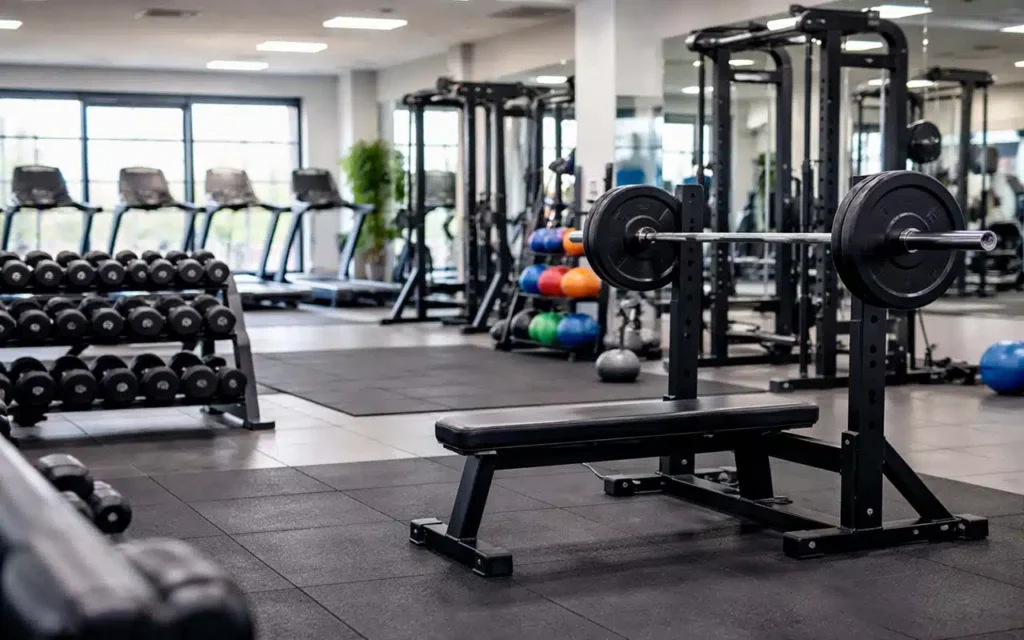
Learn how the rack, safety arms, collars, and plates work before loading the bar. Set safety arms correctly, use collars when needed, and keep the floor clear.
A standard Olympic bar may be too heavy for a new lifter. Lighter technique bars and fixed-weight bars are sensible options. Warm up for five to ten minutes, then practise the first lift without extra plates to check your balance and bar path.
Speak with a health professional before training if you have a medical condition, recent surgery, unexplained symptoms, or an injury that affects movement. A qualified coach can adapt exercises, but medical problems need suitable clinical advice.
Check that both sides of the bar carry the same plates before each set. Grip marks can help you place your hands evenly, but the best width depends on the movement and your body. Take time to centre the bar before lifting it from the rack.
Six Full-Body Barbell Exercises to Learn
These movements cover squatting, hinging, pushing, and pulling. Learn them one at a time. A trainer may recommend an easier variation first.
Barbell box squat
Set the bar on a rack around upper-chest height. Place it across the muscles of your upper back, not directly on your neck. Step back carefully, sit towards a box or bench, then stand by driving your feet into the floor.
The box gives you a clear depth target. Use a stable, pain-free range. Start with a bodyweight or goblet squat if the bar feels awkward.
Barbell Romanian deadlift
Hold the bar in front of your thighs with your hands just outside your legs. Soften your knees and push your hips backwards while keeping the bar close. Stop when you feel tension through the back of your legs, then stand tall.
This trains the hamstrings, glutes, grip, and back. Keep it controlled and do not chase depth by rounding.
Barbell deadlift from raised blocks
Place the bar on secure blocks or rack supports so you do not have to reach the floor. Stand close, grip the bar, brace gently, and push through your feet as you stand. Lower the bar under control.
A raised start can simplify the setup. Choose a height that suits your mobility and avoid pulling suddenly.
Barbell bench press
Lie on a stable bench with your feet supported. Grip the bar evenly and lower it towards the middle of your chest with control. Press it up while keeping your wrists over your forearms.
Use safety arms and a competent spotter. A machine press, dumbbells, or an elevated push-up may be a better first step.
Bent-over barbell row
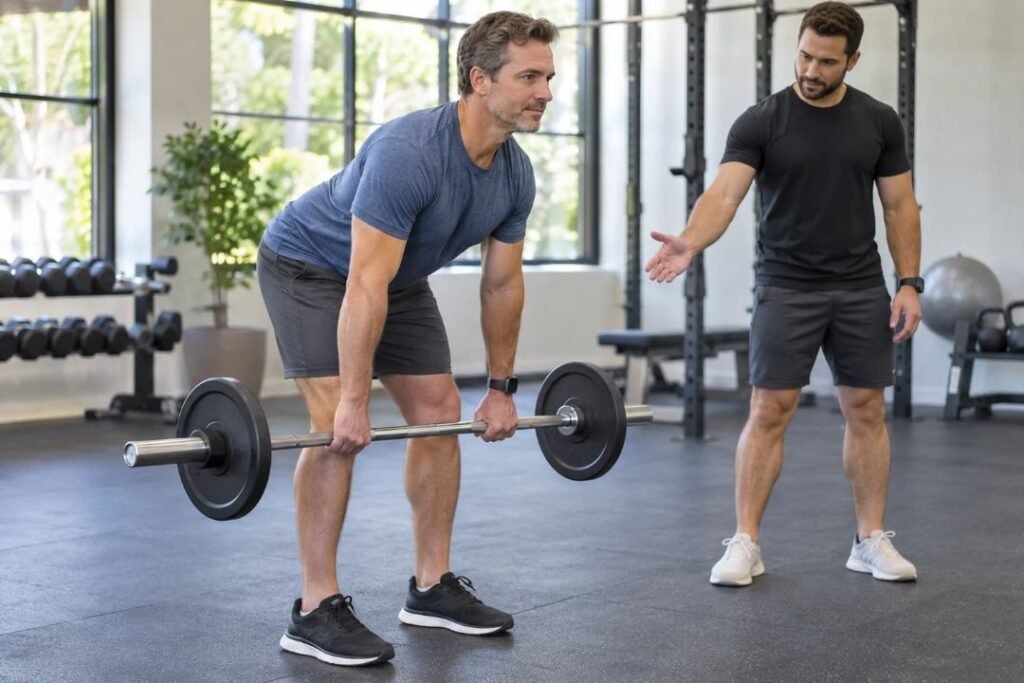
Hold the bar in front of your thighs, hinge at the hips, and keep your trunk steady. Pull the bar towards your lower ribs, pause briefly, then lower it without jerking.
Rows train the upper back and arms. Use a supported or cable row if the bent position is difficult.
Landmine press
Secure one end of the bar in a landmine attachment. Hold the other end near one shoulder and press it forwards and upwards. Lower it slowly and keep your ribs from lifting sharply.
This angled press trains the shoulders and triceps. Make sure the bar is secured before starting.
A Simple Full-Body Barbell Workout
Train on two non-consecutive days. This starting template uses three main barbell movements each day and can be adjusted for your needs.
| Session A | Session B |
|---|---|
| Box squat | Raised barbell deadlift |
| Bench press | Landmine press |
| Bent-over row | Romanian deadlift |
| Optional carry | Optional cable row |
Start with one or two sets of 8 to 10 controlled repetitions. Rest for 90 to 120 seconds. Deadlifts may suit 5 to 8 repetitions because each one begins from a reset.
Stop before technique changes. The final repetitions should require focus without looking different from the first ones.
The Better Health Channel resistance-training guide advises beginners to start gradually, focus on form, and work towards two or three sets of 8 to 12 repetitions. It also recommends recovery time before training the same muscles again.
Common Barbell Training Mistakes Beginners Should Avoid
Learning barbell exercises takes practice. Paying attention to technique, equipment setup, and suitable training loads can help you build confidence and make steady progress.
Adding Weight Before Learning Proper Technique
Adding plates too early can make it harder to control the bar and maintain a stable position. Start with a manageable load and practise the movement, bar path, and breathing. Increase the weight only when you can complete each repetition with consistent form.
Copying an Experienced Lifter’s Technique or Program
Another lifter’s stance, grip, and training load may suit their body and experience rather than yours. Choose a setup that matches your ability, mobility, and goals. Ask a qualified trainer for guidance if a movement feels awkward or difficult to control.
Skipping Safety Equipment and Setup Checks
Before squats and bench presses, adjust the rack supports and safety arms to suit the exercise. Check that the bench is stable, the bar is centred, and both sides carry matching plates. Use a competent spotter when needed, especially during bench presses.
Holding Your Breath Without Proper Control
Bracing helps keep your trunk steady, but prolonged, uncontrolled breath holds can make you feel lightheaded. Learn how to coordinate your breathing with each lift. If you struggle to breathe comfortably, reduce the load and ask for coaching.
Continuing Through Sharp Pain or Dizziness
Sharp pain, numbness, or dizziness should never be treated as part of a normal workout. Stop the exercise and avoid repeating a movement that triggers symptoms. Seek medical advice for persistent or concerning symptoms before returning to training.
How to Progress Barbell Strength Training
Keep the same core exercises for several weeks. Use a repetition range instead of adding weight at every visit.
Begin with a load you can control for eight repetitions and work towards ten. When every set reaches ten with sound form, add the smallest practical weight and return to eight.
Progress may also mean better balance, a steadier bar path, or less effort at the same load. Record these details so improvements are easy to see.
Frequently Asked Questions
What barbell weight should a beginner use?
Use the lightest bar you can control. Add plates only when the empty-bar movement feels stable.
How many barbell exercises should I do in one workout?
Three main lifts can be enough. Quality practice matters more than filling an hour.
Can I build muscle with barbell training?
Yes. Progressive training can support muscle growth alongside suitable food and recovery. Focus first on technique.
Do beginners need a lifting belt?
Usually not. A belt does not replace learning how to brace and control a load.
How often should beginners use barbells?
Two full-body sessions are a practical start. Leave recovery time and include other suitable activity.
Build Barbell Confidence One Session at a Time
Barbell exercises are most useful when they match your ability and form part of a balanced full-body plan. Learn the setup, begin with a manageable load, and repeat the main movements long enough to improve. Small increases will add up when you train consistently.
EFM Glenelg is a multi-award-winning group personal training studio and 24-hour gym that has served the Glenelg community for more than 15 years. Our fitness services include access to barbells, racks, free weights, machines, and coached training options.
If you would like help learning the movements, explore personal training in Glenelg. You can also read our guide on what to do when you are at the gym to plan your warm-up, main workout, and cool-down with more confidence.
Final Thoughts
Barbell exercises can be a practical way to build full-body strength when you start at a suitable level. Learn each movement, check your equipment setup, and choose weights you can control. Add weight gradually as your technique and confidence improve.
Keep your routine manageable and allow time to recover between sessions. Better balance, smoother repetitions, and a more stable bar path are all signs of progress, even before you add another plate.
For support with exercise selection and technique, explore personal training at EFM Glenelg. Before your next visit, read our guide on what to do when you are at the gym to help turn your training plan into a consistent routine.