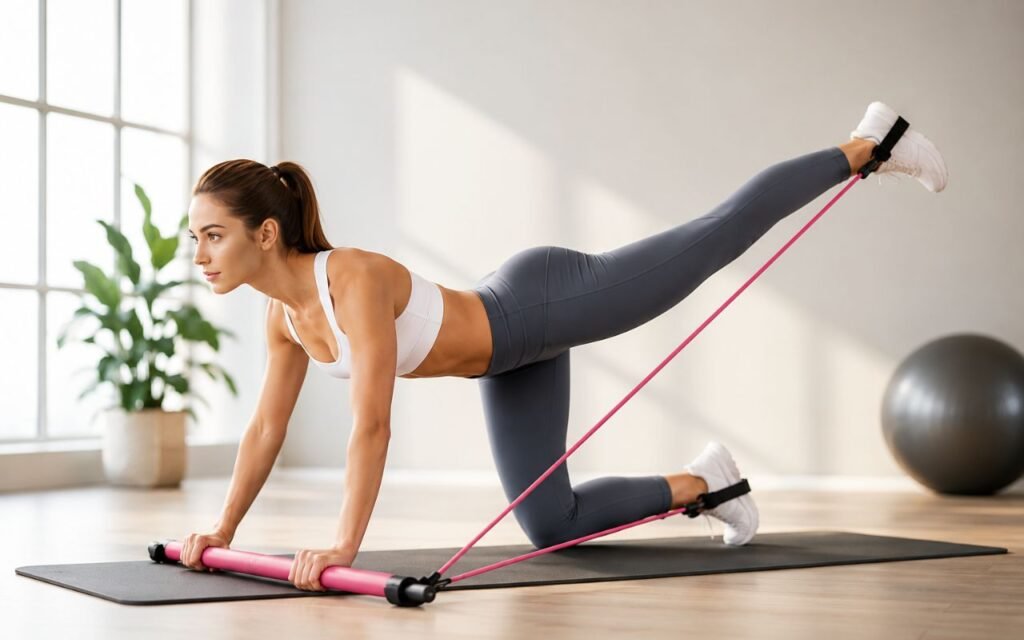
Body bar exercises are a simple and effective way to add resistance training to your fitness routine. Using one weighted bar, you can perform exercises for your legs, arms, shoulders, back, and core.
One of the biggest advantages of a body bar is its versatility. You can use it for familiar exercises such as squats, lunges, rows, presses, curls, and deadlifts. This makes it useful for both full-body workouts and sessions focused on specific muscle groups.
Body bars are also available in different weights. Beginners can start with a lighter bar while learning correct technique, then gradually increase the resistance as they become stronger and more confident.
You do not need complicated movements to get a good workout. The key is choosing appropriate exercises, maintaining good form, and progressing gradually.
In this guide, we explain how body bar exercises work, their benefits, how to get started, and some practical exercises you can include in your next full-body workout.
The Basics of Body Bar Exercises
A body bar is a long weighted exercise bar commonly used for resistance training. Unlike a traditional barbell, which normally uses removable weight plates, a body bar generally has a fixed weight.
Body bars are available in different weights, allowing you to choose one that suits your strength and exercise experience.
The equipment can be used for many traditional resistance exercises. Squats can target your lower body, rows can work your back, and overhead presses can challenge your shoulders and arms.
You can also combine several exercises into a full-body workout.
Although a body bar may appear simple, correct technique is still important. The weight should allow you to control each movement without losing your posture or relying on momentum.
If you are new to resistance training, consider learning the movements with a light bar before progressing to heavier resistance.
Why Choose Body Bar Exercises?
Body bar exercises can be incorporated into many different fitness programs. You can use them as your main form of resistance during a workout or combine them with dumbbells, machines, resistance bands, and bodyweight exercises.
Here are some of the main reasons people use body bars.
Full-Body Engagement
A body bar can be used to train most of the major muscle groups.
For example, squats work your lower body, rows target your back, and overhead presses train your shoulders and arms. Compound exercises can also involve several muscle groups during the same movement.
This makes it possible to create an effective full-body workout with relatively little equipment.
Enhanced Strength and Endurance
Body bar exercises provide external resistance, which challenges your muscles as you move.
With regular training and appropriate progression, resistance exercises can help develop muscular strength and endurance.
The results will depend on factors such as the weight you use, the exercises you perform, your repetitions and sets, training frequency, nutrition, and recovery.
Improved Flexibility
Body bar training is primarily a form of resistance exercise, but some movements can also take your joints through a controlled range of motion.
Good mobility can help you perform exercises such as squats, lunges, presses, and hinges more comfortably.
However, you should never force yourself into a range of motion that causes pain. Work within a comfortable range and gradually improve your movement quality over time.
Stability and Balance
Many body bar exercises require your core to work alongside other muscles to keep your body stable.
Standing presses, lunges, squats, and other compound movements can challenge balance and coordination when performed correctly.
The bar itself is not necessarily unstable. Instead, the challenge comes from controlling the added resistance while maintaining your posture and body position.
Versatility
Versatility is one of the strongest reasons to use a body bar.
The same piece of equipment can be used for squats, lunges, deadlifts, rows, curls, presses, and several other movements.
You can also change the exercises, repetitions, rest periods, and bar weight to create different types of workouts.
Suitable for All Fitness Levels
Body bar exercises can be adapted for different levels of experience.
A beginner might start with a light bar and basic exercises. Someone with more resistance-training experience may use a heavier bar, perform more repetitions, or combine movements to create a greater challenge.
The most important factor is choosing resistance that allows you to maintain good technique.
Getting Started with Body Bar Exercises
Before starting your workout, take a few minutes to prepare. Choosing the correct weight and understanding the exercises can make your training safer and more effective.
Selecting the Right Body Bar
Choose a bar you can control throughout the entire movement.
If your technique begins to break down after only a few repetitions, the bar may be too heavy. Start lighter while learning the exercise and increase resistance gradually.
Different exercises may also require different weights. A bar that feels appropriate for squats may be too heavy for biceps curls or overhead presses.
Warming Up
Begin with a short warm-up to prepare your body for exercise.
You might include light cardiovascular activity followed by controlled movements for the joints and muscles you plan to train.
You can also practise some of your exercises without resistance or with a lighter bar before beginning your working sets.
Mastering Proper Form
Good technique should come before heavier resistance.
Move through each exercise with control and pay attention to your posture. Avoid using momentum simply to complete another repetition.
If you are unsure about your technique, ask a qualified fitness professional to demonstrate the exercise and provide feedback.
Starting Slowly
You do not need to perform every body bar exercise during your first workout.
Start with a few basic movements that cover the major muscle groups. Squats, rows, presses, and hip-hinge movements can provide a good foundation.
Once you become comfortable with these exercises, you can gradually introduce additional movements.
Rest and Recovery
Your body needs time to recover from resistance training.
Avoid assuming that more exercise will automatically produce faster results. Your muscles adapt during the recovery process as well as during training.
How much recovery you need depends on your workout intensity, training experience, overall activity, sleep, nutrition, and individual circumstances.
Body Bar Exercises for Different Muscle Groups
Body bars can be used to train different areas of the body. The following exercises provide examples for the upper body, lower body, core, and full body.
Choose exercises that match your current fitness level and use a bar weight you can control comfortably.
1. Upper Body
Upper-body body bar exercises can target your arms, shoulders, and back.
a. Body Bar Bicep Curls
Stand upright and hold the body bar with an underhand grip, with your hands around shoulder-width apart.
Keep your elbows close to your sides. Bend your elbows and bring the bar towards your shoulders without swinging your upper body.
Pause briefly before lowering the bar with control.
Keep your shoulders relaxed and avoid using momentum to lift the weight.
b. Overhead Press
Hold the body bar around shoulder height with a comfortable grip.
Brace your core and press the bar upwards until your arms are extended overhead. Avoid excessively arching your lower back as the bar moves upwards.
Lower the bar back towards your shoulders in a slow and controlled manner.
This exercise primarily targets the shoulders while also involving the triceps and other muscles that help stabilise the movement.
c. Body Bar Bent-Over Rows
Stand with your feet around hip-width apart and hold the bar with both hands.
Push your hips backwards and lean your torso forward while maintaining a controlled, neutral position through your spine.
Pull the bar towards your torso by driving your elbows backwards.
Slowly lower the bar and repeat without allowing your upper body to swing.
2. Lower Body
The body bar can add resistance to several common lower-body exercises.
a. Body Bar Squats
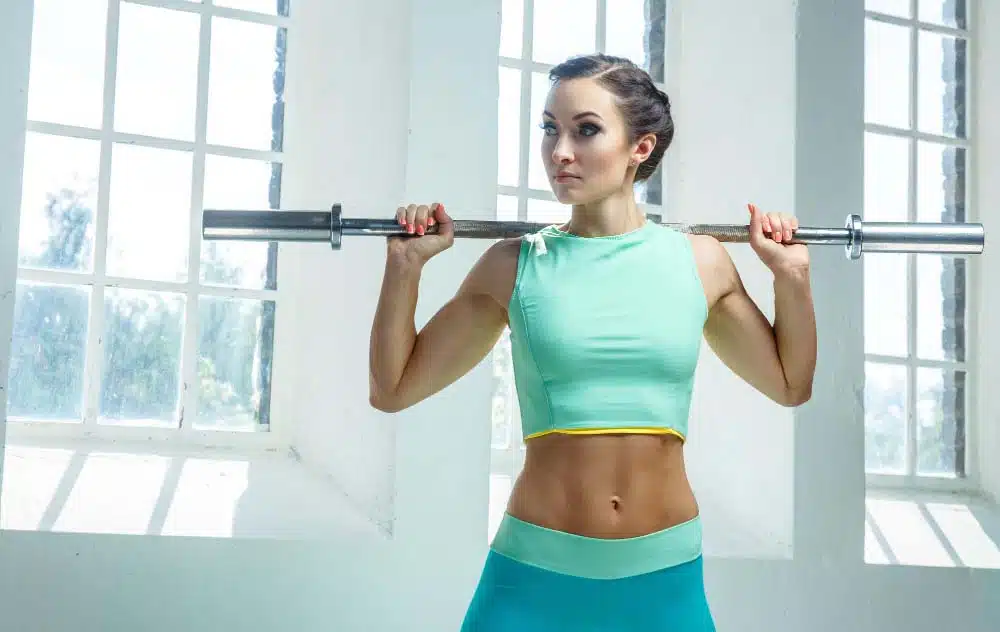
Position the body bar securely across your upper back and shoulders, avoiding direct pressure on your neck.
Stand with your feet in a comfortable squat position. Brace your core and lower your hips while keeping your feet firmly planted.
Descend only as far as you can while maintaining good control and comfortable positioning.
Push through your feet to return to standing.
Squats primarily work the quadriceps and glutes while also involving the hamstrings and core.
b. Forward Lunges
Hold the body bar securely across your upper back.
Step forward with one leg and lower your body under control. Keep your front foot firmly planted and maintain an upright, stable position.
Push through the front foot to return to your starting position before changing legs.
If balance is difficult, practise lunges without the body bar first.
c. Deadlifts
Hold the body bar in front of your thighs with both hands.
Keep your knees slightly bent and push your hips backwards as you lower the bar along the front of your legs.
Maintain control through your torso and stop when you reach a comfortable range without losing your position.
Drive your hips forward to return to standing.
The deadlift movement primarily challenges the muscles around the hips and posterior chain, including the glutes and hamstrings.
3. Core
Your core helps stabilise your body during many body bar exercises. You can also use the bar for movements that place greater emphasis on core control.
a. Body Bar Russian Twists
Sit on the floor and hold the body bar securely with both hands.
Lean backwards slightly while maintaining control through your torso. Rotate gently from one side to the other without rushing the movement.
Avoid twisting aggressively or forcing your spine beyond a comfortable range.
Beginners can keep their feet firmly on the floor for additional stability.
b. Plank with Body Bar Roll
This is a more advanced core exercise and should only be attempted when you are confident performing a standard plank.
Place the body bar on the floor and take a stable plank position. Depending on the equipment and exercise variation, carefully control the movement of the bar while keeping your torso as stable as possible.
Avoid allowing your hips to drop or rotate excessively.
If you cannot maintain good plank technique, use a standard plank or another simpler core exercise instead.
c. Body Bar Bicycle Crunches
Lie on your back and hold a light body bar securely.
Perform a controlled bicycle-style movement while keeping your core engaged. Avoid pulling aggressively through your neck or using momentum to rush through repetitions.
This is a more complex exercise, so beginners may be better starting with standard bicycle crunches without additional resistance.
Stop if you experience discomfort in your neck or lower back.
4. Total Body
Compound body bar exercises combine upper-body and lower-body movements, allowing you to train several muscle groups during the same exercise.
a. Body Bar Woodchoppers
Hold the body bar securely with both hands.
Move the bar through a controlled diagonal pattern while allowing your hips and torso to move naturally with the exercise.
Keep your core engaged and avoid using fast, uncontrolled twisting movements.
Start with a light bar until you are comfortable coordinating the movement.
b. Body Bar Thrusters
Hold the bar around shoulder height and begin by performing a controlled squat.
As you return to standing, smoothly press the bar overhead.
Lower the bar back to shoulder height before beginning the next repetition.
This movement combines a squat and overhead press, making it an efficient exercise for the legs, shoulders, arms, and core.
Because several movements are combined, learn the squat and overhead press separately before attempting thrusters.
c. Clean and Press
The clean and press is a more technical full-body exercise.
The movement involves bringing the bar from a lower position towards the shoulders before pressing it overhead.
Because technique is particularly important, beginners should learn the movement with a light bar and preferably under the guidance of a qualified trainer.
Do not rush to add resistance. Good coordination and control should come first.
Conclusion
Body bar exercises can provide a simple and versatile way to introduce more resistance training into your fitness routine.
With one piece of equipment, you can perform exercises for your legs, back, shoulders, arms, and core. You can also combine movements to create an efficient full-body workout.
If you are new to body bar training, start with basic exercises such as squats, rows, curls, and presses. Choose a manageable weight and concentrate on learning good technique before increasing the resistance.
As you become stronger and more confident, you can gradually introduce exercises such as lunges, thrusters, woodchoppers, and other compound movements.
Remember that effective training is not about performing the most complicated exercises or using the heaviest body bar available. Consistency, appropriate resistance, good technique, and adequate recovery are far more important.
If you are unsure how to perform an exercise correctly, working with a qualified fitness professional can help you learn the movement and choose suitable exercises for your fitness level.
Whether you train at home or in the gym, body bar exercises can add useful variety to your workouts and help you build a more balanced resistance-training routine.