Building a strong chest is about more than simply doing flat bench presses every week. If you want balanced chest development, your program should include pressing and adduction movements that train the pectoral muscles through different angles and ranges of motion.
A well-planned chest workout for lower chest development can include decline pressing, dips, cable work and suitable push-up variations. The original EFM Glenelg guide focuses on combining compound and isolation exercises rather than relying on the flat bench press alone.
At EFM Glenelg, we prefer to look at the bigger picture. Exercise selection matters, but so do technique, progressive overload, recovery and consistency. You also do not need seven exercises in every workout.
Below, we explain seven useful exercises and show you how to turn them into a practical lower chest training routine.
Benefits of Targeting the Lower Chest
Your chest is primarily formed by the pectoralis major, supported by several surrounding muscles during pressing movements. Rather than thinking of the lower chest as a completely separate muscle, it is more useful to think about exercise angles that can change how the pectoral fibres are loaded.
Training with different pressing angles can help you build a more complete chest program. It also adds useful variety instead of performing the same flat pressing movement every session.
Lower chest exercises generally involve your triceps and shoulders as well, particularly during compound movements such as presses and dips. This makes them useful for overall upper-body strength.
The original EFM Glenelg article also highlights the role of lower chest training in pressing performance and balanced chest development.
For us, the priority remains simple. Choose exercises you can perform comfortably, use controlled technique and progressively increase the challenge as you become stronger.
7 Lower Chest Exercises at a Glance
You do not need complicated equipment or an excessively long workout to train your chest effectively. A combination of pressing and chest-focused movements can provide plenty of stimulus.
| Exercise | Main Muscles | Equipment | Suggested Reps |
|---|---|---|---|
| Decline barbell bench press | Chest, triceps, shoulders | Barbell and bench | 6 to 10 |
| Decline dumbbell press | Chest, triceps, shoulders | Dumbbells | 8 to 12 |
| Chest dips | Chest, triceps, shoulders | Dip bars | 6 to 12 |
| High-to-low cable crossover | Chest | Cable machine | 10 to 15 |
| Decline machine press | Chest, triceps, shoulders | Machine | 8 to 12 |
| Dumbbell pullover | Chest, lats, triceps | Dumbbell and bench | 8 to 12 |
| Incline push-up | Chest, triceps, shoulders | Bench or bar | 10 to 20 |
Treat these ranges as starting points rather than rigid rules. Your experience, goals and ability should determine the resistance and volume you use.
1. Decline Barbell Bench Press
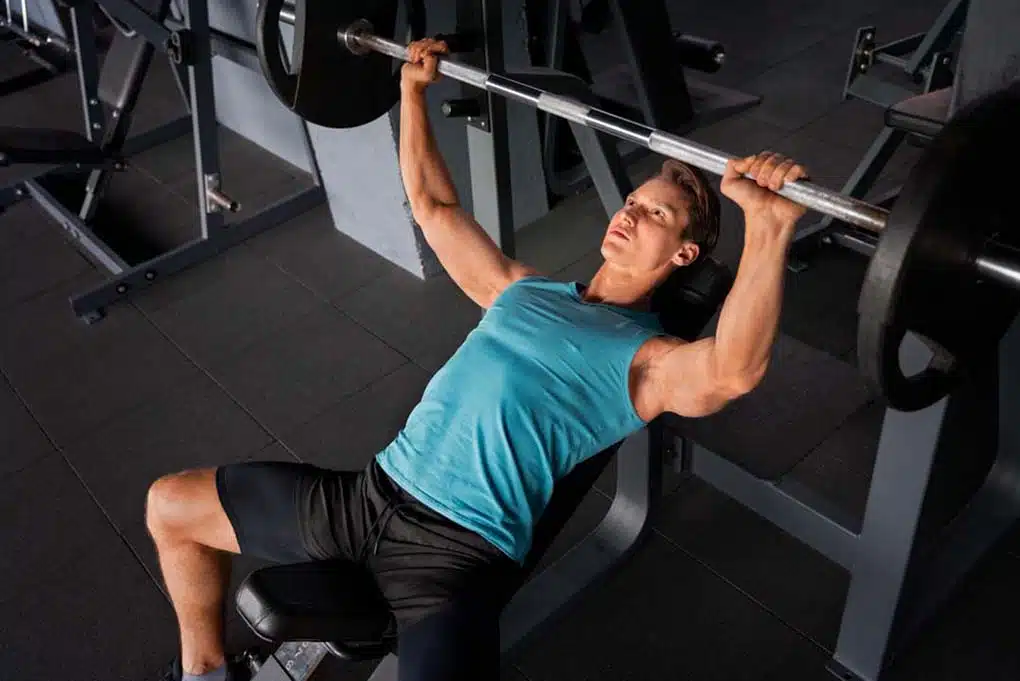
The decline barbell bench press is a useful compound exercise for people who want to add a different pressing angle to their chest program. The decline position changes the pressing path compared with a flat or incline bench.
The original article recommends using this movement early in the workout because it allows relatively heavy resistance.
Set yourself securely on the bench before unracking the bar. Lower the weight under control towards the lower chest area, then press it back up without bouncing the bar or rushing the repetition.
You do not need to exaggerate the decline angle.
More importantly, avoid adding weight simply because the exercise allows you to lift heavier. If your technique starts changing significantly, reduce the resistance.
For muscle growth, a moderate repetition range can work well. Progress by gradually adding repetitions or resistance while maintaining the same quality of movement.
2. Decline Dumbbell Press
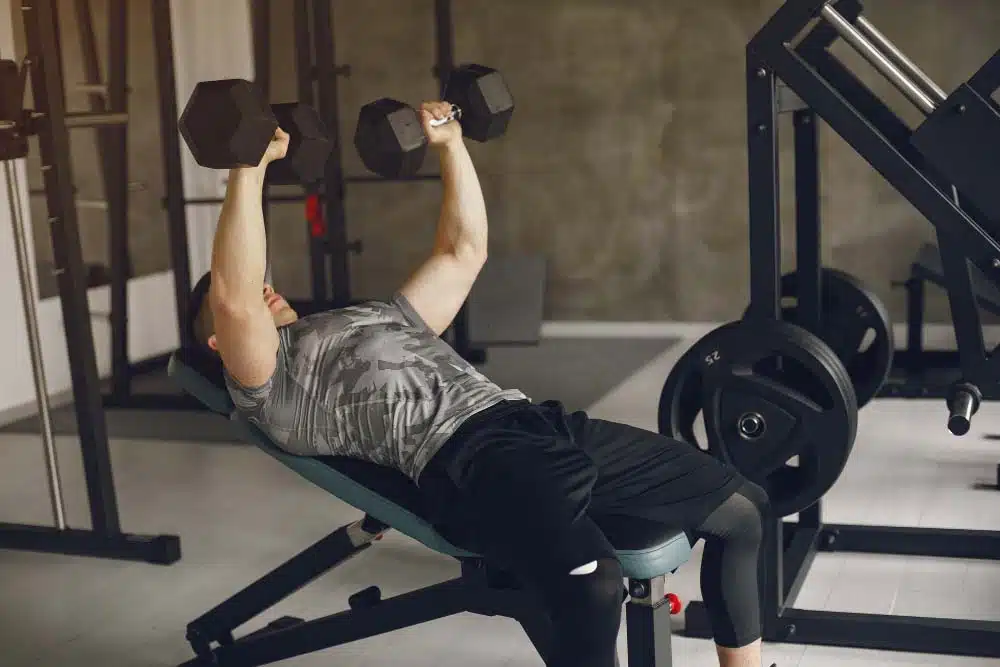
The decline dumbbell press follows a similar movement pattern to the barbell version but allows each arm to work independently.
That can be useful for people who prefer the freedom of movement dumbbells provide. It can also make differences between the left and right sides more noticeable because one arm cannot rely on the other to move a single bar.
Start with a manageable pair of dumbbells and establish a secure position before beginning.
Lower the weights slowly while maintaining control through your shoulders. Press them upwards without aggressively bringing the dumbbells together at the top.
The original EFM Glenelg article recommends beginning with moderate resistance and gradually increasing the load as strength improves.
That is the approach we prefer as well.
If you are unfamiliar with decline pressing, learn the setup with lighter resistance first. A technically consistent set is far more valuable than struggling through repetitions simply to use heavier dumbbells.
3. Chest Dips
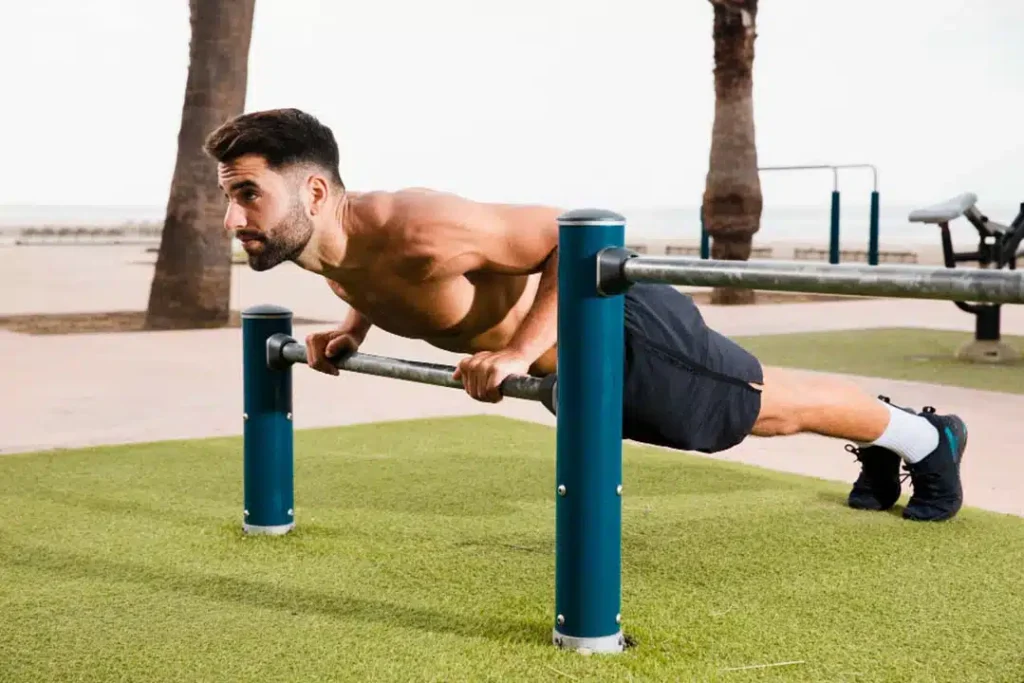
Dips are a challenging bodyweight exercise that train the chest, triceps and shoulders together. They can be particularly useful when you want a compound pressing movement without using a barbell.
Your body position influences how the exercise feels. A slight forward lean can increase chest involvement compared with a more upright, triceps-focused dip.
However, depth should always suit your individual shoulder mobility and comfort.
The original article suggests progressing from bodyweight dips to added resistance once strength improves. We agree with the progression principle, but there is no reason to rush towards weighted dips.
If bodyweight repetitions are currently too difficult, an assisted dip machine or resistance band can reduce the load.
If dips cause persistent shoulder discomfort, choose another pressing exercise rather than forcing the movement. No individual chest exercise is compulsory for building a strong upper body.
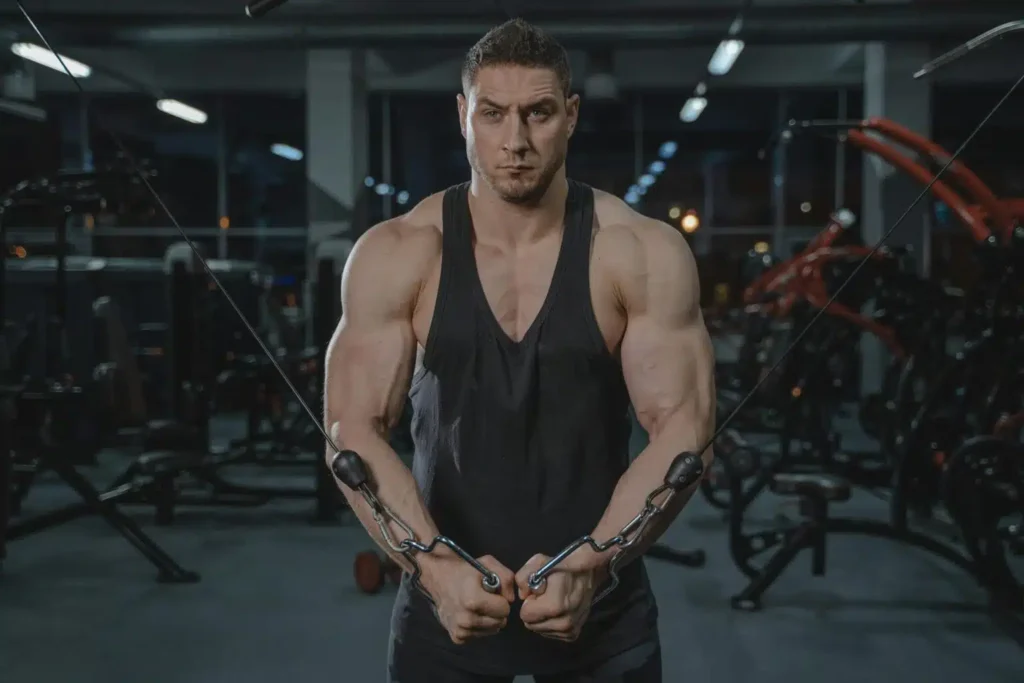
4. High-to-Low Cable Crossover
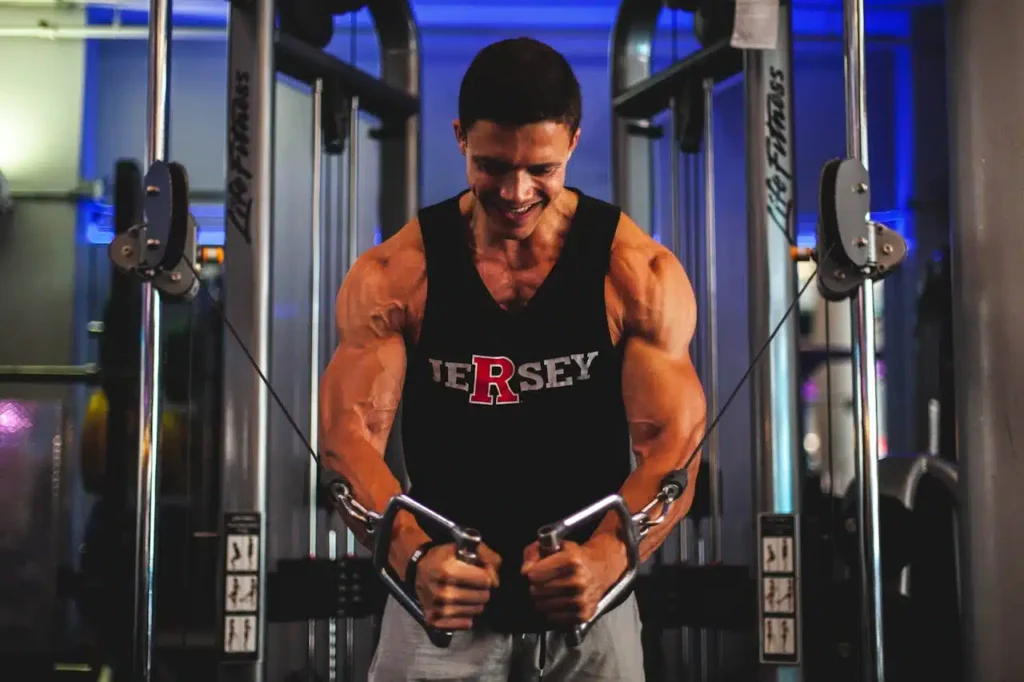
Cable crossovers are useful because they allow you to train the chest differently from traditional pressing exercises.
For a lower-chest emphasis, a high-to-low cable path is generally more appropriate than pulling from low to high. Set the handles above shoulder level, step forward into a stable position and bring your hands down and inward towards the front of your body.
Keep a slight bend in your elbows throughout the movement.
The goal is not to move as much weight as possible. Cable exercises work particularly well when you can control both the shortening and lengthening portions of each repetition.
Avoid turning the exercise into a press by excessively bending and straightening your elbows.
We often prefer cable work after heavier compound exercises because you can train the chest with less overall resistance.
Aim for smooth repetitions and choose a load that allows you to maintain the same movement pattern from your first repetition to your last.
5. Decline Machine Press
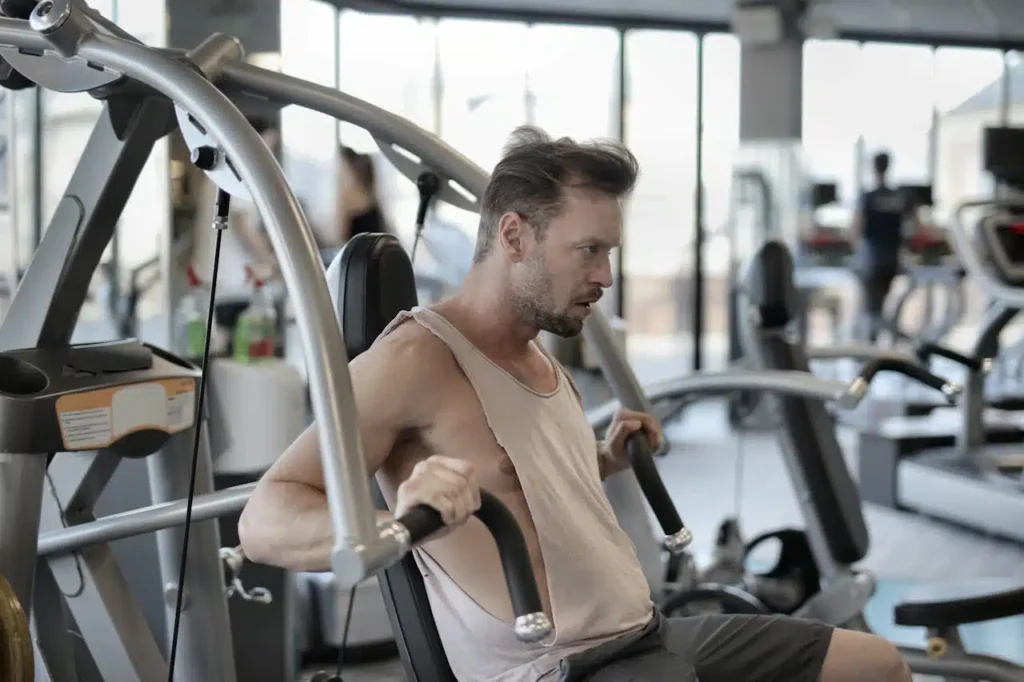
A decline or downward-angle chest press machine can be a practical alternative to free-weight pressing.
Machines provide a fixed movement path, which can make the exercise easier to learn for people who are still developing confidence with resistance training. They can also be useful later in a session when fatigue makes free-weight stabilisation more demanding.
Before starting, adjust the seat and handles to suit your body.
Your shoulders should feel comfortable throughout the movement, and you should be able to press without excessively shrugging or changing your torso position.
The original EFM Glenelg article recommends controlled repetitions and positions the machine press as an accessible option for lower chest training.
A range of roughly 8 to 12 repetitions can provide a practical starting point for muscle-focused training.
However, the exact number matters less than selecting appropriate resistance and progressively improving your performance over time.
6. Dumbbell Pullover
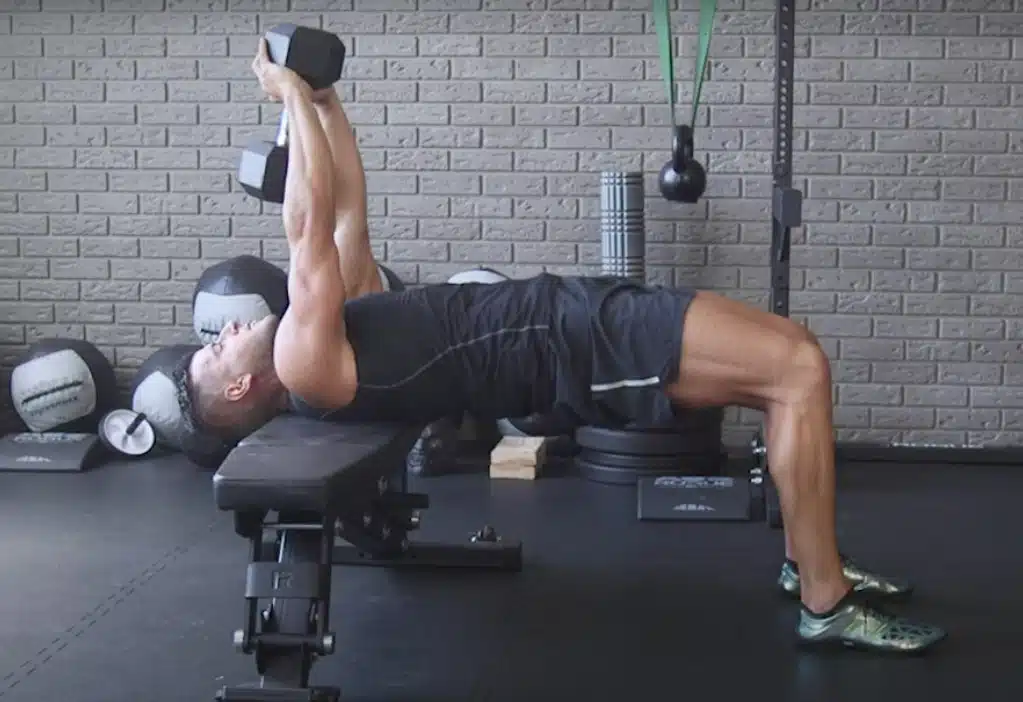
The dumbbell pullover is different from the pressing exercises on this list. Instead of pushing resistance away from your body, you move the dumbbell through an arc above and behind your head.
The movement involves both the chest and back musculature, although exactly how much you feel each area can vary with technique and individual anatomy.
Lie securely on a bench and hold one dumbbell above your chest. Maintain a slight bend in your elbows as you slowly lower the weight behind your head.
Only use a range of motion you can comfortably control.
Then bring the dumbbell back towards the starting position without using momentum.
The original article includes two to three sets of 10 to 12 repetitions near the end of a chest session.
We would treat pullovers as an optional accessory rather than an essential lower-chest exercise. Pressing and cable movements should usually receive greater priority.
7. Incline Push-Ups
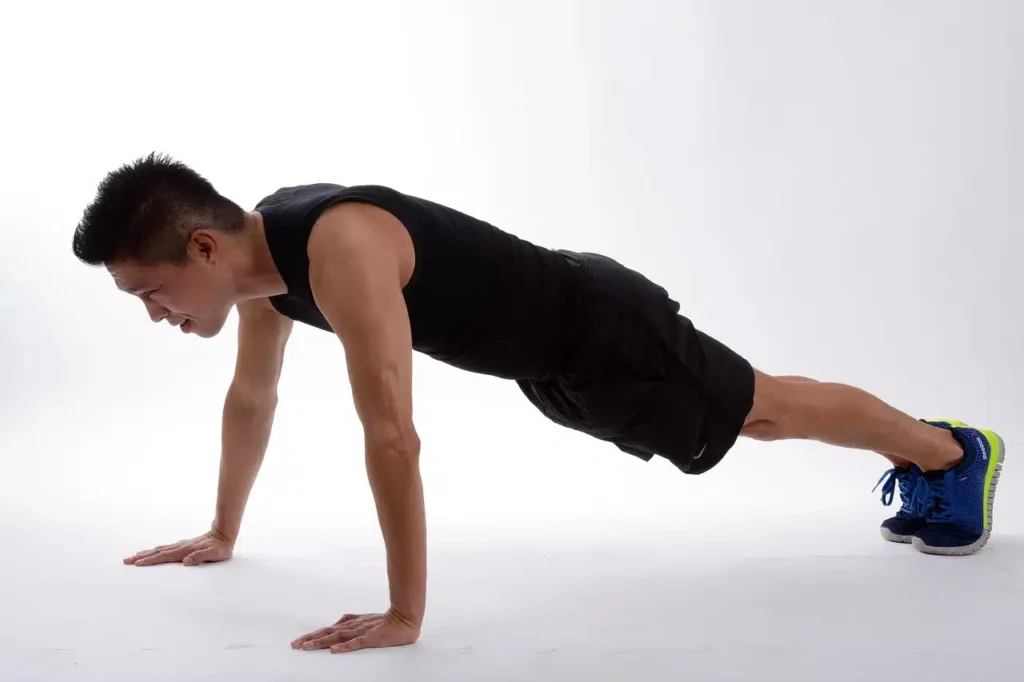
Push-ups are an excellent bodyweight chest exercise, but one technical point from the original article needs correcting.
Elevating your feet creates a decline push-up and generally shifts more demand towards the upper chest and shoulders. If you want an easier push-up variation with your hands elevated, that is an incline push-up.
For beginners, place your hands on a stable bench, bar or elevated surface.
Keep your body relatively straight from your shoulders through your hips and control yourself towards the support. Press back to the starting position without allowing your hips to sag.
As you become stronger, gradually reduce the height of the surface until you can perform floor push-ups with good control.
For a lower-chest-focused program, push-ups can work well as an accessory or finishing movement, but they should not be presented as a uniquely lower-chest exercise.
The main advantage is accessibility. You can adjust the difficulty easily without needing complicated equipment.
How to Structure a Lower Chest Workout
A productive chest workout does not need all seven exercises from this article.
In most cases, three or four well-selected movements are enough. Begin with the exercise that requires the greatest strength and coordination while you are fresh. This will usually be a barbell, dumbbell or machine press.
You can then add another compound movement before finishing with a more controlled cable or bodyweight exercise.
The original article recommends three to four exercises with progression built into the program.
That provides a sensible foundation.
The latest American College of Sports Medicine resistance-training guidance also places more emphasis on consistent training and appropriate weekly volume than unnecessarily complicated programs. For hypertrophy, its 2026 guidance points to roughly 10 weekly sets per muscle group as a useful target.
Start with a manageable amount of training and add volume when your recovery and progress justify it.
Sample Chest Workout for Lower Chest Development
Here is a straightforward routine for someone with resistance-training experience.
Decline dumbbell press
3 sets of 8 to 10 repetitions
Chest dips or assisted dips
3 sets of 8 to 12 repetitions
Decline machine press
3 sets of 10 to 12 repetitions
High-to-low cable crossover
2 to 3 sets of 12 to 15 repetitions
This provides roughly 11 to 12 working sets without requiring five or six different exercises.
The original routine included five movements and finished with repetitions to failure. For most recreational lifters, we prefer a simpler workout that allows exercise quality to remain high.
You can also alternate exercises between sessions. For example, use a barbell press one week and dumbbells during another training block.
Track your sets, repetitions and resistance so you have an objective way to measure progress.
How Often Should You Train Your Chest?
Training frequency depends on your experience, total weekly volume and overall program.
For many gym members, training the chest twice per week can be a practical way to distribute resistance-training volume. That does not mean you need two dedicated chest days. Chest exercises can form part of full-body or upper-body sessions.
Australian guidelines recommend adults perform muscle-strengthening activities on two or more days each week.
If you train your chest on Monday, for example, you might train it again later in the week after adequate recovery.
Pay attention to performance rather than soreness alone.
If your strength is continually dropping, your joints feel uncomfortable or you are carrying significant fatigue into every workout, increasing training frequency is unlikely to solve the problem.
At EFM Glenelg, we prefer training schedules people can maintain consistently instead of trying to squeeze maximum volume into every possible week.
Progressive Overload for Chest Growth
Doing the same exercises with exactly the same resistance and repetitions indefinitely gives your body little reason to continue adapting.
Progressive overload means gradually increasing the training challenge.
That does not mean adding weight every time you enter the gym. You might first increase your repetitions, improve your range of motion, perform another controlled set or improve the quality of the movement.
Imagine you perform a decline dumbbell press for three sets of eight repetitions. Over several sessions, you may progress towards three sets of ten before moving to slightly heavier dumbbells.
Keep a training record so you can see whether your performance is actually improving.
Current ACSM guidance reinforces an important point we regularly make with members. Consistency matters more than complicated programming, and resistance training should be adjusted to individual goals and ability.
Progress slowly enough that your technique develops alongside your strength.
Nutrition for Chest Muscle Growth
Training provides the stimulus for muscle development, but your overall diet and recovery support the adaptation that follows.
Protein is particularly important because it provides amino acids used to repair and build body tissues. Useful sources include eggs, dairy foods, fish, poultry, lean meats, legumes, tofu and other protein-rich foods.
You do not need excessive amounts.
A major systematic review found that protein intakes beyond approximately 1.6 grams per kilogram of body weight per day did not provide further average gains in muscle mass or strength during resistance training.
Carbohydrates can also support training by providing energy, while dietary fats remain an important part of a balanced diet.
Supplements are optional. You do not need protein powder or BCAAs simply because you lift weights.
Focus first on a balanced diet, adequate total food intake, hydration and a training routine you can maintain consistently.
Common Lower Chest Training Mistakes
More exercises do not automatically produce more muscle. In our experience, people often make their chest workouts less effective by trying to do too much rather than improving the quality of what they already perform.
Common mistakes include:
- Using weights that are too heavy to control
- Bouncing the bar during pressing exercises
- Forcing excessive depth during dips
- Performing too many similar pressing movements
- Neglecting back and pulling exercises
- Changing exercises every workout
- Treating soreness as proof of a successful session
- Training the chest hard without enough recovery
Another mistake is believing you can completely isolate one small section of the chest.
Exercise angles can change loading and muscle recruitment, but your pectoralis major still functions as an integrated muscle.
Build your overall chest first. Then use different angles and movements to create a balanced training program rather than searching for one exercise that supposedly targets a tiny area perfectly.
Do You Need Supplements to Build Your Chest?
No. Supplements are not required for building chest muscle.
The original article suggested whey protein, creatine and BCAAs as possible options. While certain supplements can have specific uses, they should never replace basic nutrition and consistent resistance training.
Protein powder, for example, is mainly a convenient way to increase dietary protein. If you already obtain enough protein from food, you do not automatically need a shake.
Your priorities should be much simpler.
Train consistently, progressively challenge the muscles, eat enough nutritious food, consume adequate protein and get sufficient sleep.
Those habits will matter considerably more than having a shelf filled with supplements.
If you are considering supplements because of a medical condition, dietary deficiency or another health concern, speak with an appropriately qualified health professional rather than relying on general gym advice.
Why Balanced Upper Body Training Matters
Developing your chest should not mean ignoring your back, shoulders or other muscle groups.
If your weekly routine contains numerous presses but almost no rows or pulling movements, your upper-body training is incomplete.
Combine chest exercises with movements such as rows, pulldowns and pull-ups. Shoulder exercises can also form part of a balanced strength program when appropriate.
This gives you a broader range of pushing and pulling movements rather than concentrating on the muscles you can easily see in the mirror.
Australian physical activity guidance recommends regular muscle-strengthening exercise as part of an active lifestyle, rather than focusing on one isolated body part.
If you want to develop a more complete routine, combine this lower chest workout with our guide to upper body compound exercises and other strength-training resources from EFM Glenelg.
A stronger chest is useful. A stronger, balanced body should be the bigger goal.
Final Thoughts
A good chest workout for lower chest development does not need to be complicated. Decline presses, dips, suitable machine presses and high-to-low cable movements can all contribute to a well-rounded chest program when they are performed with good technique.
You also do not need to perform every exercise on this list during every workout.
Choose three or four movements that suit your ability, track your performance and progressively increase the challenge. Give yourself enough time to recover and support your training with sensible nutrition.
At EFM Glenelg, we have spent more than 15 years helping people train with greater structure and confidence. We believe the best program is not the one containing the most exercises. It is the one you can perform safely, progress consistently and continue long enough to see meaningful results.
If you need support with your training, learn more about personal training at EFM Glenelg and how our trainers can help you build a program around your goals.