
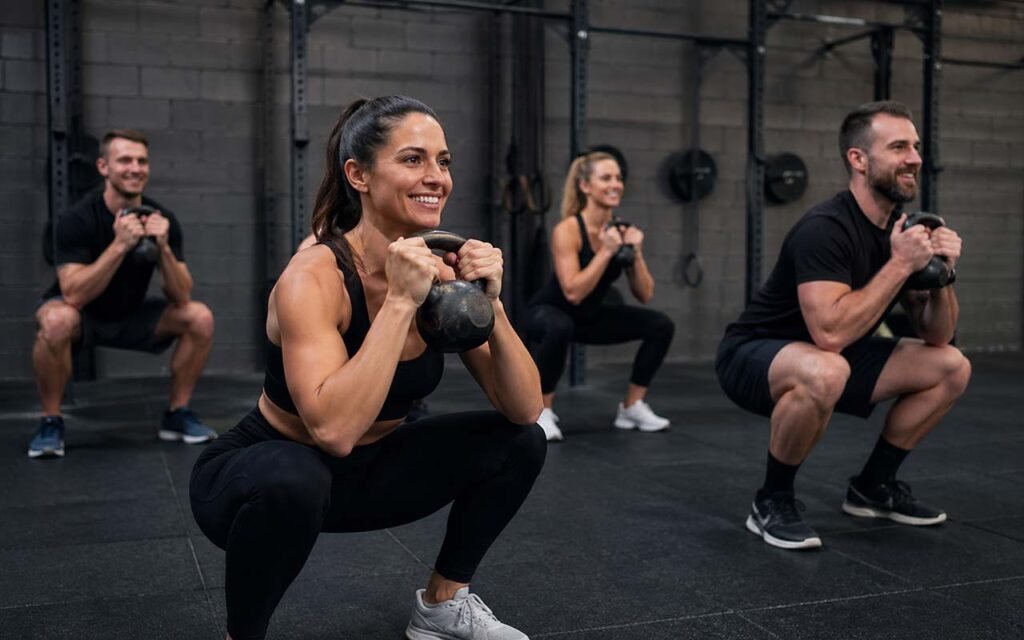
If you are looking for a smarter way to train, understanding group training Glenelg benefits can change how you approach fitness. Many people join a gym with good intentions but struggle to stay consistent, see progress, or train correctly.
Group training offers a structured and supportive alternative. Instead of training alone, you follow a guided program with expert coaching and a motivated community around you. This combination often leads to better results in less time.
At EFM Glenelg, we have seen first-hand how group personal training helps members build strength, improve fitness, and stay committed long term. The difference is not just the workout. It is the system behind it. EFM Glenelg offers expert personal trainers, providing high-quality personal training services in Glenelg.
What Is Group Personal Training
Group personal training is a coach-led training session where each member follows a tailored program within a supportive group environment. It combines the benefits of personal training with the motivation and energy of training alongside others.
Unlike standard gym classes, sessions are adjusted to suit your fitness level, goals, and experience. This ensures you are always working at the right intensity, whether you are a beginner or more advanced.
Each session follows a structured plan designed to help you progress over time. Coaches are present throughout to guide your technique, make adjustments, and keep you on track. This helps improve results while reducing the risk of injury.
Another important aspect is the group environment. Training with others creates accountability and encourages consistency, which is key to long-term success.
Overall, group personal training removes guesswork and replaces it with a clear, effective system for achieving better fitness results.
Why Group Training Works So Well
Many people assume training alone gives better results. In reality, most people train more effectively in a structured group environment.
1. Built-In Accountability
One of the biggest challenges in fitness is consistency. Research shows that people are up to 30 percent more likely to stick to a routine when they feel accountable to others.
In group training:
- You train at set times
- Coaches expect you to show up
- Members notice your absence
This creates a system where skipping sessions becomes less likely.
2. Professional Coaching Every Session
Training without guidance often leads to poor technique or slow progress.
With group training, you get:
- Real-time feedback
- Safer movement patterns
- More efficient workouts
According to the American Council on Exercise, proper coaching can improve workout efficiency by up to 20 percent.
This means better results without increasing training time.
3. Increased Motivation and Energy
Training alone can feel repetitive. In a group, the environment naturally lifts your effort levels.
You will often:
- Push harder than you would alone
- Complete more sets or reps
- Stay focused throughout the session
From our experience at EFM Glenelg, members consistently perform better in group sessions compared to solo workouts.
Key Group Training Glenelg Benefits
Understanding the real group training Glenelg benefits helps you see why this approach delivers consistent and long-term results. It is not just about exercising more. It is about training smarter with the right structure, support, and coaching. EFM Glenelg provides professional Glenelg fitness service with expert trainers and supportive group sessions.
Improved Consistency
Consistency is the foundation of any successful fitness journey. Without it, progress becomes slow and unpredictable. Group training creates a routine that is easier to follow and maintain over time.
This is achieved through scheduled sessions, structured programs, and ongoing support from coaches and members. When you know when you are training and have people expecting you to show up, it becomes much easier to stay committed.
In a real gym setting, members who train at least three times per week within a structured program often begin to notice measurable improvements within four to six weeks. This includes better energy levels, improved movement quality, and early strength gains.
Better Strength and Fitness Gains
One of the biggest advantages of group training is the ability to track and measure progress. With proper programming and coaching, improvements are no longer guesswork.
Most members experience steady progress such as increased strength within three to eight weeks and improved cardiovascular fitness within two to four weeks. Endurance during workouts also improves as the body adapts to consistent training.
These results come from a principle known as progressive overload, where training intensity is gradually increased over time. In a coached environment, this progression is carefully managed to ensure continuous improvement without burnout.
Reduced Risk of Injury
Training without guidance often leads to poor technique, which increases the risk of injury over time. Group training significantly reduces this risk by providing constant supervision.
Coaches monitor your movements throughout each session and correct your form when needed. Exercises are also adjusted based on your current ability, which ensures you are not pushing beyond what your body can handle safely.
Load and intensity are controlled in a structured way, allowing your body to adapt gradually. This not only reduces strain but also supports long-term training consistency, which is essential for sustained results.
Time Efficiency
A common issue in traditional gyms is wasted time due to lack of structure. Many people spend time deciding what to do instead of actually training effectively.
Group training removes this problem by providing a clear and focused session plan. You arrive knowing exactly what you need to do, and the coach guides you through each part of the workout.
Sessions are typically completed within 45 to 60 minutes, making them highly efficient for busy schedules. Despite the shorter duration, the structured approach ensures you get maximum value from every session.
This combination of efficiency and effectiveness is one of the key reasons why group training continues to grow in popularity.
Comparison Table: Solo Gym vs Group Training
| Feature | Solo Gym Training | Group Personal Training |
|---|---|---|
| Structure | Low | High |
| Coaching | None or limited | Continuous |
| Motivation | Self-driven | Group-driven |
| Progress Tracking | Often unclear | Measured and guided |
| Injury Risk | Higher | Lower |
| Consistency | Low to moderate | High |
This table highlights why group training often produces better long-term results.
Real-World Example from the Gym Floor
In a real gym environment, we often see new members join after spending months training on their own with limited results. Many come in feeling frustrated, not because they lack effort, but because their training lacks structure and direction.
A common pattern we notice is inconsistent attendance, usually around one to two sessions per week, combined with no clear program to follow. Without guidance, workouts become repetitive or random, which leads to minimal progress over time.
Once these members transition into group training, the change is noticeable. Attendance typically increases to three sessions per week as they begin to follow a structured routine. With consistent coaching and a clear plan, strength starts to improve steadily, and overall confidence grows within just a few weeks.
By the eight to twelve week mark, most members report visible improvements in their fitness, energy levels, and body composition. These results are not achieved through harder workouts, but through better structure, accountability, and ongoing support.
Expert Insight from EFM Glenelg Coaches
From a coaching perspective, the biggest difference is not intensity. It is consistency and execution.
Most people do not need extreme workouts. They need:
- Correct technique
- Progressive programming
- Regular attendance
Group training delivers all three.
We also see that members who enjoy their sessions are far more likely to stay long term. The community aspect plays a major role in this.
How Group Training Supports Different Fitness Levels
One of the biggest misconceptions about group training is that it only suits beginners or highly advanced individuals. In reality, a well-designed group personal training system adapts to every fitness level. With proper coaching and structured programming, each person can train effectively within the same session while working toward their own goals.
Beginners
For beginners, group training provides a safe and structured starting point. New members learn proper technique from day one, which reduces the risk of injury and builds a strong foundation for long-term progress. Sessions are adjusted to a manageable intensity, so there is no pressure to keep up with others. This supportive environment helps build confidence quickly, making it easier to stay consistent. With regular attendance, beginners often notice improvements in coordination, strength, and overall fitness within the first few weeks.
Intermediate
Intermediate members benefit from the progression and structure that group training provides. At this stage, many people struggle with plateaus due to lack of direction in their workouts. A guided program helps improve both strength and endurance through planned progression. Coaches ensure exercises are performed correctly while gradually increasing intensity. This approach leads to steady and measurable improvements. Over time, members build greater resilience, improve performance, and develop better control over their training, which is essential for continued progress.
Advanced
Advanced members often require more than just hard workouts to see results. They need precision, consistency, and accountability. Group training provides all three. Coaches help refine technique, correct small inefficiencies, and ensure training remains aligned with performance goals. Even experienced individuals benefit from structured sessions that prevent stagnation. The group environment also adds an extra level of motivation, helping advanced members maintain high standards and stay committed to their routine over the long term.
In every session, each member follows a program suited to their level while training alongside others. This balance of personalisation and group support is what makes group training effective for beginners, intermediate, and advanced individuals alike.
Supporting Data and Industry Insights
Research continues to support the effectiveness of group training. Studies from Harvard Health Publishing show that people who exercise in a group environment report higher enjoyment levels, lower stress, and a stronger commitment to their training routine. This makes it easier to stay consistent over time.
In addition, a study published in the Journal of Social Sciences found that group exercise participants improved their adherence rates by more than 26 percent compared to those training alone. These findings closely reflect what we see every day on the gym floor.
How to Get the Most Out of Group Training
To get the best results from group training, it is important to focus on a few key habits that support long-term progress. Consistency should always come first. Attending at least three sessions per week allows your body to adapt and improve steadily over time. Regular training builds momentum and helps turn exercise into a routine rather than a short-term effort.
Following coaching advice is equally important. Trainers are there to guide your technique, adjust your program, and keep you progressing safely. Applying their feedback during each session leads to better performance and reduced risk of injury.
Tracking your progress also plays a key role. Monitoring your strength, fitness levels, and attendance helps you stay accountable and see how far you have come.
Finally, patience is essential. Real results take time, with most visible changes appearing between six to twelve weeks of consistent training.
Frequently Asked Questions
What are the main group training Glenelg benefits?
Is group training suitable for beginners?
How often should I attend group training sessions?
Can group training help with weight loss?
Is group training better than training alone?
Conclusion
Understanding group training Glenelg benefits helps you make a smarter decision about your fitness journey. It is not just about working out. It is about training with purpose, structure, and support. With the right environment, coaching, and consistency, results become predictable. You do not need to rely on motivation alone. At EFM Glenelg, we have seen how group training transforms not only fitness levels but also confidence and lifestyle habits. If you want a proven system that keeps you accountable and delivers results, group training is one of the most effective options available.
