Building a strong upper body takes more than training your arms or doing a few push-ups each week. A balanced program should challenge your chest, back, shoulders, biceps, and triceps while helping you develop strength that carries over into everyday movement.
The best upper body workout exercises combine pushing and pulling movements with targeted arm work. This gives you a more complete training session without needing dozens of different exercises. Whether you are new to the gym or already have training experience, getting the fundamentals right will usually produce better results than constantly changing your routine.
At EFM Glenelg, we focus on helping members exercise with good technique, appropriate resistance, and steady progression. The seven exercises below provide a practical foundation for developing upper-body strength, muscle, and confidence in the gym.
What Makes a Good Upper Body Workout?
A well-designed upper body workout should not focus on just one muscle group. Your shoulders, chest, back, and arms work together during many everyday and sporting movements, so your training should reflect that.
For example, push-ups and dumbbell bench presses train pressing strength, while pull-ups and rows develop pulling strength. Shoulder presses add vertical pressing work, while curls and dips provide more direct training for the arms.
For beginners, exercise quality is more important than performing a large number of movements. Start with resistance that allows you to maintain good technique, then progress gradually.
A balanced routine should also include adequate recovery. Strength develops between workouts as your body adapts to training. This means that training harder every day is not necessarily better. Consistency, sensible progression, nutrition, and recovery all contribute to long-term results.
7 Best Upper Body Workout Exercises
You do not need complicated equipment to build an effective program. Some exercises use body weight, while others can be performed using dumbbells, barbells, cables, or resistance machines.
Here is a quick comparison before we look at each movement in more detail.
| Exercise | Main Muscles | Equipment | Difficulty |
|---|---|---|---|
| Push-Ups | Chest, shoulders, triceps | Body weight | Beginner |
| Pull-Ups | Back, biceps, forearms | Pull-up bar | Intermediate |
| Dumbbell Bench Press | Chest, shoulders, triceps | Dumbbells and bench | Beginner |
| Shoulder Press | Shoulders, triceps | Dumbbells or machine | Beginner |
| Bicep Curls | Biceps | Dumbbells | Beginner |
| Tricep Dips | Triceps, chest, shoulders | Dip bars | Intermediate |
| Bent-Over Rows | Back, biceps | Dumbbells or barbell | Beginner to intermediate |
The exact exercises you choose should reflect your experience, current ability, available equipment, and training goals.
1. Push-Ups
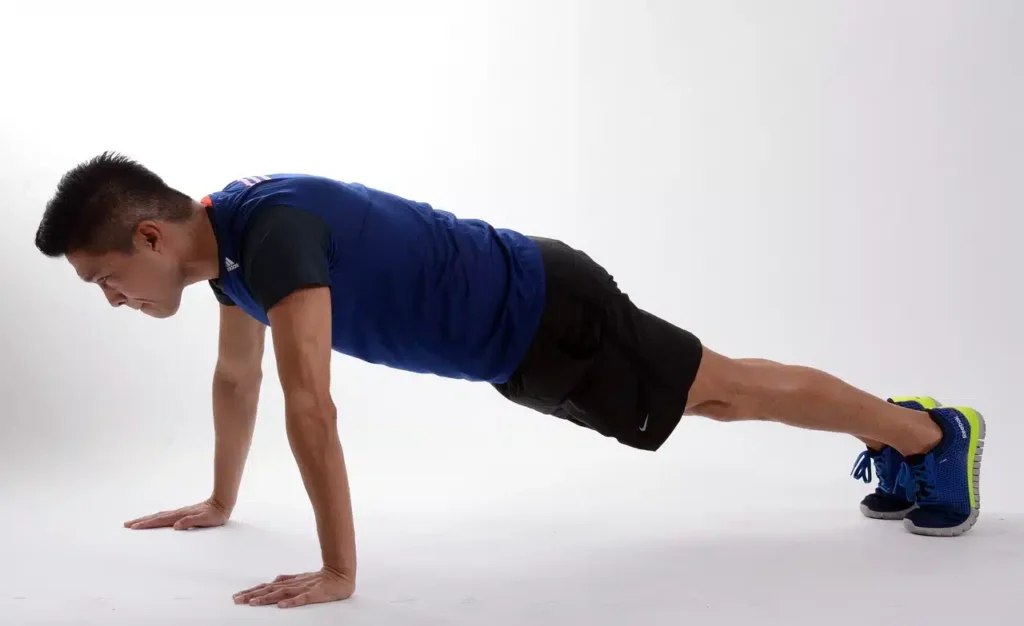
Push-ups are one of the most useful upper body exercises because they require no specialised equipment and can be adapted to different fitness levels. They primarily train your chest, shoulders, and triceps while requiring your core to keep your body stable.
Start with your hands slightly wider than shoulder width. Keep your body in a straight line and lower yourself under control by bending your elbows. Press through your hands to return to the starting position.
Beginners who cannot yet perform a standard floor push-up can start with an elevated version using a secure bench or similar surface. As strength improves, gradually lower the height.
More experienced gym members can make push-ups harder through slower repetitions, pauses, or other suitable progressions. Whatever variation you choose, maintain control instead of rushing through your repetitions.
2. Pull-Ups
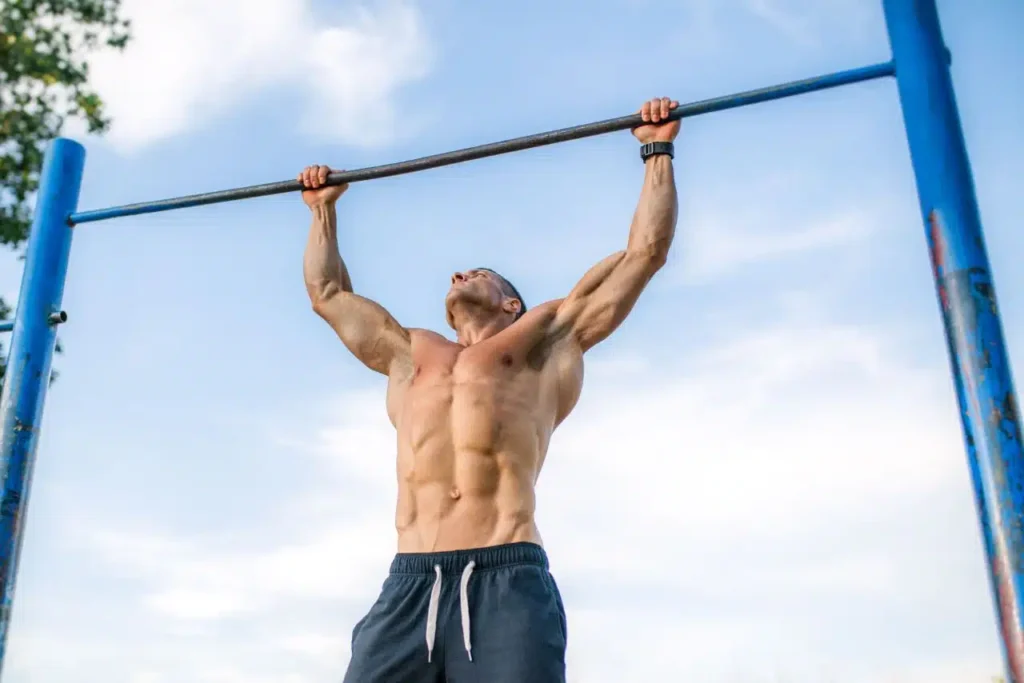
Pull-ups are a challenging but highly effective exercise for developing upper-body pulling strength. They primarily target the latissimus dorsi muscles of the back while also involving the biceps, forearms, shoulders, and other upper-back muscles.
Grip a secure pull-up bar with your hands approximately shoulder width apart. Start from a controlled hanging position and pull your body upwards until your chin approaches or passes the bar. Lower yourself slowly rather than simply dropping back down.
Many beginners cannot perform a full pull-up immediately, and that is completely normal. Assisted pull-up machines and resistance bands can make the movement more manageable while you develop strength.
Chin-ups are another useful variation. Using an underhand grip generally increases biceps involvement.
Focus on improving one stage at a time. Building enough strength for your first controlled pull-up can be a worthwhile training goal in itself.
3. Dumbbell Bench Press
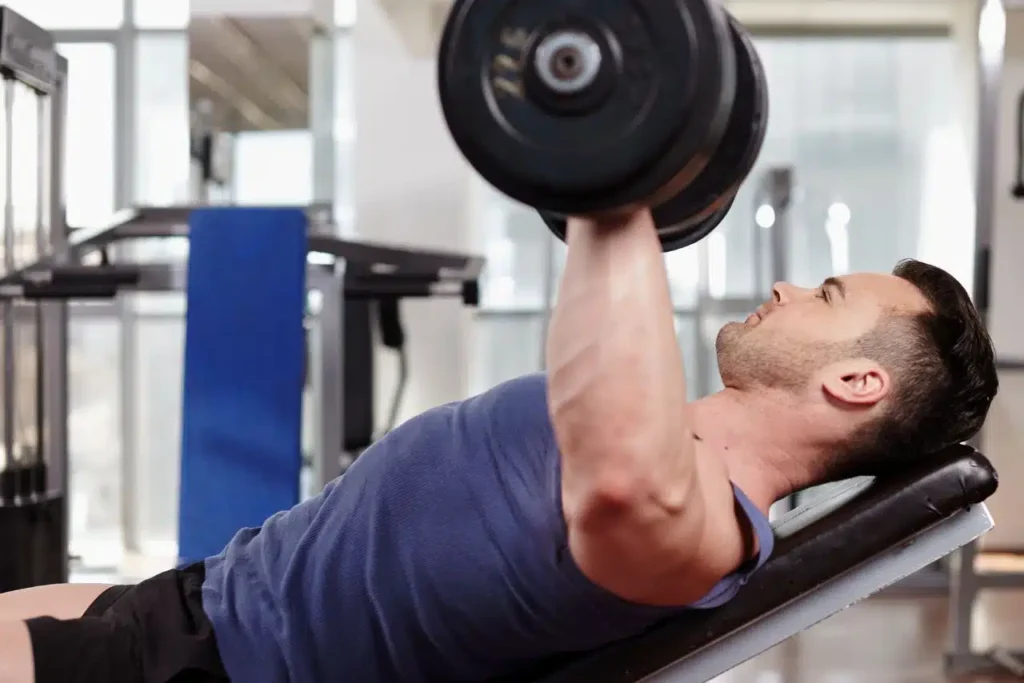
The dumbbell bench press is one of the best upper body workout exercises for developing your chest while also training your shoulders and triceps. Using separate dumbbells means each arm has to control its own resistance.
Lie on a flat bench with your feet securely positioned. Hold a dumbbell in each hand near chest level. Press the weights upwards in a smooth motion, then lower them under control until you reach a comfortable position.
Avoid bouncing the weights or rushing the lowering phase. Your repetitions should remain controlled from beginning to end.
You can also use incline dumbbell pressing to change the training emphasis and add variety to your program.
Beginners should start conservatively. Before trying to increase the weight, become comfortable setting up safely, controlling both dumbbells, and maintaining a stable position throughout each repetition.
4. Shoulder Press

The shoulder press develops vertical pressing strength and primarily targets the deltoid muscles while also involving your triceps. Depending on your experience and equipment, it can be performed with dumbbells, a barbell, or a shoulder press machine.
For a seated dumbbell shoulder press, sit securely with a dumbbell in each hand. Begin with the weights around shoulder height. Keep your torso stable as you press upwards, then slowly lower the dumbbells.
One common mistake is using a weight that causes excessive arching through the lower back. If maintaining your position becomes difficult, reduce the resistance.
Beginners may find a machine shoulder press easier while learning the movement because the equipment provides a more fixed movement path.
Once your technique becomes consistent, gradually increasing resistance can help you continue developing shoulder and upper-body strength.
5. Bicep Curls
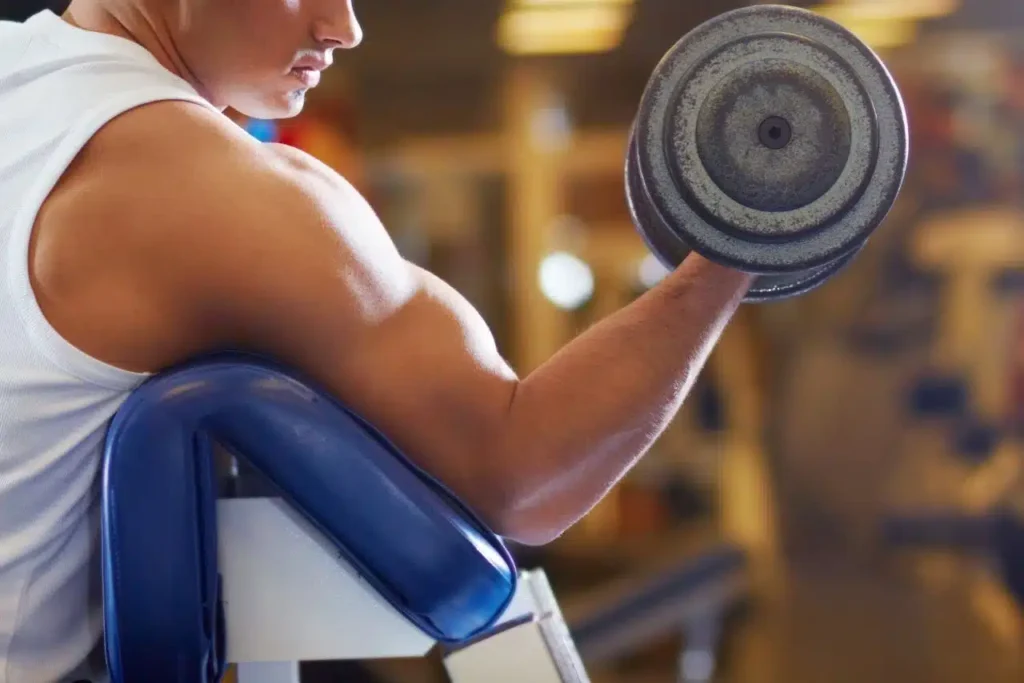
Compound exercises should form a large part of an upper-body program, but isolation exercises can still have a useful role. Bicep curls are a straightforward way to directly train the muscles at the front of your upper arms.
Stand with a dumbbell in each hand and keep your elbows close to your sides. Bend your elbows to bring the weights upwards without swinging your torso. Pause briefly before lowering the dumbbells under control.
The movement sounds simple, but technique makes a noticeable difference. Using momentum often allows you to lift more weight while reducing the amount of controlled work your biceps perform.
You can also use hammer curls, cable curls, or other variations to add variety.
If building your arms is one of your goals, combine direct biceps work with pulling movements such as rows and pull-ups rather than relying exclusively on curls.
6. Tricep Dips
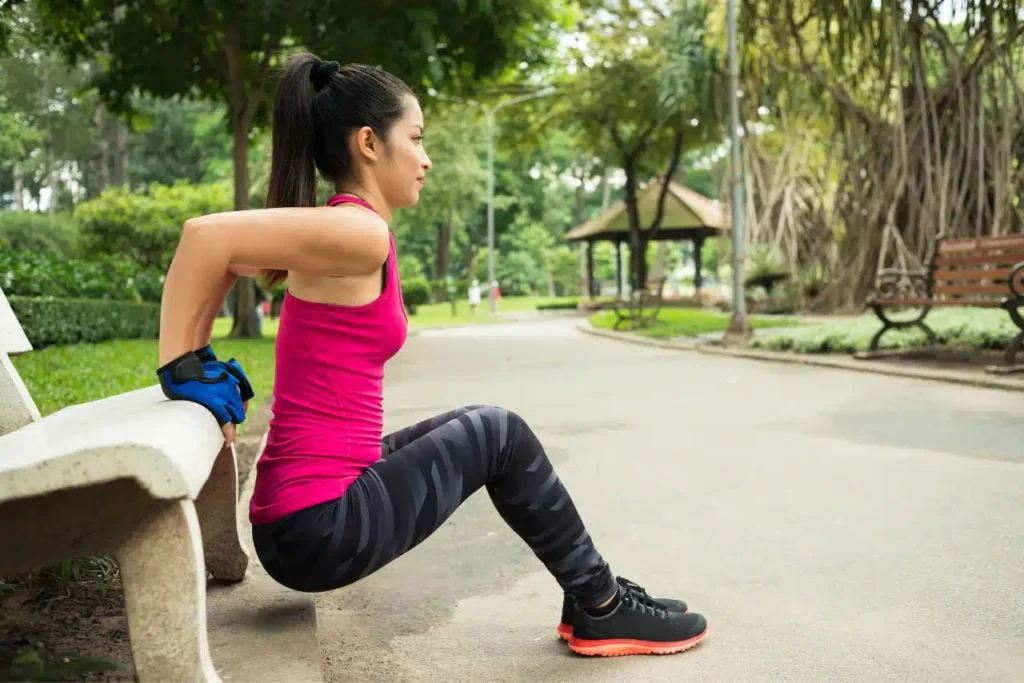
Dips are a compound upper-body exercise that can place significant demand on your triceps while also involving the chest and shoulders. Because you are moving a large proportion of your body weight, they can become challenging quickly.
For parallel-bar dips, support yourself securely with your arms and lower your body by bending your elbows. Descend only through a comfortable range before pressing yourself back upwards.
Beginners may benefit from an assisted dip machine instead of immediately attempting unsupported repetitions.
Dips are not comfortable or appropriate for every shoulder, so they should never be forced. If the exercise causes pain, choose another triceps movement that feels better for you.
Cable pushdowns, for example, can provide a more adjustable alternative for direct triceps training.
The goal is to train the muscle effectively, not to perform a particular exercise at all costs.
7. Bent-Over Rows
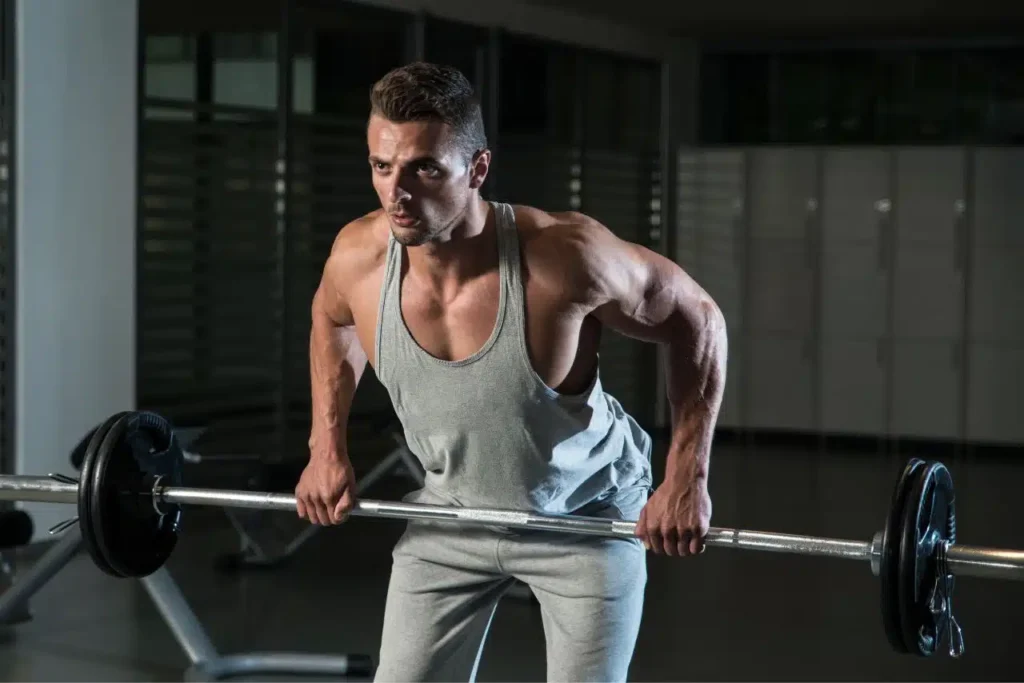
Bent-over rows are an excellent counterbalance to pressing exercises because they strengthen your upper and middle back while also training your biceps and rear shoulders.
Stand with your feet in a stable position and hold a dumbbell in each hand. Hinge forward from your hips while maintaining a controlled torso. Allow the dumbbells to hang beneath you before pulling them towards your body.
Think about bringing your elbows backwards while maintaining your position. Lower the weights slowly and repeat.
Do not choose a resistance that forces you to jerk your torso upwards on every repetition. If maintaining your hip hinge becomes difficult, reduce the weight.
You can perform rows using dumbbells, barbells, cables, or machines. Beginners who struggle to maintain a bent-over position may find a chest-supported row or seated cable row easier to control.
How Many Sets and Reps Should You Do?
There is no single repetition range that everyone must follow. Your ideal sets, repetitions, and resistance depend on your goals, experience, and the specific exercise.
For a general beginner strength workout, a simple starting structure may look like this:
- Perform 2 to 3 sets of each selected exercise
- Aim for approximately 8 to 12 controlled repetitions for many resistance exercises
- Rest enough between sets to maintain good technique
- Choose a weight that becomes challenging without causing your form to break down
- Increase resistance gradually as your strength improves
You also do not necessarily need all seven exercises in every session. Selecting four or five movements that provide a balance of pushing and pulling can create an effective workout.
Your overall weekly training program matters more than trying to fit everything into a single day.
A Simple Upper Body Workout for Beginners
When you first start strength training, keeping your program simple makes it easier to monitor progress. Constantly changing exercises can make it difficult to determine whether you are actually becoming stronger.
For example, you could start with dumbbell bench presses for your chest, seated or assisted pull-ups for your back, shoulder presses for your shoulders, and controlled bicep and tricep work towards the end of the session.
Keep a record of the weights and repetitions you complete. If you can perform your planned repetitions with consistent technique, you can gradually increase the challenge.
At EFM Glenelg, we often find that beginners progress well when they first learn how exercises should feel rather than trying to match what experienced members are lifting.
Good strength training is personal. Your starting point does not need to look like anyone else’s.
Tips for a Successful Upper Body Workout
Your exercise selection is only part of what determines the quality of your training. How you perform those exercises matters just as much.
Start each session with an appropriate warm-up and practise the movement pattern before using challenging resistance. Pay attention to technique and avoid sacrificing control simply to add more weight.
Progressive overload is also important. As your body adapts, gradually increase the challenge through additional resistance, repetitions, improved range of motion, or better control.
Recovery deserves equal attention. Your muscles need time and adequate nutrition to recover from training.
Finally, keep your routine balanced. If your program contains several pressing exercises, make sure you are also performing appropriate pulling movements. Balanced training helps you develop your entire upper body rather than focusing only on the muscles you can see in the mirror.
Common Upper Body Training Mistakes
One mistake we regularly see is trying to lift too much too soon. Heavier weights can feel like progress, but if your technique deteriorates significantly, you may not be getting the benefit you expect.
Another issue is focusing heavily on chest and arms while neglecting the back and rear shoulders. Pull-ups, rows, and other pulling exercises deserve consistent attention alongside presses and curls.
Beginners also sometimes change their workouts every few days because they believe constant variety is necessary. Variety has its place, but repeating key exercises gives you an opportunity to practise them and measure improvement.
Finally, avoid treating soreness as the main measure of workout quality. A successful training session does not need to leave you unable to move the following day.
Focus instead on consistency, exercise quality, gradual progression, and how your performance changes over time.
How Often Should You Train Your Upper Body?
Training frequency depends on how your overall program is structured. Some people train their entire body several times per week, while others use separate upper and lower-body sessions.
For beginners, allowing recovery time between demanding sessions is important. The Australian Government’s physical activity guidelines recommend adults perform muscle-strengthening activities on at least two days each week.
You can learn more about Australia’s recommendations through the Australian Government physical activity and exercise guidance.
Training frequency should also reflect how well you recover. Sleep, nutrition, stress, exercise intensity, and your general activity level can influence recovery.
If you are consistently exhausted or your performance is declining, adding more workouts may not be the solution. A sustainable schedule is more valuable than an aggressive routine you cannot maintain.
Building Upper Body Strength at EFM Glenelg
A strong upper body is developed through consistent training rather than one perfect workout. Push-ups, pull-ups, presses, rows, curls, and dips can all contribute when they are selected appropriately and performed with good technique.
At EFM Glenelg, we have been supporting the Glenelg community for more than 15 years. Our approach combines gym access with professional guidance, helping members train according to their individual fitness levels and goals.
If you are new to resistance training, guidance can be particularly useful when choosing exercises, learning technique, and deciding when to increase resistance.
You can also read our guide to rear deltoid exercises for beginners to learn more about strengthening the back of your shoulders as part of balanced upper-body training.
Final Thoughts
The best upper body workout exercises do not need to be complicated. Push-ups, pull-ups, dumbbell bench presses, shoulder presses, bicep curls, dips, and bent-over rows give you a strong combination of pushing, pulling, and targeted arm movements.
The key is performing them consistently and correctly. Start at a level appropriate for your current ability, concentrate on technique, and gradually increase the challenge as you become stronger.
Your workout should also fit into a balanced fitness routine that includes recovery, good nutrition, lower-body training, and regular physical activity.
If you would like more structure and professional support, EFM Glenelg provides a welcoming training environment where you can work towards your goals with experienced trainers and a program suited to your fitness level.