Modern life makes it surprisingly easy to spend most of the day sitting. We sit at work, in the car, at home and while using our phones or computers. Over time, a lack of movement can affect our strength, fitness, energy and general wellbeing.
This is one reason why gym is important for many people. A good gym gives you a dedicated place to move regularly, build strength and improve your fitness in a structured way. More importantly, it can help turn exercise from something you occasionally do into part of your normal weekly routine.
At EFM Glenelg, we have worked with people at many different stages of their fitness journey. One thing we consistently see is that progress does not require perfection. Regular, well-planned exercise that suits your ability is far more valuable than pushing yourself through workouts you cannot maintain.
Why Is Regular Exercise So Important?
Regular movement supports almost every stage of life. It can help you stay stronger, improve cardiovascular fitness, maintain mobility and manage your physical and mental wellbeing. The benefits also extend well beyond what you see in the mirror.
Physical inactivity remains a significant global health issue. The World Health Organization reported that around 31% of adults worldwide, or approximately 1.8 billion people, did not meet recommended physical activity levels in 2022.
Australian guidance recommends adults complete moderate to vigorous physical activity for at least 30 minutes on most days, along with muscle-strengthening exercise on two or more days each week.
A gym can make meeting those recommendations easier because you have equipment, structured workouts and professional support available in one place.
Are There Age Restrictions for Going to the Gym?
There is no single age that determines whether someone can benefit from exercise. However, individual gyms may have minimum age requirements or supervision rules, particularly for younger members. The right training approach should always reflect a person’s age, experience, health and physical ability.
For adults and older people, resistance, cardiovascular, balance and mobility exercises can all have a place in a well-designed program. Older adults may particularly benefit from maintaining strength and balance as they age.
What matters most is choosing exercises that are appropriate for you rather than copying someone else’s workout. A beginner in their 50s may need a completely different program from an experienced person in their 20s.
At EFM Glenelg, we believe training should meet you where you are. Good coaching allows exercises to be adjusted as your strength, confidence and fitness improve.
10 Reasons Why Gym Is Important
The benefits of going to the gym extend from stronger muscles to better cardiovascular fitness and social connection. Here is a quick overview before we look at each benefit more closely.
| Gym Benefit | How It Can Help |
|---|---|
| Muscle strength | Supports stronger muscles and everyday movement |
| Weight management | Increases activity and energy expenditure |
| Cardiovascular fitness | Trains the heart and circulatory system |
| Mental wellbeing | Can support mood and reduce stress |
| Energy | Improves general fitness and work capacity |
| Sleep | Regular activity can support healthy sleep |
| Confidence | Creates measurable goals and achievements |
| Long-term health | Helps reduce several chronic disease risks |
| Healthy ageing | Supports strength, mobility and independence |
| Social connection | Creates community and accountability |
Not every benefit appears immediately. Some improvements can be felt relatively quickly, while strength, body composition and fitness changes generally require consistent training over time.
That is why we encourage people to think beyond quick results and build habits they can realistically maintain.
1. Builds Muscle Strength and Endurance
One of the clearest reasons why gym is important is the opportunity to develop and maintain physical strength. Resistance exercises can include free weights, machines, bodyweight movements and functional exercises that train several muscle groups together.
Strength matters outside the gym too. Everyday activities such as carrying groceries, lifting objects, climbing stairs and getting up from the floor all rely on muscular strength and control.
A well-designed program gradually increases the challenge as your body adapts. This is known as progressive overload. It does not mean adding heavy weights every session. Progress can come from improving technique, completing additional repetitions, increasing resistance or performing an exercise with better control.
Australian physical activity guidance recommends muscle-strengthening activities on at least two days each week. For many members, two or three well-structured sessions can be a practical starting point.
2. Supports Healthy Weight Management
Going to the gym can play an important role in weight management, but we encourage people to look beyond the number on the scales. Exercise can help increase energy expenditure, improve fitness and build or maintain lean muscle while supporting healthier long-term habits.
Cardiovascular activities such as cycling, rowing, walking and running increase energy use during a workout. Resistance training adds another important element by helping preserve and develop muscle.
Nutrition still plays a major role. Training cannot compensate for an eating pattern that consistently works against your goals, so exercise and nutrition are best viewed as partners rather than competing strategies.
In practice, we often find that sustainable routines work better than aggressive short-term plans. Someone who consistently trains three times each week for months is usually building a more useful habit than someone completing intense daily workouts for two weeks before stopping altogether.
3. Improves Cardiovascular Health and Fitness
Your heart is working whenever you exercise. Activities that raise your heart rate, such as cycling, rowing, brisk walking or circuit training, challenge your cardiovascular system and help your body become more efficient at supplying oxygen to working muscles.
This has important long-term implications. The World Health Organization reports that regular physical activity helps prevent and manage conditions including heart disease, stroke, hypertension and diabetes.
You do not have to become a runner to improve cardiovascular fitness either. Different forms of aerobic activity can be adapted to your current fitness level and personal preferences.
For beginners, this might mean shorter periods of moderate exercise with appropriate recovery. As fitness develops, duration or intensity can gradually increase.
The best cardiovascular exercise is often one you can perform safely, enjoy enough to repeat and progressively improve over time.
4. Supports Mood and Mental Wellbeing
The gym is not only about physical changes. Regular exercise can also be valuable for mental wellbeing, especially when it gives you time away from work, screens and everyday responsibilities.
Physical activity is associated with improved mental health and quality of life. WHO guidance also recognises that regular physical activity can reduce symptoms of depression and anxiety and support overall wellbeing.
From our experience working with members, the mental benefit of training often comes from several things working together. You have a goal to focus on, a structured routine, social interaction and the satisfaction of completing something positive for yourself.
Not every session needs to be your best workout. Some days, simply arriving and moving is worthwhile. Building that consistency can make exercise feel like a normal part of your week rather than another task you have to force yourself to complete.
5. Can Improve Everyday Energy Levels
It may sound contradictory that using energy during a workout can leave you feeling more energetic, but regular exercise helps your body become better prepared for physical demands.
As your cardiovascular fitness and muscular endurance improve, normal activities may begin to feel easier. Walking longer distances, climbing stairs or keeping up with a busy day can require less effort than they did before.
We regularly see this become an important milestone for members. Their original goal might have been weight loss or strength, but they begin noticing that they can complete everyday activities without feeling as tired.
The key is choosing the right training intensity. Constantly pushing yourself to exhaustion is not necessary and may make consistency harder.
A balanced program should challenge you while allowing enough recovery between sessions. Over time, this combination of training and recovery can improve your overall work capacity and make regular movement feel more manageable.
6. Regular Exercise Can Support Better Sleep
Exercise and sleep have a close relationship. Being physically active during the day can support healthy sleep, while getting enough quality sleep gives your body time to recover from training.
Australian 24-hour movement guidelines recommend adults aim for 7 to 9 hours of good-quality sleep, together with regular physical activity and reduced sedentary time.
Training can be one part of a healthy sleep routine, although exercise is not a cure for every sleep problem. Stress, caffeine, work schedules, medical conditions and screen use can also influence sleep quality.
From a fitness perspective, recovery deserves the same attention as training. Your body needs time between workouts to repair tissues and adapt to the exercise you have completed.
This is why we prefer a sustainable training schedule over simply doing as much exercise as possible. Good training should work alongside your lifestyle rather than leaving you permanently exhausted.
7. Builds Confidence Through Measurable Progress
Confidence in the gym rarely appears overnight. For many people, it develops as they learn exercises, understand equipment and begin noticing what their body can do.
Progress can be measured in many ways. You might lift a weight that previously felt difficult, complete more repetitions, improve your technique or recover faster between exercises. These small achievements provide evidence that your effort is producing results.
This can be particularly valuable for beginners who initially feel unsure about entering a gym. Having professional guidance removes much of the guesswork and gives you a clearer idea of what to do during each session.
We believe this is one of the most overlooked gym health benefits. Becoming physically capable can change the way you approach challenges both inside and outside training.
Rather than comparing yourself with other members, focus on your own starting point and measure how far you have progressed.
8. Helps Reduce the Risk of Chronic Disease
Regular physical activity is an important part of long-term preventative health. It cannot guarantee that someone will avoid disease, but research consistently links being physically active with lower risks across several major health conditions.
WHO states that regular physical activity can help prevent and manage heart disease, type 2 diabetes and several cancers. It can also help maintain healthy body weight and support mental health.
More recent research continues to strengthen this evidence. A 2026 study involving 598,890 adults across six European countries found that higher physical activity was associated with lower risk across 15 physical activity-related cancer types analysed together.
This does not mean more exercise is always better. The goal should be an appropriate level of regular activity that matches your circumstances.
If you have an existing medical condition, injury or significant health concern, seek appropriate medical advice before substantially changing your exercise routine.
9. Supports Healthy Ageing and Quality of Life
The value of strength and fitness often becomes even clearer as we get older. Maintaining muscle, balance, mobility and cardiovascular fitness can make everyday movement easier and support greater independence.
Australian guidelines recommend adults and older Australians include moderate to vigorous physical activity, muscle-strengthening work and functional exercises that target mobility, balance and coordination.
Training for healthy ageing does not necessarily mean lifting very heavy weights or performing complicated exercises. Simple movements performed correctly and progressed appropriately can be highly valuable.
For example, squatting patterns can support the strength needed to sit down and stand up. Carrying exercises can relate to everyday tasks, while balance work may improve confidence during movement.
This is another reason we see fitness as a long-term investment. Training is not just about how your body looks today. It is also about maintaining what your body can do in the years ahead.
10. Provides Social Interaction, Support and Accountability
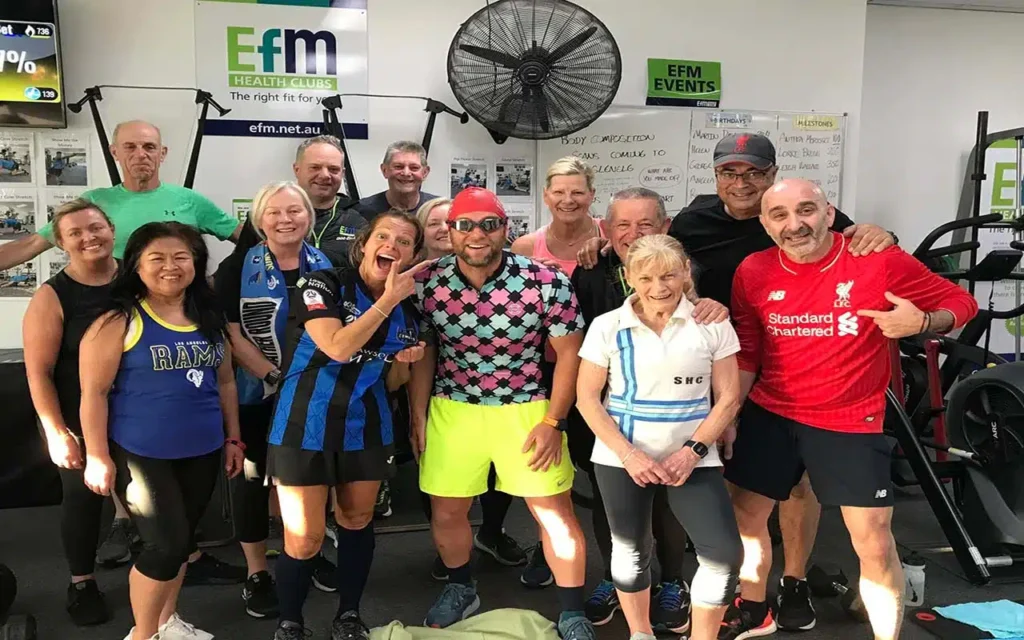
One benefit of a gym that is difficult to recreate when exercising alone is the sense of community. Seeing familiar people, working with trainers and sharing sessions with other members can make exercise more enjoyable and easier to maintain.
Accountability matters because motivation naturally changes. There will be weeks when you feel enthusiastic about training and others when work, family commitments or tiredness make exercise less appealing.
A supportive training environment can help bridge those gaps.
This is particularly relevant to the way we approach training at EFM Glenelg. After serving the Glenelg community for more than 15 years, we have seen how relationships can become part of a person’s reason for continuing to exercise.
You might initially join a gym to become fitter or stronger, but having trainers and other members who know you can turn training into something you genuinely look forward to each week.
How Often Should You Go to the Gym?
There is no perfect number of gym sessions that works for everyone. Your ideal frequency depends on your goals, training experience, recovery, work schedule and the type of exercise you are doing.
For general health, Australian guidance recommends being active on most days, with moderate to vigorous activity for 30 minutes or more on most days and muscle-strengthening activity on at least two days per week.
For someone starting out, two or three structured gym sessions per week may provide a realistic foundation. Other activities such as walking, cycling or recreational sport can complement those sessions.
A useful weekly routine might include:
- 2 to 3 resistance or structured gym sessions
- Regular walking or other light activity
- Cardiovascular exercise appropriate to your fitness
- Mobility or balance exercises where needed
- Enough recovery between demanding workouts
Consistency matters more than trying to fit an unrealistic number of sessions into every week.
Why Professional Guidance Can Make a Difference
Having access to gym equipment is useful, but knowing how to use it effectively is equally important. This is where professional guidance can make training more structured, particularly for beginners or anyone returning after a long break.
A trainer can help select exercises, adjust movements to suit your ability and build sensible progression into your program. They can also watch your technique and identify when an exercise needs to be modified.
At EFM Glenelg, our approach is based on helping people train at an appropriate level rather than expecting everyone to complete the same workout in exactly the same way.
We have a diverse team of trainers, including people with Human Movement education and backgrounds in Australian football. That experience helps us understand that good training should be individual.
Your program should reflect your goals, your current ability and where you want your fitness to take you next.
Final Thoughts on Why the Gym Is Important
Understanding why gym is important becomes easier when you stop viewing exercise only as a way to change your appearance. Regular training can help build strength, support cardiovascular fitness, manage weight, improve confidence and contribute to better long-term health.
The gym also provides something equally valuable. It gives you a place to build a routine.
You do not need to be extremely fit before joining, and every workout does not need to be perfect. Start at a level that suits you, learn how to move well and focus on gradual progress.
At EFM Glenelg, we have spent more than 15 years helping people in the Glenelg community make exercise part of everyday life. Whether your goal is to become stronger, improve fitness or simply start moving regularly again, building a routine you can maintain is one of the best places to begin.