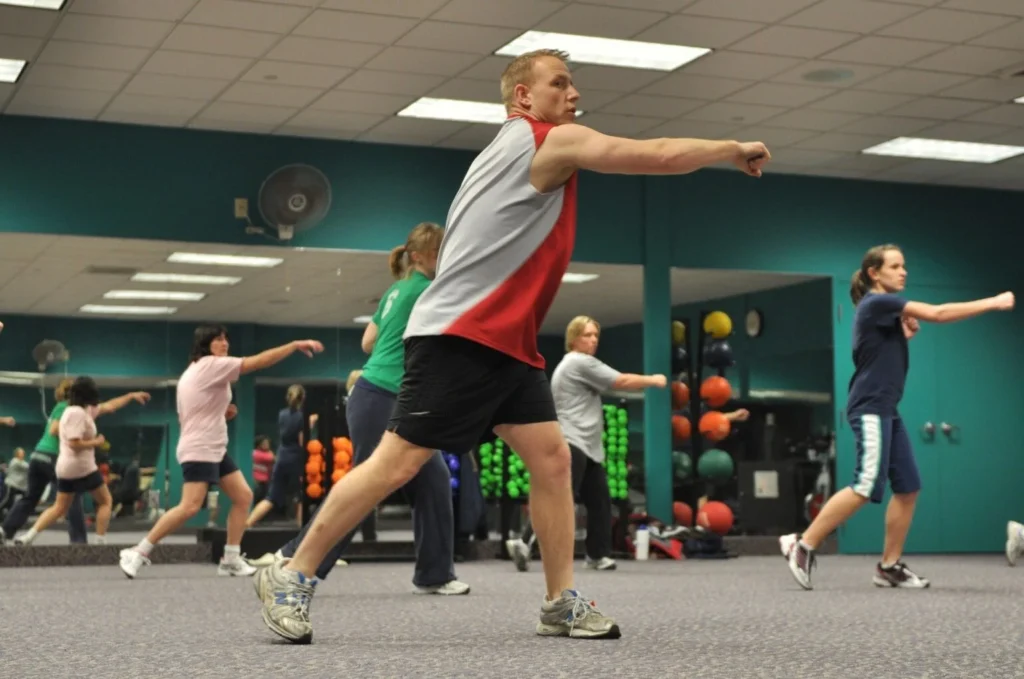
Exercising regularly sounds simple, but maintaining the habit can be difficult. Work, family commitments and changing motivation can quickly push workouts down the priority list. This is one reason group fitness classes in Australia continue to appeal to people looking for a more structured way to stay active.
Instead of arriving at the gym and deciding what to do yourself, group training provides a planned session, coaching and other people to exercise alongside. That combination can make training feel more purposeful and enjoyable.
At EFM Glenelg, we have seen this first-hand during more than 15 years of working with the Glenelg community. People may initially join because they want to improve strength, fitness or general health. What often keeps them coming back is the combination of personal progress, trainer support and community.
Here is why group fitness continues to be such a popular way to exercise.
What Are Group Fitness Classes?
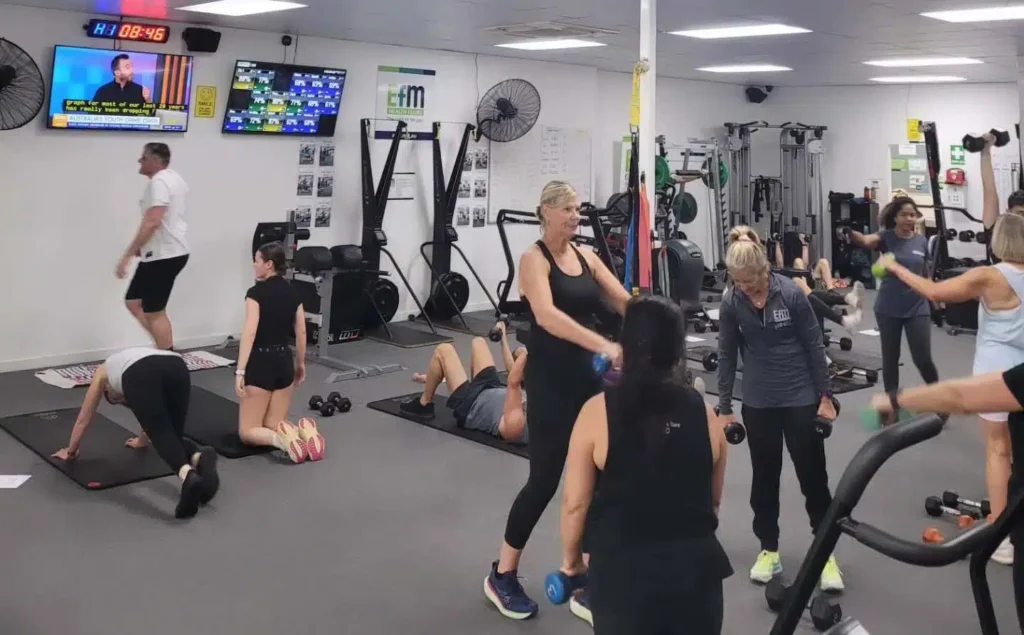
Group fitness classes involve several people completing a structured workout together, usually under the guidance of an instructor or trainer. Depending on the facility, sessions may focus on cardiovascular fitness, strength, mobility, functional movement or a combination of different training styles.
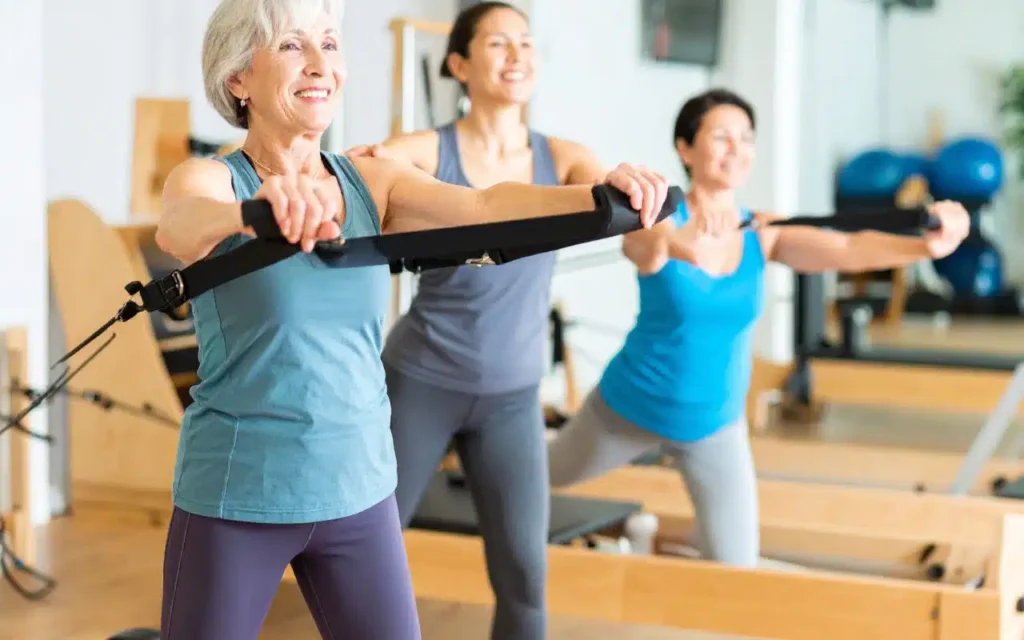
Traditional examples include yoga, Pilates, circuit training, indoor cycling and dance-based exercise. Other facilities use group personal training, where exercises can be adapted more closely to each participant.
This distinction matters because not every group session requires everyone to perform exactly the same exercise at the same intensity.
At EFM Glenelg, our approach to group personal training allows people with different experience and fitness levels to train in the same supportive environment.
A beginner might use lighter resistance or a modified exercise, while an experienced member can work at a more challenging level. The aim is to train together without losing sight of individual needs.
Why Are Group Fitness Classes in Australia So Popular?
Australia has a strong fitness culture, but structured exercise is only one part of how active Australians are. Walking, cycling, organised sport and recreational activities all contribute to overall movement.
Even so, many adults are still not active enough. According to the Australian Institute of Health and Welfare, 22% of adults aged 18 to 64 met both the physical activity and muscle-strengthening components of Australia’s physical activity guidelines in 2022. Read the AIHW physical activity data.
Group training can make regular exercise easier to organise because the workout structure is already provided.
Rather than planning every exercise yourself, you arrive knowing that there is a session to complete. You also have trainers and other members around you.
For busy people, that combination of convenience, accountability and social interaction can turn exercise into a regular part of the week instead of something that happens only when motivation is high.
1. Group Training Provides Structure
One of the biggest advantages of group fitness is that you do not have to create a workout every time you enter the gym.
This can be particularly useful for beginners. Walking into a gym filled with machines, free weights and unfamiliar equipment can make it difficult to know where to start. A structured session removes much of that uncertainty.
The trainer can organise exercises, explain technique and help manage the pace of the workout.
Structure is useful for experienced members too. When your session has a clear purpose, it becomes easier to focus on training instead of spending time deciding which exercise to perform next.
From our experience, people often become more consistent when exercise requires fewer decisions.
You still need to arrive and put in the effort, but the session itself has already been organised. This can make regular training feel much more manageable during a busy week.
2. Trainers Provide Guidance and Support
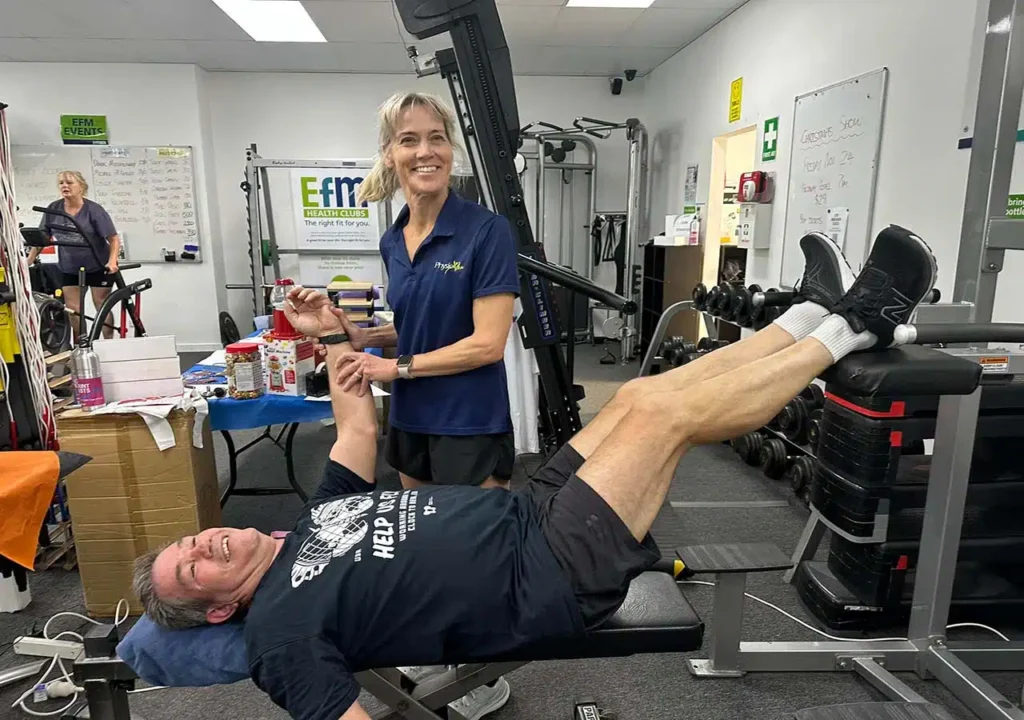
Good group fitness is about more than having someone stand at the front and count repetitions. Trainers should help participants understand exercises and adjust movements where appropriate.
Technique becomes particularly important when sessions include resistance exercises such as squats, lunges, rows or presses.
An experienced trainer can observe how you move and suggest changes when needed. That might involve reducing resistance, modifying an exercise or choosing a different movement that better suits your ability.
This is one reason we believe coaching adds significant value to group training.
Our EFM Glenelg team includes trainers with different fitness backgrounds, including Human Movement education and experience within Australian football. That diversity gives our members access to practical knowledge across different areas of training.
The goal is not to make every person exercise identically. Good coaching helps each participant complete a session that challenges them appropriately while maintaining control and good movement quality.
3. Exercising With Others Can Improve Motivation
Motivation naturally changes. Some weeks you may look forward to every workout. During others, work, poor weather or a busy schedule can make staying home much more appealing.
This is where group fitness can help.
Knowing that other members and trainers will be there creates a different level of accountability compared with always training alone. You are not relying entirely on how motivated you happen to feel that day.
There is also something useful about exercising around people who are working towards their own goals. You see other members showing up, improving and working through challenging sessions.
That energy can make it easier to keep going.
However, group training should not become a competition. Someone else’s fitness level has little relevance to your own progress.
At EFM Glenelg, we encourage members to focus on what they can improve. The group provides support, but your goals and progress remain personal.
4. Group Fitness Classes Add Variety to Training
Repeating exactly the same workout every session can become monotonous. Group training can introduce different exercises, equipment and training formats while maintaining an overall structure.
A session might combine resistance exercises with cardiovascular work, balance, mobility or functional movements. Another session may place greater emphasis on strength.
Variety can help keep training interesting, but it should still have a purpose.
Changing every exercise simply to make a workout feel different is not necessarily better. Some consistency is useful because it allows you to practise movements and measure progress.
A good program balances both ideas. Important movement patterns remain part of your training while individual exercises or session formats change when appropriate.
This approach keeps workouts engaging without making them random.
For people who become bored exercising alone, that variation can be one of the biggest advantages of group fitness classes in Glenelg.
5. Classes Can Work for Different Fitness Levels
A common concern among beginners is that everyone else in a group fitness class will be fitter than they are. This can make attending the first session feel intimidating.
Well-designed group training should accommodate different abilities.
Consider a squat exercise. A beginner might perform a bodyweight or supported variation, while another member uses a dumbbell or heavier resistance. Both people are training the same general movement pattern at an appropriate level.
The same principle can apply to cardiovascular exercises and other resistance movements.
This is why we prefer focusing on individual effort rather than comparing participants.
Your first session does not need to look like somebody else’s hundredth session.
Before joining a class, ask whether exercises can be modified and how trainers support beginners. If everyone is expected to perform exactly the same workout regardless of experience, that environment may not suit every person.
Good group training allows people to progress rather than expecting them to arrive already fit.
6. Group Fitness Creates Accountability
Consistency is one of the biggest challenges in fitness. Most people understand that exercise is beneficial, but knowing something is good for you does not automatically make it easy to do every week.
Group training can create useful accountability.
When sessions become part of your normal schedule, exercise starts to feel more like an appointment than an optional activity. You know when you are training and can organise other commitments around it.
The social element can strengthen that routine.
Trainers may notice your progress, while other members become familiar faces. Over time, this can create an environment where showing up feels normal.
In our experience at EFM Glenelg, this is particularly valuable during periods when motivation drops. You do not need to feel excited about every workout to continue making progress.
A sustainable fitness routine is built by exercising consistently across good weeks and difficult ones. Accountability can make that consistency easier to maintain.
7. You Become Part of a Fitness Community
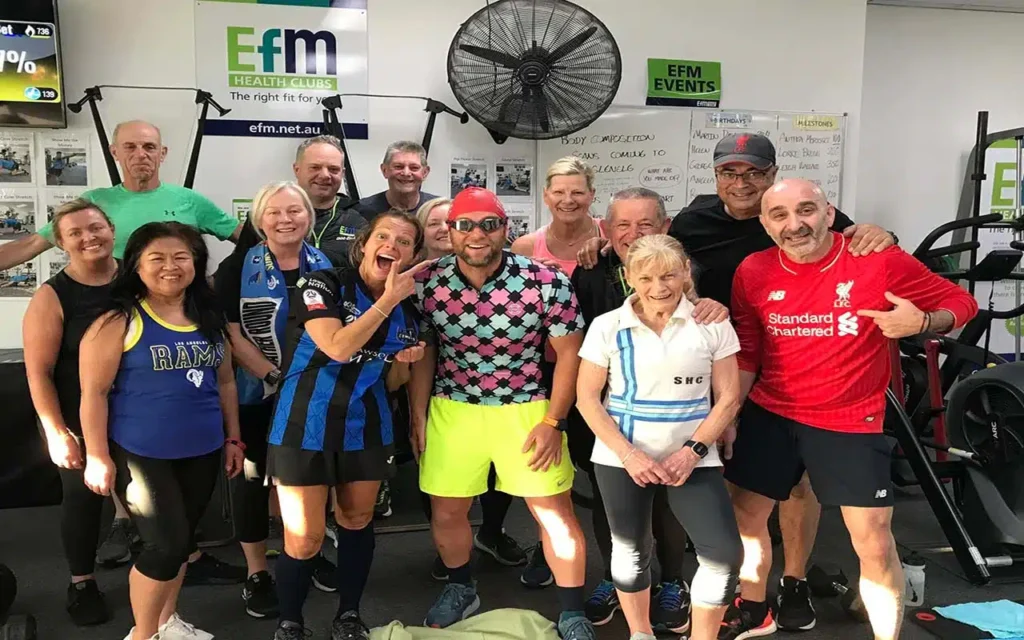
The social side of group training should not be underestimated. For many members, the people around them become an important part of why they enjoy coming to the gym.
Exercise creates an easy shared interest. You may be training for completely different reasons, but everyone has made the decision to spend part of their day becoming more active.
That can make conversation and connection happen naturally.
This does not mean you need to be highly social to enjoy group fitness. Some members prefer to concentrate quietly on their workout. The benefit is simply knowing that you are exercising in a supportive environment rather than always doing it alone.
Community has been an important part of EFM Glenelg throughout our more than 15 years serving the local area.
We have seen members begin as strangers and gradually become familiar training partners. That sense of belonging can turn the gym from somewhere you have to visit into somewhere you enjoy returning to.
8. Group Training Can Make Exercise More Enjoyable
Enjoyment matters more than many people realise. A technically perfect exercise program provides little benefit if you dislike it so much that you stop after three weeks.
Group sessions can make exercise feel more enjoyable because you are interacting with trainers, exercising alongside other members and completing workouts with a clear beginning and end.
The atmosphere can also help challenging exercises feel more manageable.
That does not mean every minute of every workout will be fun. Exercise still requires effort, and some sessions will feel harder than others.
The difference is that you are sharing that experience with other people.
The World Health Organization recommends adults complete at least 150 minutes of moderate-intensity physical activity per week, or at least 75 minutes of vigorous activity, along with muscle-strengthening activities on two or more days. Read the WHO physical activity recommendations.
Finding an enjoyable way to exercise can make reaching those recommendations easier.
Group Fitness Compared With Training Alone
There is no rule saying group training is always better than exercising independently. Both approaches can be effective when they suit the individual.
The main differences usually involve structure, coaching and social interaction.
| Training Factor | Group Fitness | Independent Training |
|---|---|---|
| Workout structure | Usually provided | You plan your own session |
| Trainer support | Available during sessions | Depends on membership |
| Social interaction | Higher | Usually lower |
| Accountability | Often stronger | Mostly self-managed |
| Exercise flexibility | Exercises can be modified | Complete control over exercises |
| Beginner guidance | Usually available | May require separate support |
| Motivation | Group environment can help | Depends heavily on the individual |
Some people prefer complete independence. Others benefit from knowing that someone has planned the session and will be available if they need help.
The right option is the one you can maintain while continuing to make progress.
Can Group Fitness Help With Weight Management?
Group fitness can contribute to weight management because it increases physical activity and energy expenditure. However, no individual exercise class can guarantee weight loss.
Body weight is influenced by several factors, including nutrition, overall activity, sleep, health conditions and individual physiology.
This is why we avoid presenting group exercise as a quick solution.
Instead, think about the broader benefits. Regular sessions can help improve cardiovascular fitness, build or maintain muscle and create a more active weekly routine.
Resistance training is particularly useful because maintaining muscle is important for physical function and long-term health.
If changing body composition is your goal, combine appropriate exercise with sustainable eating habits rather than relying on extremely restrictive diets or excessive workouts.
Most importantly, give yourself enough time.
Fitness and body composition changes occur gradually. A routine that you can follow consistently for six months will usually be more useful than an aggressive approach that lasts only a few weeks.
What Should You Expect From Your First Group Fitness Class?
Your first class should be about becoming familiar with the environment rather than proving how fit you are.
Arrive with enough time to speak with the trainer before the session. Let them know that you are new and mention any relevant injuries or movement limitations.
During the workout, focus on technique and understanding each exercise. You do not need to use the same resistance or pace as experienced members.
A few simple things can make your first session easier:
- Wear comfortable training clothes and appropriate footwear.
- Bring water and stay hydrated.
- Arrive early enough to meet your trainer.
- Ask questions when an exercise is unclear.
- Start with manageable resistance.
- Focus on your own workout rather than other members.
- Allow yourself time to learn.
Nobody starts as an expert.
A supportive class should make you feel comfortable learning and progressing at your own pace.
How Often Should You Attend Group Fitness Classes?
How frequently you should attend depends on your goals, fitness level, training intensity and other physical activities.
For someone starting out, two or three structured sessions per week can be a manageable foundation. You might then combine those workouts with walking or other lighter activities throughout the week.
Australian physical activity guidelines recommend adults complete moderate to vigorous physical activity for at least 30 minutes on most days, preferably every day. Muscle-strengthening activities should also be completed on at least two days each week. View the Australian Government recommendations.
That does not mean every session needs to be intense.
Recovery is still important, particularly when group sessions include demanding resistance or high-intensity exercises.
Start with a frequency that fits your lifestyle. Once training becomes consistent, you can adjust your schedule based on your progress and recovery.
Group Fitness Classes in Glenelg
If you live or work around Glenelg, choosing a local training environment can make exercise easier to fit into your routine.
Convenience matters. A workout is much easier to complete when you do not need to travel across Adelaide every time you want to train.
At EFM Glenelg, we take a personalised approach to group training. Members exercise together, but that does not mean everyone needs to have the same ability or complete every exercise at the same level.
Our trainers can adapt movements and resistance based on individual experience and fitness.
We also understand that people’s goals change. Someone may initially join to improve general fitness and later become interested in strength, mobility or another area of physical performance.
If you are considering structured training, explore our fitness services and learn more about the options available at EFM Glenelg.
How to Choose the Right Group Fitness Class
Not every group fitness class will suit every person. Before joining, think about what you want from your training and what type of environment makes you comfortable.
Start by considering the coaching. A good trainer should be able to explain exercises clearly and provide alternatives when needed.
Class size also matters. In a very large group, it may be more difficult for an instructor to observe individual technique. Smaller or more personalised training environments can provide greater opportunities for feedback.
You should also consider the overall training style.
If your goal is strength, make sure the program includes appropriate resistance training. If you prefer general fitness, a combination of cardiovascular and strength work may suit you better.
Finally, pay attention to how the environment feels.
The right class should challenge you without making you feel that you need to compete with everyone around you. You should leave feeling that your time and effort had a clear purpose.
Why Group Personal Training Is Different
Group personal training combines some of the social benefits of a class with greater attention to individual exercise needs.
In a traditional fitness class, everyone may follow the same workout. Group personal training can provide more flexibility. Exercises, resistance and intensity can be adjusted according to the individual while members still train together.
We have found this particularly useful for groups containing people with different fitness backgrounds.
For example, two members might both perform a lower-body exercise. One could use a bodyweight squat while another works with additional resistance. The movement pattern is similar, but the challenge is appropriate for each person.
This allows beginners and experienced members to share a training environment without needing identical programs.
For people who enjoy social exercise but still want professional guidance, group personal training at EFM Glenelg can provide a practical balance between community and personalised support.
Final Thoughts
Group fitness classes in Australia remain popular because they solve several common challenges people face when trying to exercise consistently. They provide structure, trainer support, variety, accountability and the opportunity to train alongside other people.
Most importantly, group training can make exercise feel like something you want to continue rather than another obligation on your weekly schedule.
At EFM Glenelg, we have seen the value of this approach throughout more than 15 years serving the Glenelg community. People arrive with different goals and fitness levels, but they can still train together when exercises are appropriately adapted.
If you are new to group fitness, you do not need to wait until you feel fit enough to start. Find a supportive environment, speak with the trainers and begin at a level that suits you.
Your first goal does not need to be dramatic. Show up, learn the movements and build consistency. Fitness develops from there.