If you want to build a stronger upper body without filling your workout with dozens of exercises, compound movements are an excellent place to start. Upper body compound exercises involve several joints and muscle groups working together during the same movement, making them an efficient addition to a strength program.
Exercises such as bench presses, pull-ups and rows allow you to train your chest, shoulders, back, arms and stabilising muscles through a relatively small number of movements. The original EFM Glenelg article also highlights efficiency, functional strength and multi-muscle recruitment as key reasons for including these movements in a workout.
At EFM Glenelg, we regularly use compound movements as part of structured strength training. However, the exercise should always suit the person. Your experience, mobility, technique and goals should determine which variation you use and how much resistance you apply.
What Are Upper Body Compound Exercises?
Upper body compound exercises are movements where two or more joints contribute significantly to the exercise. Because several joints are moving, multiple muscle groups usually have to work together.
Take the bench press as an example. Your shoulder and elbow joints both move while the chest, shoulders and triceps contribute to pressing the weight. During a pull-up, your shoulders and elbows move while your back, biceps, forearms and stabilising muscles work together.
This is different from many isolation exercises. A biceps curl, for example, primarily involves movement at the elbow and places greater emphasis on one muscle group.
Neither approach is automatically superior. Isolation movements can be useful when you want additional work for a particular muscle. Compound exercises are particularly practical when you want to train several areas efficiently.
For most people, a balanced strength program can include both, with compound movements forming much of the foundation.
Benefits of Upper Body Compound Exercises
One of the biggest benefits of compound training is efficiency. Instead of performing separate exercises for every muscle, you can train several muscle groups during one movement.
That can be valuable when you only have 45 to 60 minutes available for a workout.
Compound movements can also improve the ability of different muscles to coordinate during pushing and pulling activities. That has practical value in sport and everyday activities such as lifting, carrying and moving objects.
Australian movement guidelines recommend adults complete muscle-strengthening activity on two or more days each week. Compound exercises can help train several major muscle groups within those sessions.
Research has also found that multi-joint resistance exercises can be effective for increasing muscle size and strength. One study found no additional strength or muscle-size benefit from adding single-joint exercises to an existing multi-joint program among previously untrained young men.
The practical takeaway is simple. You do not need an unnecessarily complicated workout to become stronger.
7 Upper Body Compound Exercises at a Glance
The best exercise for you depends on your ability and goals, but these seven movements provide several useful pushing and pulling patterns.
| Exercise | Main Muscles Trained | Movement Type | Beginner Option |
|---|---|---|---|
| Bench press | Chest, triceps, shoulders | Horizontal push | Dumbbell chest press |
| Pull-up | Lats, biceps, upper back | Vertical pull | Assisted pull-up |
| Overhead press | Shoulders, triceps | Vertical push | Seated dumbbell press |
| Bent-over row | Lats, traps, biceps | Horizontal pull | Supported dumbbell row |
| Dips | Chest, triceps, shoulders | Push | Assisted dips |
| Lat pulldown | Lats, biceps, upper back | Vertical pull | Light cable pulldown |
| Push-up | Chest, shoulders, triceps | Horizontal push | Incline push-up |
You do not need to perform all seven during the same session.
Choosing three or four movements that complement one another can often provide a more practical workout, particularly if you are new to resistance training.
1. Bench Press
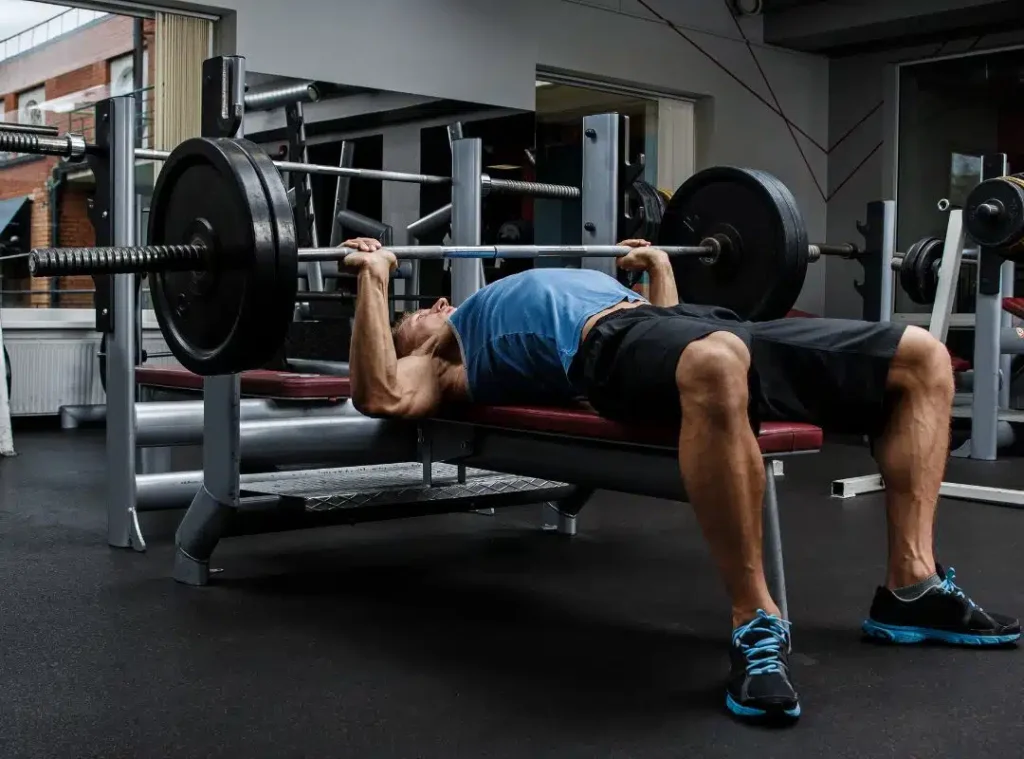
The bench press is one of the best-known compound upper body exercises. It mainly trains the chest while the front shoulders and triceps assist with pressing the weight away from your body. The original article identifies the same three areas as the main muscles involved.
You can perform the movement with a barbell, dumbbells or some resistance machines.
When using a barbell, keep your feet stable on the floor and create a secure position through your upper back. Lower the weight under control rather than allowing it to drop quickly towards your chest.
The amount of weight you lift is less important than maintaining good control.
Beginners may feel more comfortable starting with dumbbells or a chest press machine. These options still train a similar pushing pattern while allowing resistance to be adjusted easily.
As your strength improves, increase the challenge gradually rather than continually testing your maximum lift.
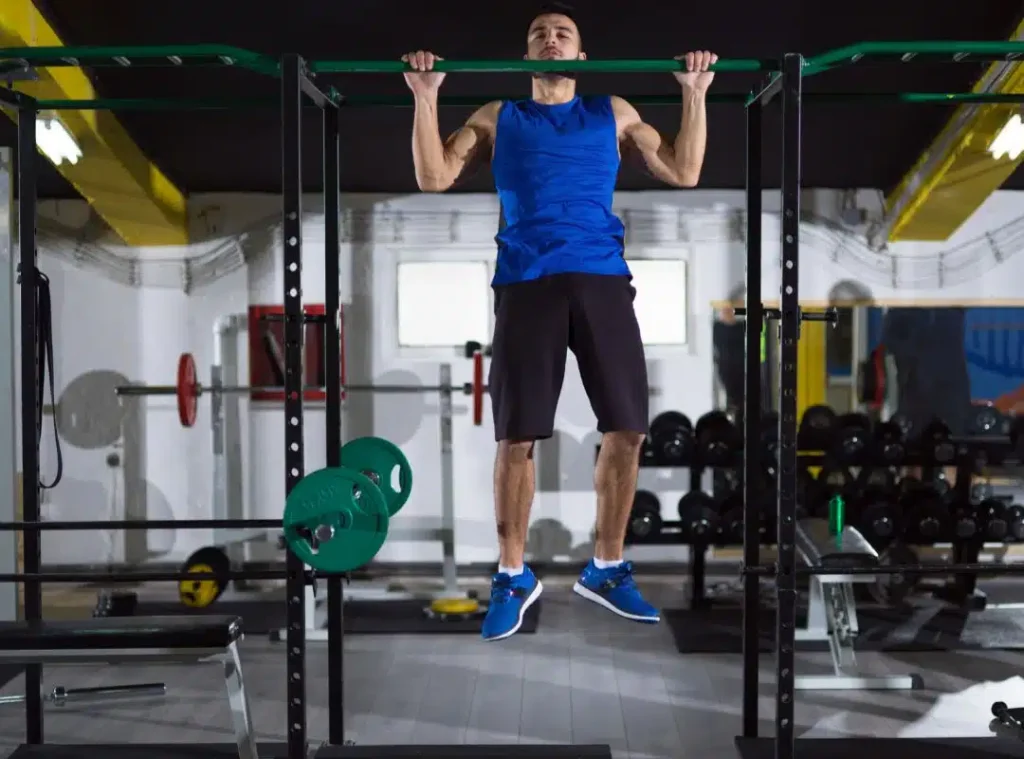
2. Pull-Ups

Pull-ups are an effective vertical pulling exercise that primarily train your latissimus dorsi while also involving the biceps, forearms and other muscles across the upper back. They also require your trunk to remain stable while you move your body.
The original EFM Glenelg article recommends assisted machines or resistance bands for beginners who are not yet able to complete an unassisted repetition.
That is an approach we regularly encourage.
You do not need to perform a full bodyweight pull-up on your first day for the exercise to be useful. An assisted version allows you to practise the movement while developing enough strength to progress gradually.
Focus on initiating the movement through your back and controlling the lowering phase rather than swinging your body towards the bar.
As your strength improves, reduce the amount of assistance. Eventually, you may progress to bodyweight repetitions and potentially additional resistance if that suits your goals.
3. Overhead Press
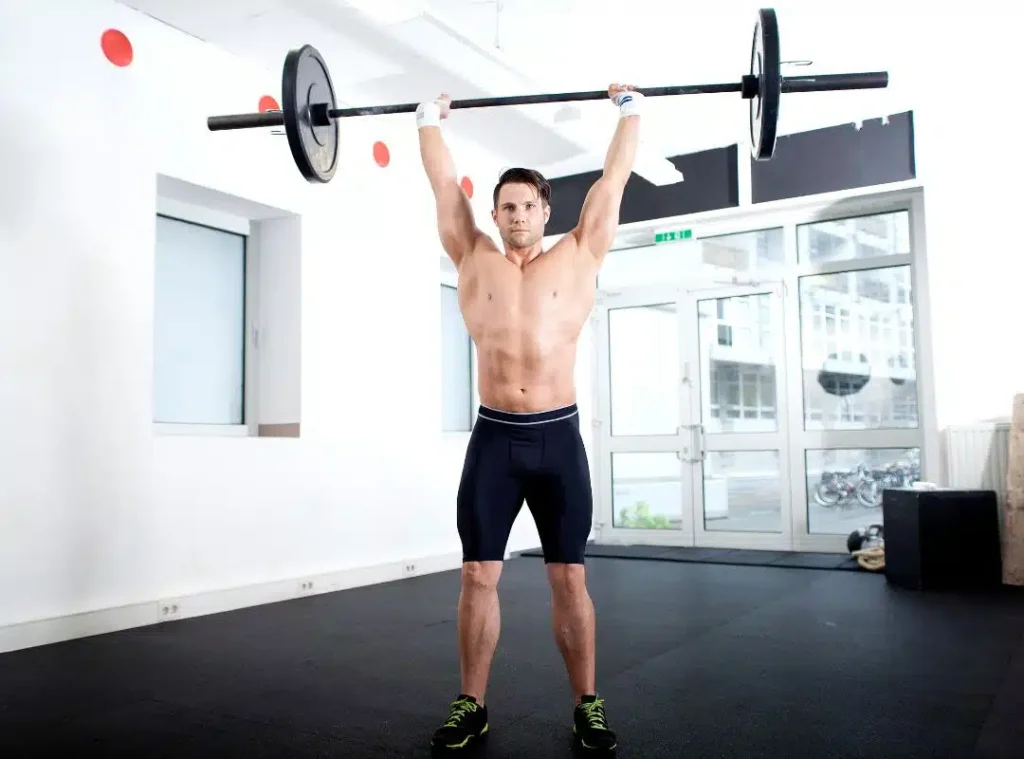
The overhead press trains the shoulders and triceps while requiring your torso to remain stable as you move resistance above your head. It can be performed standing or seated using a barbell, dumbbells or suitable resistance machines.
Standing variations place more demand on trunk stability because you have to control your entire body while pressing.
However, heavier does not necessarily mean better.
One common mistake is leaning backwards excessively to move a weight that is too challenging. If you cannot maintain a comfortable, controlled position, reducing the resistance is usually a better choice.
Dumbbells can be a good starting option because each arm works independently and the load can be adjusted easily.
The original article also highlights core stability and avoiding excessive backward lean as important parts of this movement.
Overhead pressing works particularly well when balanced with pulling exercises such as rows or lat pulldowns.
4. Bent-Over Rows
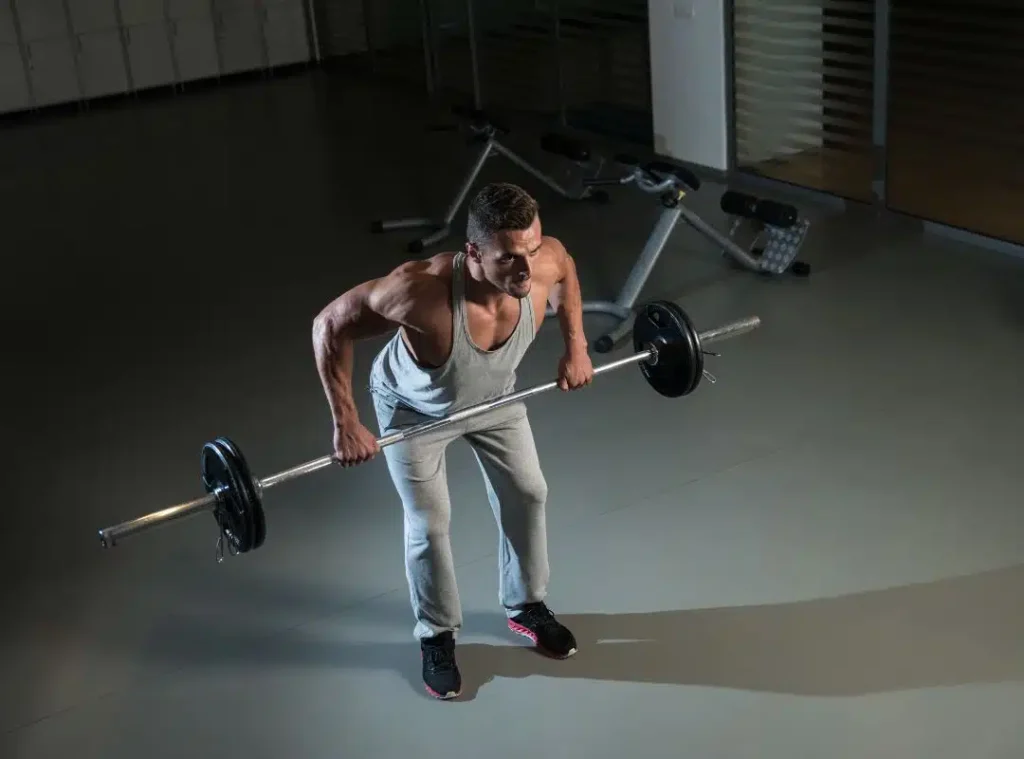
Bent-over rows are one of our preferred upper body compound exercises when the goal is to develop horizontal pulling strength.
The movement primarily targets the lats, rhomboids and trapezius while the biceps assist with pulling. Your trunk and lower body also contribute by helping you maintain the bent-over position.
Start by hinging through your hips and establishing a stable torso. From there, pull the resistance towards your body without using excessive momentum.
The original article correctly places particular importance on keeping a stable back position and avoiding excessive rounding through the shoulders.
If you find maintaining the hinged position difficult, a chest-supported row or one-arm dumbbell row can be an excellent alternative.
The important part is not whether you use a barbell. It is creating a controlled pulling movement that challenges your back muscles appropriately.
Gradually increase resistance once you can repeat the movement with consistent technique.
5. Dips

Dips are a bodyweight pressing exercise that train the triceps, chest and shoulders. Because your body moves through space rather than simply moving a weight, they can provide a substantial challenge even without additional resistance.
Your body position changes the emphasis slightly. A greater forward lean can involve more chest, while a more upright position tends to place greater emphasis on the triceps.
However, dips are not suitable for everyone.
Some people find the bottom position uncomfortable around the shoulders. You do not need to force a particular depth simply because another person can move lower.
The original EFM article similarly advises controlling depth and avoiding unnecessarily low positions that may place additional strain on the shoulders.
Beginners can use an assisted dip machine or choose another pressing exercise first.
If dips feel comfortable and your technique is consistent, assistance can gradually decrease as your strength improves.
6. Lat Pulldown

The lat pulldown follows a similar movement pattern to a pull-up, but the resistance can be adjusted much more easily. This makes it particularly useful for beginners or anyone building the strength required for bodyweight pulling.
Sit securely and pull the bar towards your upper chest while directing your elbows downwards. Avoid using excessive momentum or leaning far backwards simply to move a heavier load.
The primary target is the latissimus dorsi, although your biceps and other upper-back muscles also contribute.
The original article identifies the lat pulldown as an accessible progression towards pull-ups because resistance can be adjusted to match the individual.
We find that particularly useful in coached programs.
If you cannot yet perform a pull-up, that does not mean your back training has to wait. Pulldowns allow you to practise vertical pulling immediately and gradually increase resistance as you become stronger.
7. Push-Ups

Push-ups are one of the simplest compound exercises, but simple does not mean ineffective. They train the chest, triceps and shoulders while requiring your core and lower body to maintain a stable position.
They also need almost no equipment.
The standard push-up is not necessarily the correct starting point for everyone. If completing a full repetition causes your hips to drop or your body position to break down, raise your hands onto a bench or another stable elevated surface.
As your strength improves, gradually lower the height.
More advanced variations can include slower repetitions, pauses, additional resistance or different hand positions.
The original article also highlights incline, decline and other push-up variations as ways of adjusting the challenge.
A well-controlled incline push-up is more valuable than repeatedly forcing poor-quality floor repetitions. Choose the variation that lets you train with good technique.
How Many Sets and Reps Should You Do?
There is no single perfect repetition range for everyone. Your training should reflect whether your main goal is strength, muscle growth, general fitness or a combination of these.
For many recreational gym members, a practical starting point is two to four sets per exercise using a resistance that becomes challenging while still allowing good technique.
The original article suggests three sets of roughly 8 to 12 repetitions for beginners. This can still be a useful general framework, but it should not be treated as a fixed rule.
The American College of Sports Medicine’s updated 2026 resistance training guidance emphasises that consistent resistance training matters more than complicated programming and recommends training all major muscle groups at least twice weekly for healthy adults. The updated evidence review covered more than 137 studies and over 30,000 participants.
Start with manageable resistance and build from there.
How Often Should You Train Your Upper Body?
For general health, Australian guidelines recommend adults perform muscle-strengthening activities on at least two days each week.
That gives us a useful starting point, although your exact schedule will depend on your training program.
A beginner might complete two full-body sessions each week, with upper body compound exercises included in both. Someone with more training experience might split their week into upper and lower body sessions.
For example, you could train your upper body on Monday and Thursday while completing lower-body or other activities on different days.
The important part is leaving enough recovery between demanding sessions.
You also do not need to train every muscle with maximum effort every day. Your body adapts during the time between workouts as well as during the session itself.
A routine you can repeat consistently is much more useful than an aggressive schedule that leaves you constantly sore or fatigued.
How to Build an Upper Body Compound Workout
An effective upper body workout does not need seven compound exercises performed back to back.
In fact, trying to complete every movement on this list in one session may add unnecessary fatigue.
A balanced session could include one horizontal push, one horizontal pull, one vertical push and one vertical pull. For example, you might perform a bench press, bent-over row, overhead press and lat pulldown.
A simple structure could look like this:
- Bench press for 3 sets
- Bent-over row for 3 sets
- Overhead press for 2 to 3 sets
- Lat pulldown for 2 to 3 sets
You could then add one or two smaller exercises if they support your goals.
This approach gives you substantial upper body coverage without making the workout unnecessarily long.
If you are new to training, fewer exercises performed well will generally be more productive than trying to fit every possible movement into one session.
Compound Exercises vs Isolation Exercises
You do not have to choose exclusively between compound and isolation exercises.
Compound movements are useful when you want to train several muscle groups efficiently. Isolation exercises allow you to place more direct attention on one particular area.
Research comparing the two approaches suggests that both can contribute to strength and muscle development. One study involving untrained men found similar increases in upper-body strength and muscle size from single-joint and multi-joint resistance training, suggesting that exercise selection should consider practical factors such as goals, available equipment and personal preference.
In practice, we often structure a workout around larger compound movements and then add isolation exercises where they provide a clear benefit.
For example, a program might include bench presses and rows before finishing with lateral raises or biceps curls.
The key is avoiding unnecessary exercises simply because you believe more movements automatically produce better results.
Common Mistakes With Compound Upper Body Exercises
Compound movements can be highly effective, but they also give you more opportunities to compensate when resistance becomes too heavy.
One of the most common mistakes we see is allowing the amount of weight to become more important than the quality of the movement.
Technique should remain consistent as resistance increases.
Other common mistakes include:
- Adding weight before establishing good form
- Using excessive momentum during rows and pulldowns
- Ignoring pulling exercises while performing too many presses
- Training through persistent joint pain
- Copying advanced exercises before developing the required strength
- Changing the workout so often that progress becomes difficult to measure
- Performing every set to complete muscular failure
Current evidence does not show that taking every resistance-training set to failure is necessary for improving strength or muscle growth.
Train hard enough to provide a challenge, but do not confuse unnecessary exhaustion with productive training.
Progressive Overload for Upper Body Strength
Once an exercise becomes easier, your body needs a greater challenge if you want strength and muscle development to continue.
This is known as progressive overload.
Adding weight is one way to progress, but it is not the only method. You can also perform additional repetitions, improve range of motion, add another set or complete the movement with better control.
For example, imagine you currently bench press a particular weight for three sets of eight repetitions. Over several weeks, you might progress to three sets of ten using the same weight before adding a small amount of resistance.
This method makes progression measurable.
Keeping a simple training record helps considerably. Write down your exercises, resistance, sets and repetitions.
At EFM Glenelg, we encourage gradual improvement rather than constantly chasing personal records. Progress that you can repeat with good technique provides a much stronger foundation than an occasional heavy lift performed poorly.
Are Compound Exercises Good for Beginners?
Yes. Beginners can benefit significantly from compound exercises when the movements and resistance are appropriate.
The important point is that a beginner does not need to start with the most advanced version.
You can perform a dumbbell chest press rather than a heavy barbell bench press. An assisted pull-up can replace an unassisted version. A seated dumbbell press may be more appropriate than a heavy standing barbell press.
These modifications still teach the same general movement patterns.
We prefer to help beginners become comfortable with pushing, pulling and stabilising before increasing complexity.
This is also where professional guidance can be useful. A trainer can observe your movement and adjust exercises rather than forcing you to follow a generic program.
If you are just starting out, our guide to workouts for beginners provides additional ideas for building a manageable training routine.
Why Balanced Push and Pull Training Matters
Upper body workouts sometimes become dominated by pressing exercises. Bench presses, push-ups and dips receive plenty of attention, while rows and other pulling movements are treated as secondary.
A balanced program should include both.
Pressing movements primarily train the chest, shoulders and triceps. Pulling exercises place more emphasis on the back and biceps.
Including both patterns helps develop a more complete upper body and prevents one area of your program from receiving nearly all the training volume.
This does not mean you need exactly one pulling set for every pushing set in every workout. Your ideal balance depends on your goals and current program.
We simply recommend not overlooking your back because pressing exercises are easier to see or more familiar.
Exercises such as bent-over rows, pulldowns and pull-ups deserve a regular place in most upper body programs.
Your training should develop what your body can do, not just the muscles you can see in the mirror.
Final Thoughts
Upper body compound exercises can make strength training simpler and more efficient. Movements such as bench presses, pull-ups, overhead presses, rows, dips, lat pulldowns and push-ups allow multiple muscle groups to work together during the same exercise.
You do not need to perform all seven every time you train.
Choose movements that suit your body and goals, learn the technique and increase the challenge gradually. Combining pushing and pulling exercises will also help create a more balanced upper body program.
At EFM Glenelg, we have spent more than 15 years helping members of different fitness levels become stronger and more confident in the gym. Our approach is based on structured training that can be adjusted to the individual rather than expecting everyone to exercise in exactly the same way.
If you want help building a strength routine around your ability and goals, learn more about personal training in Glenelg and explore our other practical fitness guides.