We use our hands constantly, whether we are lifting weights, typing, carrying shopping, playing sport, or completing everyday tasks. Yet hand and finger strength rarely receive the same attention as larger muscle groups.
Simple hand exercises can help develop grip strength, finger control, mobility, and coordination. They can also be useful for people who want stronger hands to support exercises such as deadlifts, pull-ups, rows, and other movements where grip can become a limiting factor.
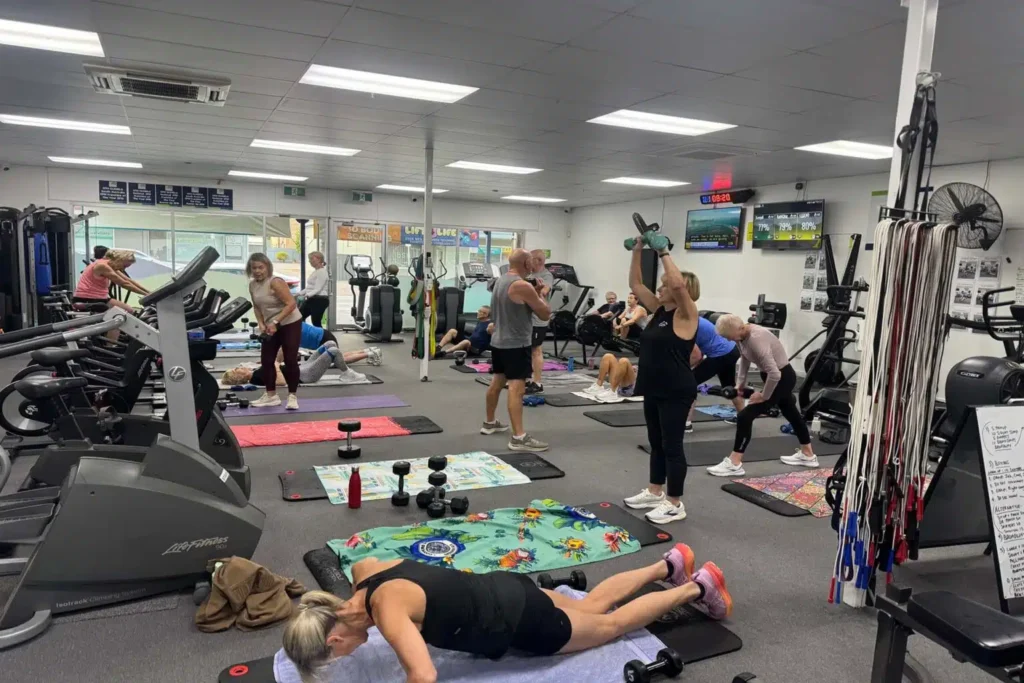
At EFM Glenelg, we believe the smaller details of physical fitness matter. Your hands connect you to almost every piece of equipment you use in the gym, so maintaining good hand and grip function can support your wider training.
The following seven exercises require little equipment and can easily be added to a warm-up, recovery routine, or general fitness program.
Why Are Hand Exercises Important?
Your hands contain a complex combination of bones, joints, tendons, ligaments, muscles, and nerves that work together whenever you grip or manipulate an object.
Hand exercises can target different qualities depending on the movement you choose. Squeezing exercises challenge grip strength, while controlled finger movements can work on dexterity and range of motion.
For gym members, grip strength is particularly important.
During pull-ups, deadlifts, rows, carries, and many dumbbell exercises, your hands must maintain contact with the equipment while larger muscles produce force. If your grip tires early, you may have to stop the set before the muscles you intended to train are sufficiently challenged.
However, hand exercises should be performed sensibly. If you have persistent pain, swelling, numbness, tingling, or a recent hand or wrist injury, exercise should not replace professional assessment. Speak with an appropriate healthcare professional before pushing through symptoms.
Benefits of Hand and Finger Exercises
Hand training does not need to be complicated to be useful. A few carefully selected exercises can work on several aspects of hand function.
For active adults and gym members, the most obvious benefit is stronger gripping ability. This can support resistance exercises where you need to hold a barbell, dumbbell, kettlebell, cable attachment, or pull-up bar.
Finger exercises can also provide controlled movement through different ranges.
Some of the main areas you can work on include:
- Grip and hand strength
- Finger mobility and control
- Pinching strength
- Wrist mobility
- Hand coordination
- Muscular endurance during gripping activities
The exact benefit will depend on the exercise and the person performing it.
More resistance is not automatically better. Small muscles and joints can become irritated if you suddenly perform excessive gripping work, particularly when your normal gym program already contains plenty of pulling exercises.
Start gradually and focus on controlled movement.
7 Best Hand Exercises at a Glance
Here is a simple overview of the exercises and what each one primarily focuses on.
| Exercise | Main Focus | Equipment |
|---|---|---|
| Ball Squeeze | Grip strength | Soft ball |
| Finger Flexion and Extension | Finger mobility | None |
| Wrist Rotations | Wrist mobility | None |
| Finger Walking | Dexterity and coordination | Wall or table |
| Finger Pinches | Pinch strength | Soft object |
| Wrist Flexion and Extension | Wrist mobility and control | None |
| Finger Spreads | Finger control | None or elastic band |
You do not need to perform every exercise every day. Choose movements that match your goal and current ability.
For general hand fitness, performing a few exercises several times per week can be an easy addition to your existing routine.
1. Ball Squeeze for Grip Strength
A ball squeeze is one of the simplest hand strengthening exercises and can be performed almost anywhere.
Hold a soft exercise ball, stress ball, or similar squeezable object in one hand. Wrap your fingers naturally around it and squeeze gradually rather than gripping as hard as possible immediately.
Hold the squeeze briefly, then release the pressure slowly.
You could begin with around 8 to 12 controlled repetitions on each hand.
The resistance should be firm enough to challenge your grip without causing pain in your fingers, wrist, or forearm.
As your hand becomes stronger, you can gradually use a firmer ball or increase the number of controlled repetitions.
Avoid turning this into an endurance contest. Hundreds of repetitions are unnecessary for most people.
At EFM Glenelg, we prefer progressive training. Start with a manageable amount, see how your hands respond, and build from there.
2. Finger Flexion and Extension
Finger flexion and extension is a simple mobility exercise that requires no equipment.
Begin with your hand open and your fingers comfortably straight.
Slowly bend your fingers towards your palm to form a loose fist. Avoid squeezing unnecessarily hard. Then gradually open your hand again and extend your fingers to a comfortable position.
Repeat the movement approximately 8 to 15 times.
The goal is smooth, controlled movement through a comfortable range.
You can also practise bending individual fingers, although some fingers naturally move together because of the anatomy of the hand.
This exercise can be particularly convenient for people who spend long periods typing or performing repetitive hand tasks because it gives the fingers an opportunity to move through a different pattern.
However, exercise should not be used to self-treat unexplained hand pain.
If bending or straightening a finger causes persistent pain, locking, significant swelling, or other concerning symptoms, seek professional advice.
3. Wrist Rotations
Your hands and wrists work closely together, which is why wrist mobility deserves attention in a hand exercise routine.
Hold your arms comfortably in front of you or keep your elbows close to your sides.
Slowly move your wrists through gentle circles. Complete several repetitions in one direction before reversing the movement.
Keep the circles controlled rather than rapidly spinning your hands.
Around 5 to 10 rotations in each direction can be enough as part of a warm-up.
Wrist rotations may be particularly useful before gym exercises that require you to grip equipment, although they should be combined with a broader warm-up for the activity you are about to perform.
Do not force your wrist into the largest possible circle.
Mobility work should remain within a comfortable range. If you have an existing wrist injury or experience pain during rotation, stop the movement and seek appropriate advice rather than trying to stretch through the discomfort.
4. Finger Walking
Finger walking introduces coordination and individual finger movement into your hand routine.
Place your fingertips against a wall or flat table.
Slowly move your fingers one at a time so they appear to “walk” across or upwards along the surface. Reverse direction once you have travelled a comfortable distance.
Try to make each movement deliberate.
You can practise for approximately 20 to 30 seconds before resting and repeating with the other hand.
Unlike a hard gripping exercise, finger walking is more focused on controlled movement and dexterity.
This makes it a useful addition when you want variety rather than simply performing repeated squeezing movements.
You can also change the direction by moving your fingers sideways across a table.
The exercise should remain comfortable throughout.
If a finger is recovering from an injury, surgery, or medical condition, do not assume that general finger exercises are appropriate. Follow the rehabilitation plan provided by your physiotherapist, occupational therapist, or other healthcare professional.
5. Finger Pinches
Pinching strength is different from wrapping your entire hand around an object, so it can be useful to train it separately.
Choose a soft object that can be safely held between your thumb and finger.
Gently pinch it between your thumb and index finger for a few seconds, then relax. Repeat with the middle, ring, and little fingers if each movement feels comfortable.
Start with light resistance.
You could perform approximately 5 to 8 controlled repetitions for each finger combination.
Avoid using an object that requires maximum effort to hold.
For gym training, stronger hands can contribute to your ability to control equipment, but pinch exercises should complement normal resistance training rather than dominate your program.
You may also notice that one finger combination feels stronger than another. That is not necessarily a problem.
Focus on comfortable, controlled movement rather than trying to make every finger produce exactly the same amount of force.
6. Wrist Flexion and Extension
Wrist flexion and extension can help you practise moving the wrist through two of its basic movement patterns.
Rest your forearm on a table or bench with your hand extending beyond the edge.
With your palm facing down, slowly move your hand upwards and then return towards the starting position. You can also perform a comfortable downward movement without forcing the joint.
Turn your forearm over if you want to practise the movement with your palm facing upwards.
Begin without weight.
Once the movement is easy and you have a specific strength goal, resistance can be introduced gradually as part of a structured training program.
Around 8 to 12 slow repetitions can be a reasonable starting point.
Keep your forearm relatively still so the movement comes primarily from the wrist.
If you experience sharp pain, numbness, or tingling, stop rather than attempting to complete your planned repetitions.
7. Finger Spreads
Finger spreads work the opposite action to repeatedly squeezing your hand closed.
Begin with your fingers together in a relaxed position.
Slowly spread them apart as far as comfortably possible. Pause briefly, then bring them back together.
Repeat for around 10 to 15 controlled repetitions.
For additional resistance, you can eventually place an appropriate elastic exercise band around your fingers and gently open against the resistance.
Start with very light resistance because small changes can make this exercise significantly harder.
Finger spreads can be paired with ball squeezes to create a simple routine that includes both opening and closing movements.
This is something we like about well-designed training at EFM Glenelg. Balance matters.
Rather than repeatedly training one action, think about the different ways your hands and wrists need to move during exercise and everyday life.
Again, resistance should never be increased at the expense of comfortable technique.
How to Add Hand Exercises to Your Gym Routine
You do not need a separate hour-long workout for your hands.
For most gym members, a short routine can be incorporated before or after regular training depending on the exercises and your goals.
If you are about to perform heavy pulling movements, avoid exhausting your grip beforehand. Fatiguing your hands with repeated ball squeezes before deadlifts or pull-ups could reduce your performance during the main workout.
Instead, keep pre-workout hand movements light.
More demanding grip exercises can be performed later in the session or programmed separately.
A simple routine might include one or two sets of ball squeezes, finger spreads, wrist movements, and finger mobility exercises.
Progress gradually.
If your normal training already includes pull-ups, rows, deadlifts, and loaded carries, your grip is receiving significant work. Additional hand exercises should support that training rather than create unnecessary fatigue.
Common Mistakes When Doing Hand Exercises
One of the biggest mistakes with hand strengthening exercises is assuming that more repetitions will always produce better results.
Your hands are already active throughout the day. Adding excessive gripping volume on top of gym training, work, and daily activities can leave them unnecessarily fatigued.
Another mistake is ignoring discomfort.
Exercise should challenge muscles, but persistent joint pain, numbness, tingling, swelling, or loss of function should not simply be treated by doing more exercises.
Technique matters too.
Perform movements slowly enough to maintain control. Use resistance appropriate to your ability and increase difficulty gradually.
Most importantly, match the exercise to your goal.
Someone wanting a stronger grip for deadlifts may need a different approach from someone simply looking to maintain comfortable finger movement.
There is no single hand routine that is ideal for everybody. Your training history, work activities, sport, previous injuries, and current symptoms all influence what is appropriate.
Final Thoughts
Hand exercises are simple, convenient, and easy to incorporate into a wider fitness routine. Ball squeezes can challenge grip strength, while finger spreads, finger walking, pinches, and controlled wrist movements provide different ways to work on hand and finger function.
The key is to keep your approach balanced.
You do not need hundreds of repetitions or extremely hard hand grippers to make a routine worthwhile. Start with comfortable resistance, use controlled movements, and increase the challenge gradually when appropriate.
For gym members, stronger hands can support exercises where grip plays an important role, including pull-ups, rows, deadlifts, and loaded carries. However, hand training should remain one part of a well-rounded strength and fitness program.
At EFM Glenelg, we focus on practical training that fits the individual. If you experience ongoing hand or wrist pain, swelling, numbness, tingling, or reduced function, seek advice from an appropriate healthcare professional before continuing or intensifying your exercises.