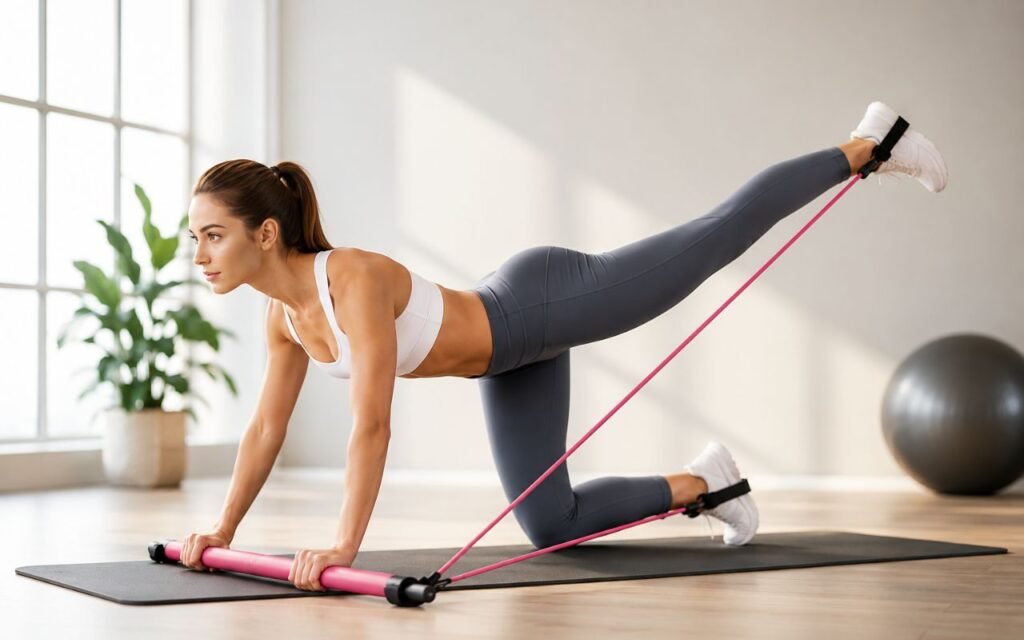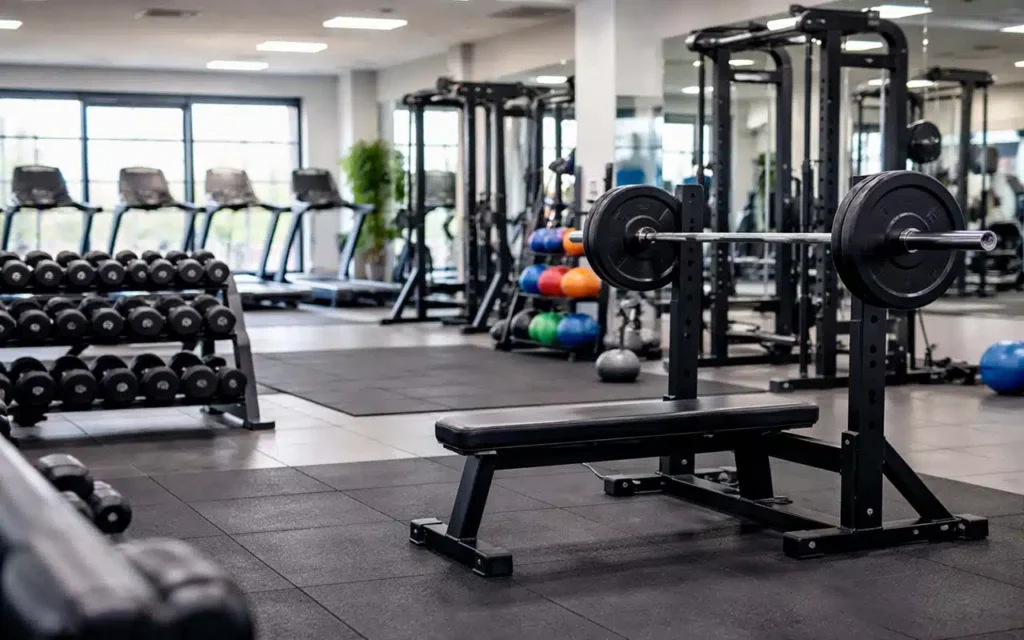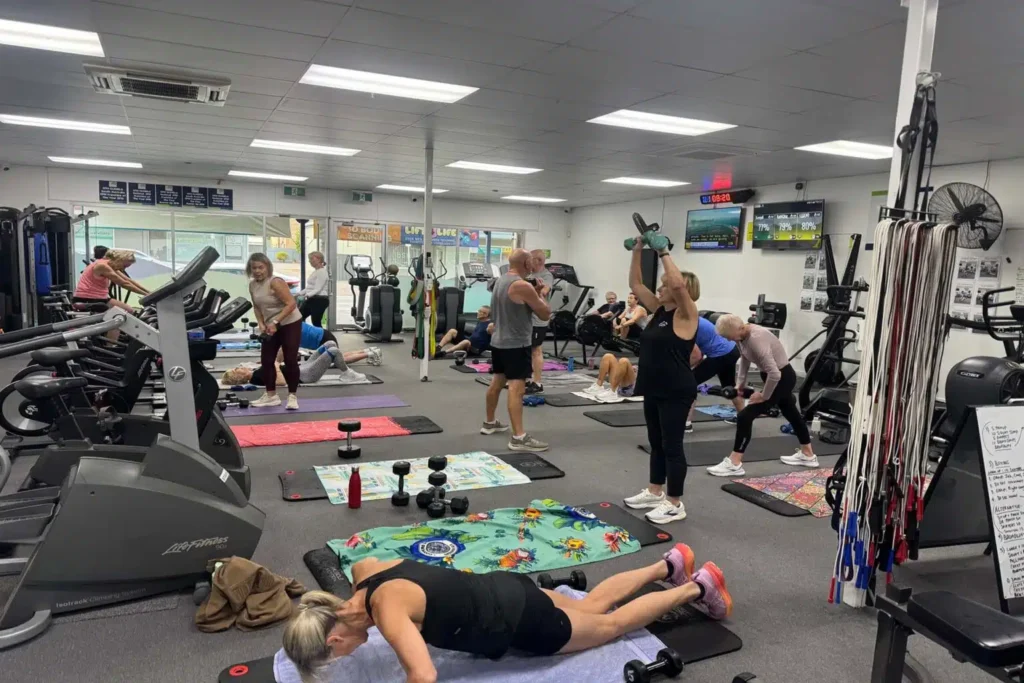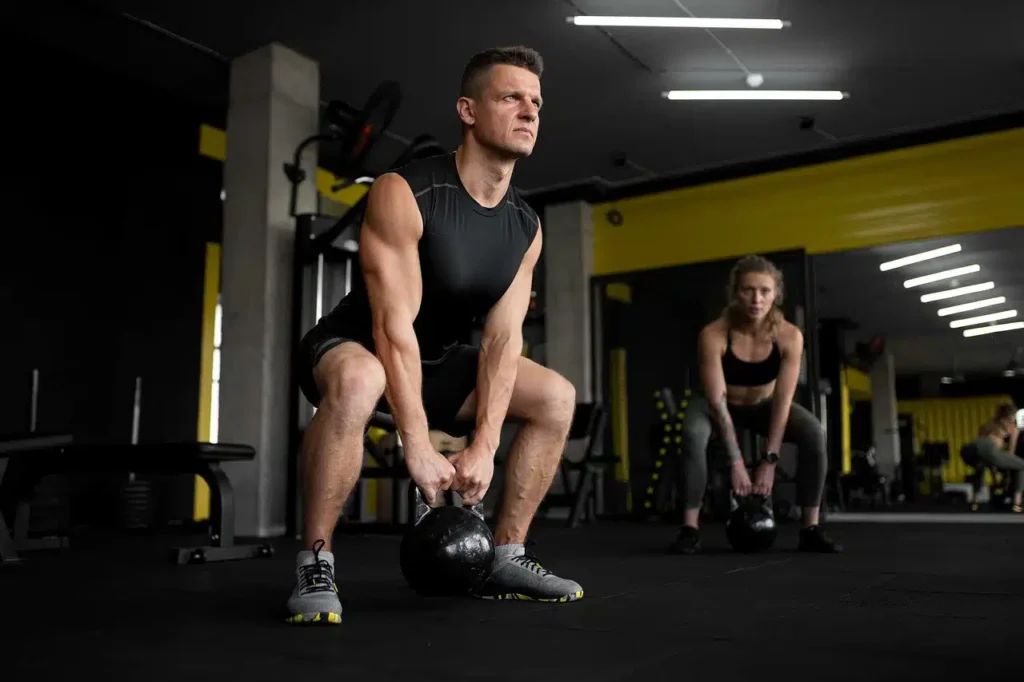
Starting strength work in your forties can feel daunting when the weights area is new. Search terms such as weight training over 40 female often lead to extreme plans or confusing rules. A useful program is simpler. It helps you learn sound movement, build strength steadily, and recover well enough to train again.
Your health, training history, and available time matter more than your birthday. Two planned sessions each week can be a sound beginning. This guide explains what to train and how to progress. Seek individual advice if you have an injury, health condition, or concerns about exercise.
Why Weight Training Over 40 Matters for Women
Resistance exercise asks your muscles to work against a weight, band, machine, or your body. Regular training can improve strength and make tasks such as lifting shopping or climbing stairs feel easier.
Strength work also supports bones, joints, balance, and physical function. Menopause can speed up bone loss for some women. Training is not a cure for hormonal change, but it can support a broader long-term health plan.
The Australian Government movement guidelines recommend muscle-strengthening activities on two or more days each week. They also recommend regular aerobic activity and work for mobility, balance, and coordination. A complete routine therefore includes more than lifting alone.
Before Weight Training Over 40 Female Beginners Should Prepare
You do not need to be fit before you start. You do need a starting point that suits your present ability. If you have chest pain, unexplained dizziness, uncontrolled blood pressure, a recent operation, or a significant joint problem, speak with a qualified health professional first. The same applies if you have osteoporosis or a high fracture risk.
In an early session, notice how comfortably you can squat to a bench, push, pull, hinge, and carry a light load. Technique should feel controlled, and you should breathe through each repetition. Wear shoes that allow stable movement and avoid testing your maximum strength. Beginner weight training is about learning repeatable skills.
Six Strength Exercises for Women Over 40
A balanced program trains major movement patterns rather than one body part at a time. The following exercises are useful starting options. Each can be made easier or harder.
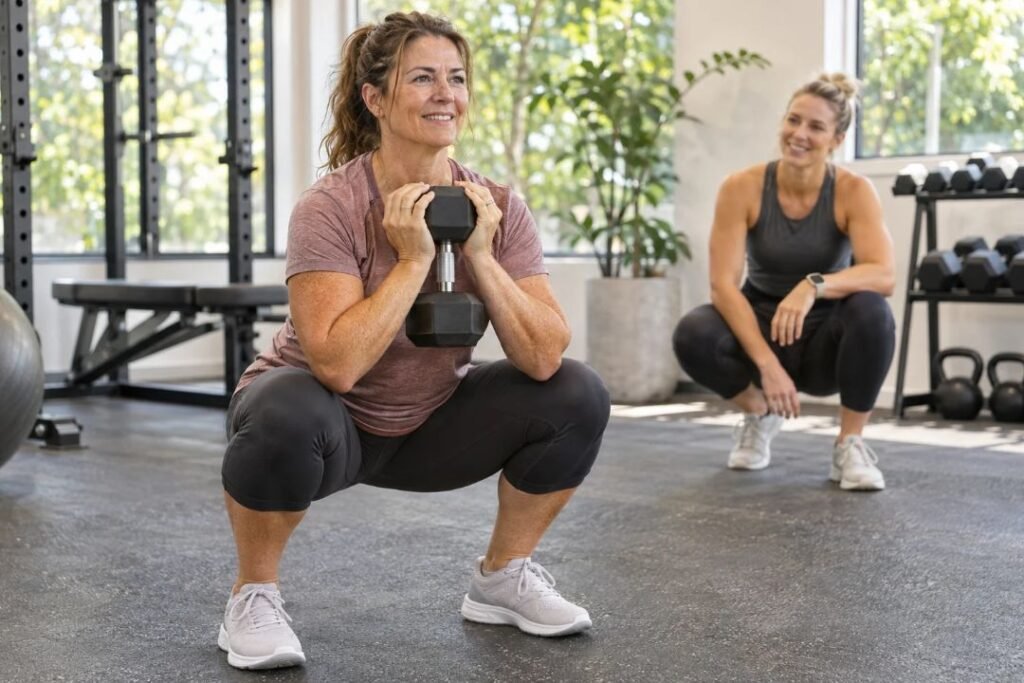
Box squat or goblet squat
Sit back towards a bench, keep your feet firm, and stand by pushing through the floor. A box gives you a clear target and may improve confidence. When that feels easy, hold a dumbbell close to your chest.
Squats train the thighs and hips. Use a depth you can control without pain or loss of balance.
Dumbbell Romanian deadlift
Hold light dumbbells by your thighs. Soften your knees, move your hips back, and keep the weights close to your legs. Stand tall by driving your feet into the floor and bringing your hips forward.
This trains the glutes, hamstrings, and back. Use a small range until your spine stays steady.
Seated cable row
Sit tall, draw the handle towards your lower ribs, and let your shoulder blades move naturally. Avoid leaning far back or shrugging your shoulders.
Rows strengthen the upper back and arms while balancing pushing work.
Incline push-up or chest press
Place your hands on a sturdy raised surface for an incline push-up. Keep your body in one line as you lower and press away. A machine chest press is another stable option.
Both train the chest, shoulders, and triceps. Choose a version that feels smooth and pain-free.
Step-up
Use a low step and place your whole foot on top. Push through that foot to stand, then lower with control. Hold a rail or stable support if needed.
Step-ups build single-leg strength and balance. Keep the step low and move with control.
Farmer carry
Hold one dumbbell in each hand, stand tall, and walk with short, steady steps. Use a load that allows a firm grip and normal breathing.
Carries train the grip, trunk, shoulders, and legs together.
A Beginner Weight Training Plan for Two Days
Leave at least one day between these sessions. Begin with a five to ten minute warm-up that raises your body temperature, followed by a few easy practice repetitions of the first exercise.
| Session A | Session B |
|---|---|
| Box squat | Dumbbell Romanian deadlift |
| Seated cable row | Step-up |
| Machine chest press | Incline push-up |
| Farmer carry | Seated cable row |
| Supported balance exercise | Farmer carry |
For the first two weeks, complete one or two sets of 8 to 12 repetitions. Carries can last 20 to 30 seconds. Rest for 60 to 120 seconds, or longer when needed. Finish while your technique remains steady.
Change any exercise to suit your joints, mobility, and confidence. If you are unsure about a machine, read our guide on how to use gym equipment for the first time.
How to Choose a Weight and Make Progress
Start with a load that feels manageable for the full set. The final two or three repetitions should require focus, but you should not need to twist, bounce, or shorten the movement to finish. If every repetition feels very easy, the load may be too light. If your form changes early, reduce it.
Progress one part at a time. Move from eight repetitions towards twelve. Once twelve feel controlled, add the smallest amount of weight and return to eight. Record each exercise, load, and repetition count. This removes guesswork and shows gradual progress.
Recovery for Strength Training After 40
Your body adapts between workouts, so give the same muscles time to recover. Mild soreness can occur, but severe pain is not a goal. Sleep, regular meals, enough protein, and hydration support recovery. Build a routine you can maintain during ordinary weeks.
Sharp pain, joint pain that worsens, numbness, or symptoms that change how you move should not be ignored. Stop the exercise and seek suitable advice. The Better Health Channel guide to resistance training also recommends screening and professional guidance before a new fitness program when appropriate.
Common Mistakes in Resistance Training for Women Over 40
A balanced strength routine should suit your ability, goals, and recovery needs. Avoiding these common mistakes can help you train with greater confidence and make steady progress.
Doing Too Much Too Soon
Starting with heavy weights, too many sets, or frequent sessions can leave you struggling to recover. Begin with a manageable workload and allow rest between workouts. Increase the challenge gradually as your technique and strength improve.
Using the Same Light Weights Without Progressing
Light weights are useful when learning an exercise. As the movement becomes easier, your muscles need a greater challenge to keep developing. Once you can complete your planned repetitions with good control, consider a small increase in weight.
Following Someone Else’s Workout Plan
A program that suits a friend may not match your experience, health, or schedule. Choose exercises and training loads that reflect your starting point. Adjust the routine when needed rather than trying to keep pace with another person.
Neglecting Major Muscle Groups
Focusing only on the arms or stomach can leave gaps in your training. A full-body routine should work the legs, hips, back, chest, shoulders, arms, and trunk. Include a suitable mix of squatting, hinging, pushing, pulling, and carrying movements.
Using Muscle Soreness to Measure Success
Soreness is not a reliable measure of workout quality. Track progress through better technique, more controlled repetitions, and gradual increases in strength. A productive session should support your next workout, not leave you unable to follow your routine.
Frequently Asked Questions
Is 40 too late to start lifting weights?
No. Start at a suitable level, learn the movements, and progress gradually. Health issues may require exercise changes or clinical advice.
How many days a week should a woman over 40 lift weights?
Two non-consecutive full-body sessions are a practical start. Some women later prefer three, but recovery and consistency matter more.
Should women over 40 lift heavy weights?
Heavy is relative. A useful weight challenges the final repetitions without breaking technique. Earn heavier loads through practice.
Can strength training help during menopause?
It can support muscle, bone, balance, and physical function. Speak with your doctor about symptoms or concerns that need personal care.
How long should a beginner session last?
Many beginners can warm up and complete five exercises in 35 to 50 minutes. Our article on how often beginners should go to the gym can help you plan the rest of your week.
Build Strength With a Plan You Can Maintain
Weight training over 40 female beginners can follow does not need to be complex. Train the main movement patterns, use loads you can control, and record small improvements. Two balanced sessions each week can create a strong foundation when they are repeated with patience.
EFM Glenelg is a multi-award-winning group personal training studio and 24-hour gym that has served the Glenelg community for more than 15 years. If you would like guidance with exercise choice, setup, and progression, learn about our personal training in Glenelg. Then read our beginner guides linked above and choose the next step that will make your training easier to repeat each week.
Final Thoughts
Starting weight training after 40 does not require a perfect fitness level or a demanding routine. Begin with exercises you can control, give yourself time to recover, and increase the challenge as your technique improves. Small gains in strength and confidence are worth recognising.
Choose a plan that fits your week and your current ability. Two manageable sessions you can repeat are a useful foundation for lasting progress.
If you would like support getting started, explore personal training at EFM Glenelg. For more practical guidance, read our article on using gym equipment for the first time and prepare for your next session with greater confidence.