
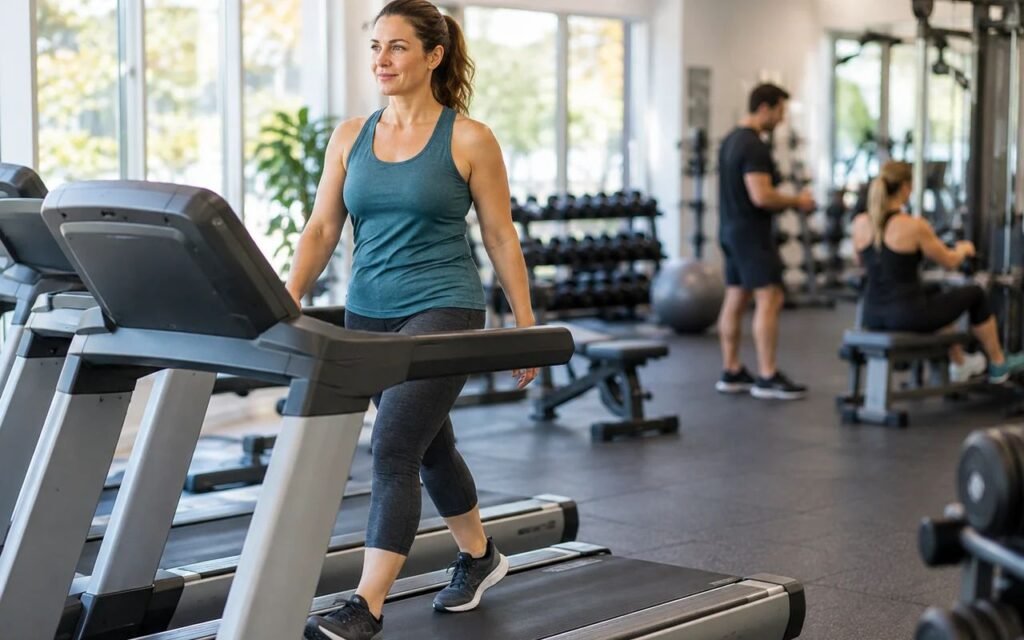
A good treadmill workout does not need high speeds, steep hills, or a complicated display. For a beginner, the best session is one you can complete with control and repeat with confidence.
Walking on a treadmill gives you a steady surface and simple controls. It lets you change the pace in small steps.
At EFM Glenelg, we encourage beginners to build fitness gradually. The 25-minute walking plan below includes an easy warm-up, manageable brisk intervals, recovery periods, and a proper cool-down. You can adjust every stage to suit your current ability.
What Makes a Good Treadmill Workout for a Beginner?
A useful beginner session has a clear purpose and a sensible level of effort. You should know how long you will walk, when the pace will change, and how you will judge the intensity.
Speed alone does not tell you how hard you are working. The same setting can feel easy for one person and demanding for another.
Use the talk test during the brisk sections. At a moderate effort, your breathing should become faster, but you should still be able to speak in short sentences. Mayo Clinic describes moderate exercise as an effort where you can talk but cannot sing.
The aim is to finish feeling as though you trained without losing control. Your first session provides a baseline for next week.
Set Up the Treadmill Before You Start
Learn the basic controls before the belt moves. Find the start, stop, speed, and incline buttons. Check where the emergency stop clip attaches and follow the instructions provided for that machine.
Step onto the side rails first. Start the belt at a very slow speed, then step onto it and settle into a natural walk. Increase the pace only after you feel balanced.
Wear comfortable shoes and tie the laces securely. Keep loose items away from the moving belt.
Look ahead rather than down at your feet. Let your arms move naturally and keep your shoulders relaxed. Avoid holding the front rail throughout the workout unless you need it briefly for balance or to use the controls. If you cannot walk safely without gripping, reduce the speed or incline.
If this is your first visit, our guide to using gym equipment for the first time explains how to get oriented and ask for help.
A Good Treadmill Workout You Can Complete in 25 Minutes
This walking session uses gentle changes in pace. The suggested speeds are only examples. Choose settings that match your stride and allow you to remain in control.
| Stage | Time | Effort | What to do |
|---|---|---|---|
| Warm-up | 5 minutes | Easy | Walk slowly and let your stride settle |
| Brisk walk | 2 minutes | Moderate | Increase the speed slightly |
| Recovery walk | 2 minutes | Easy | Return to a comfortable pace |
| Brisk walk | 2 minutes | Moderate | Repeat the stronger pace |
| Recovery walk | 2 minutes | Easy | Let your breathing settle |
| Brisk walk | 2 minutes | Moderate | Keep your steps smooth and controlled |
| Recovery walk | 2 minutes | Easy | Reduce the pace again |
| Steady walk | 3 minutes | Light to moderate | Find a pace you could maintain |
| Cool-down | 5 minutes | Easy | Gradually slow down before stopping |
During the warm-up, notice how your legs and breathing feel. Increase the speed in small steps during each brisk interval. You should feel a clear difference from the recovery pace, but you should not need to run.
Mayo Clinic recommends starting a walk slowly for the first few minutes and slowing down again at the end. It also notes that alternating brisk and slower walking is a simple form of interval training. You can read its full walking guide for more information.
How to Choose the Right Speed and Incline
There is no universal beginner speed. Start at a pace that feels secure, then make small changes. The number on the screen matters less than your movement quality and effort.
Use three simple effort levels during this session.
- Easy means you can talk comfortably and your breathing remains calm.
- Moderate means your breathing is quicker, but conversation is still possible.
- Too hard means you cannot recover during the easy stage or your form starts to break down.
Keep the incline flat or very low for your first few sessions. Once you can complete the plan comfortably, you may add a small incline during one brisk interval. Do not raise speed and incline together when you are learning how each change feels.
The treadmill calorie figure is only an estimate. Use time, pace, and perceived effort as your main guides.
How to Progress Your Beginner Treadmill Workout
Repeat the same plan for two or three sessions before changing it. Familiarity helps you learn whether the workout is becoming easier and whether the settings suit you.
When you are ready, change only one part. You could add one minute to the steady walk, raise the brisk pace slightly, or add a small incline to one interval. Keeping the other parts stable makes the effect easier to judge.
A simple four-week progression could look like this.
| Week | Suggested focus |
|---|---|
| 1 | Learn the controls and complete the 25-minute plan |
| 2 | Repeat the plan with smoother pace changes |
| 3 | Add one minute to one brisk interval |
| 4 | Add a small incline to one brisk interval if comfortable |
Repeat a week whenever you need more time. Consistent sessions at a suitable level usually work better than one exhausting workout followed by a long break.
Australia’s current movement recommendations for adults encourage moderate to vigorous movement for 30 minutes or more on most days. They also include strength, mobility, balance, and coordination activities, so treadmill walking should form one part of a broader routine.
Common Treadmill Mistakes to Avoid
Starting Too Fast
Beginning at your target pace skips the chance to settle your stride. Use the warm-up to check your balance, comfort, and energy before increasing the effort.
Copying Another Person’s Settings
The person beside you may have trained for years. Their speed and incline do not define a good session for you. Select settings based on your own effort and control.
Holding the Rails While Using a Steep Incline
If the incline makes you pull on the rails, lower it. An easier setting that lets you walk naturally is more useful than a difficult number that changes your movement.
Changing the Workout Every Visit
Constant changes make progress hard to measure. Repeat a basic plan long enough to understand it, then adjust one factor at a time.
Ending Without a Cool-Down
Reduce the pace for the final few minutes rather than stepping off immediately after a brisk interval. This gives your breathing and movement time to settle.
When to Stop and Get Advice
Stop if you feel chest pain, faintness, severe shortness of breath, or sudden pain. Seek urgent medical help for severe or concerning symptoms.
Speak with a qualified health professional before starting if you have a medical condition, a recent injury, or symptoms that affect walking. A personal trainer can help with machine setup and exercise technique, but medical concerns need suitable clinical advice.
Frequently Asked Questions
Is 20 to 25 Minutes Enough for a Beginner?
Yes. A short, controlled session is a sensible starting point. You can add time gradually as your comfort and fitness improve.
Should Beginners Use Incline on a Treadmill?
You can begin on a flat or very low setting. Add a small incline only after you feel stable and can complete the walking plan with good control.
Do I Need to Run for a Treadmill Workout to Count?
No. Brisk walking can raise your breathing and provide moderate activity. Running is an option, not a requirement for an effective session.
How Often Should I Repeat This Workout?
Two or three sessions each week may be a practical starting point, depending on your health, other exercise, and recovery. Leave space for strength work and other forms of movement.
Final Thoughts
A good treadmill workout for beginners should feel clear, controlled, and repeatable. Start slowly, use the talk test, and let the easy intervals bring your breathing back under control. Keep the incline modest while you learn the machine, and change only one part of the plan at a time.
For more help planning your routine, read how long a beginner gym session should be. You can also explore personal training in Glenelg if you would like guidance with treadmill setup, exercise selection, and gradual progression.