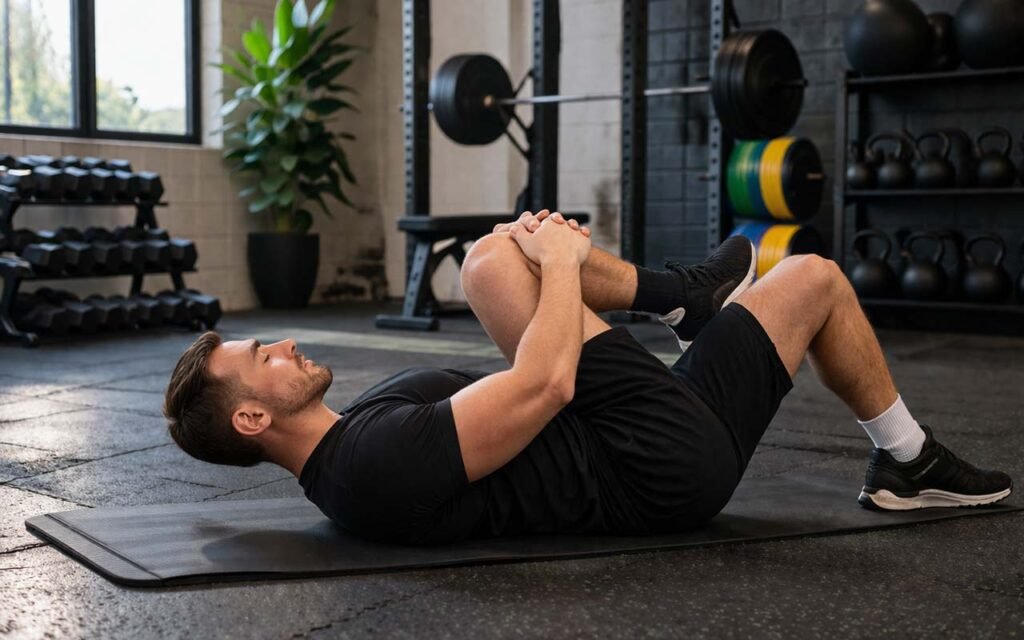
Lower back pain is one of the most common problems people experience, whether from long hours sitting, poor posture, or lack of movement.
The good news is that the right exercises for lower back pain can help reduce discomfort, improve flexibility, and prevent future issues.
Staying active is one of the most effective ways to manage and relieve lower back pain. With the right approach, you can strengthen your body and move more comfortably in daily life.
Below are eight simple exercises you can start today.
What causes lower back pain
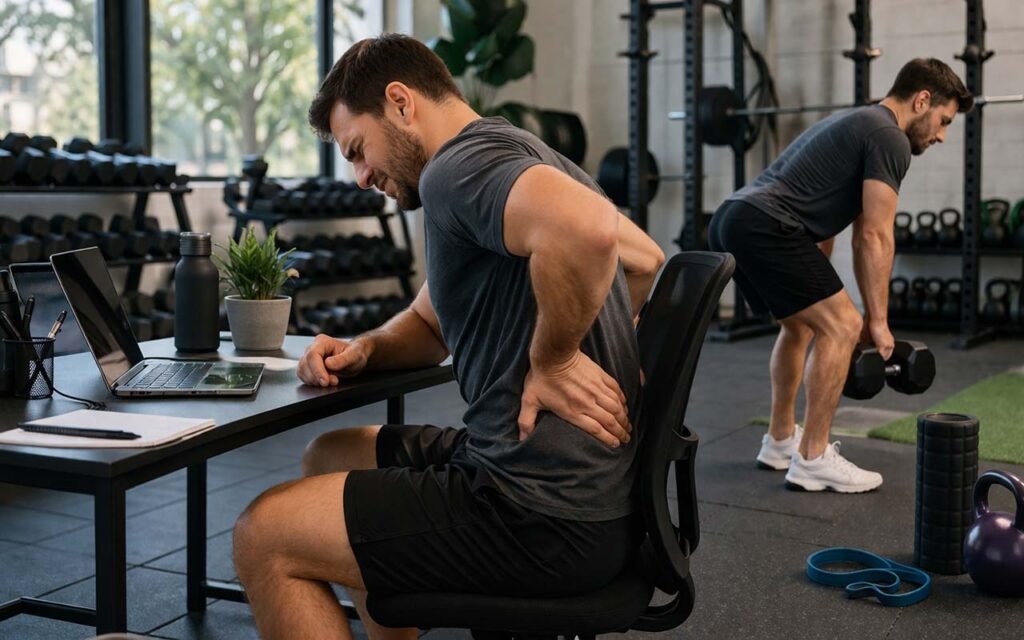
Lower back pain often develops when the muscles and joints that support your spine become tight, weak, or strained. Your lower back plays a major role in everyday movement, so when something is not functioning properly, it can quickly lead to discomfort or stiffness.
Several important structures work together to support your lower back, including your muscles, ligaments, tendons, joints, and core stabilising muscles. When these areas are not working efficiently, it can place extra stress on your spine and surrounding tissues, which may result in pain.
There are a number of common causes of lower back pain. Sitting for long periods, especially with poor posture, is one of the most frequent contributors. Weak core muscles can reduce the support your spine needs, while tight hamstrings or hip flexors can pull your body out of alignment. Incorrect lifting technique can also place unnecessary strain on your lower back.
The good news is that in many cases, lower back pain can be improved with regular movement and targeted exercises. Strengthening and stretching the right muscles can help restore balance, reduce discomfort, and support better long-term movement.
Why exercise helps lower back pain
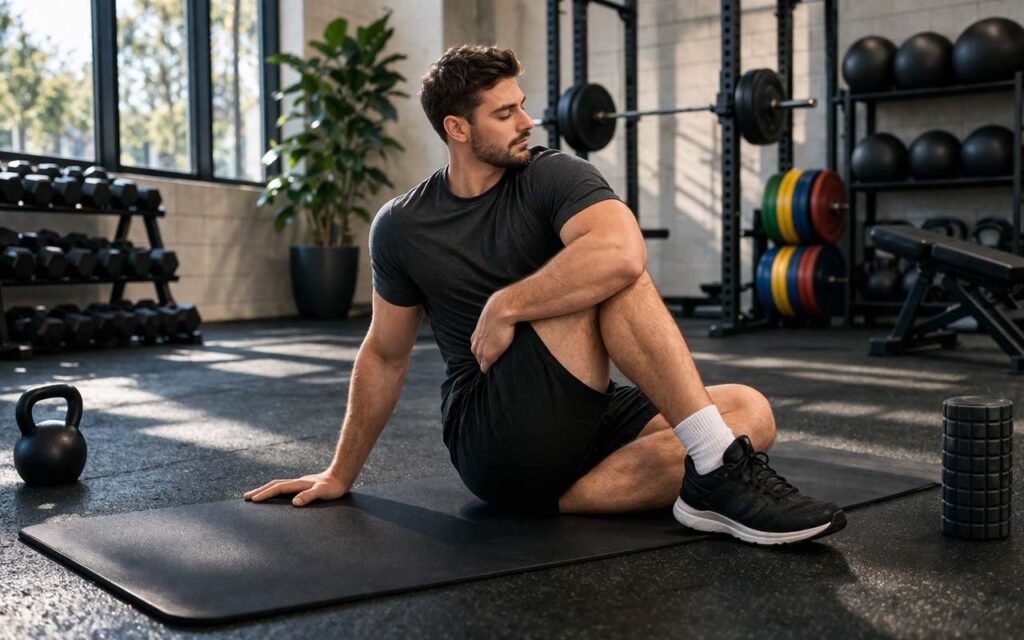
Regular movement plays an important role in managing and reducing lower back discomfort. When you stay active, you help keep your muscles flexible, your joints mobile, and your body functioning the way it should.
Exercises for lower back pain can improve flexibility and mobility, which makes everyday movements easier and more comfortable. They also help strengthen the muscles that support your spine, including your core, which plays a key role in reducing strain on your lower back.
In addition, regular exercise can reduce stiffness and tension that often build up from sitting too long or not moving enough. It can also support better posture, which helps prevent unnecessary pressure on your spine throughout the day.
Over time, staying consistent with the right exercises can help prevent recurring pain and improve your overall movement.
The key is to focus on controlled, low impact movements that support your spine and allow your body to build strength safely.
8 Exercises for Lower Back Pain
These exercises are designed to gently improve mobility, reduce stiffness, and build strength in the muscles that support your lower back. Move slowly, focus on control, and stop if anything feels painful.
1. Single knee pull stretch for lower back relief
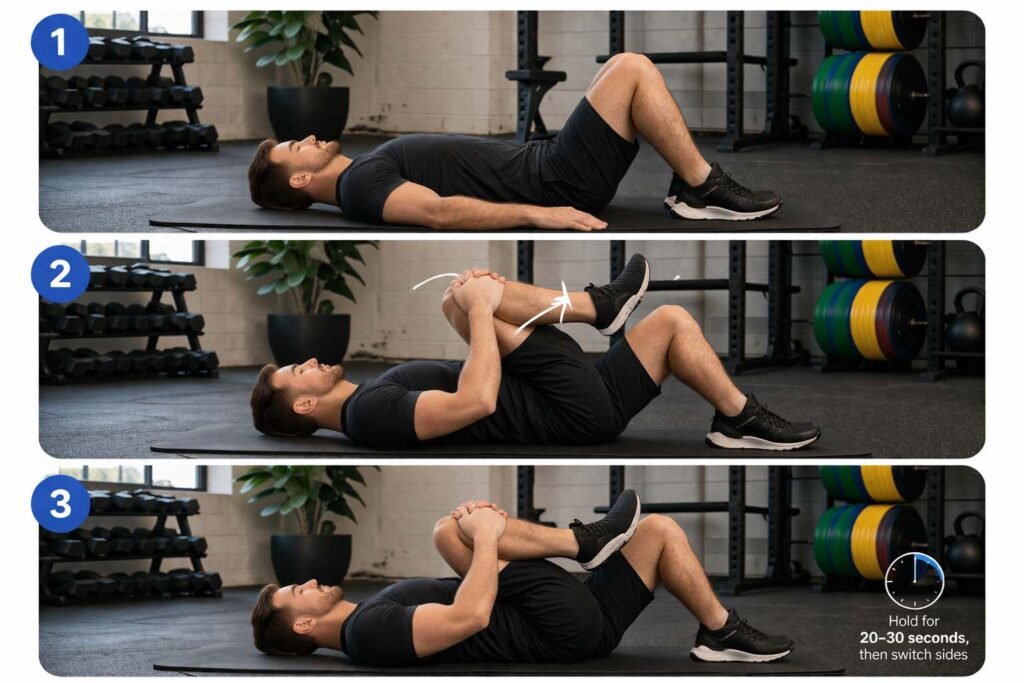
This simple stretch is great for easing tightness in the lower back and improving flexibility. It is often used as a gentle starting point before more advanced movements.
How to do it
- Lie on your back with your knees bent and feet flat on the floor
- Slowly bring one knee up toward your chest
- Hold your shin or behind your thigh with both hands
- Gently pull your knee closer until you feel a comfortable stretch
- Keep your other foot relaxed on the floor
- Hold for 20 to 30 seconds, then switch sides
2. Controlled spinal rotation stretch
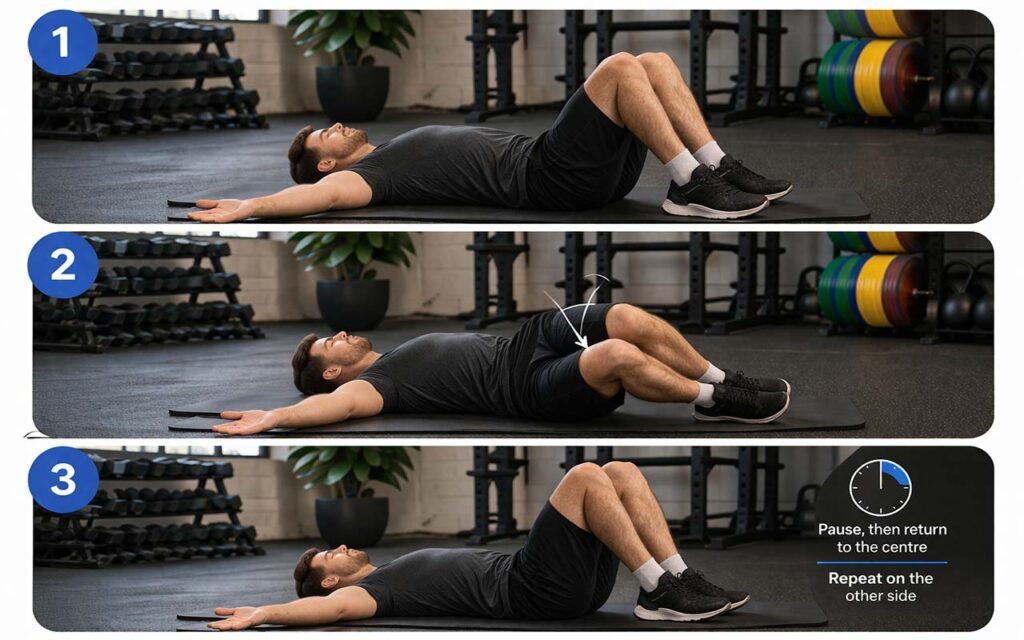
This movement helps release tension through your lower back while gently activating your core.
How to do it
- Lie on your back with both knees bent
- Stretch your arms out to the sides for support
- Slowly lower your knees to one side
- Keep your shoulders flat against the floor
- Pause, then return to the centre
- Repeat on the other side
Move slowly and stay in control throughout the movement.
3. Cat Cow mobility flow
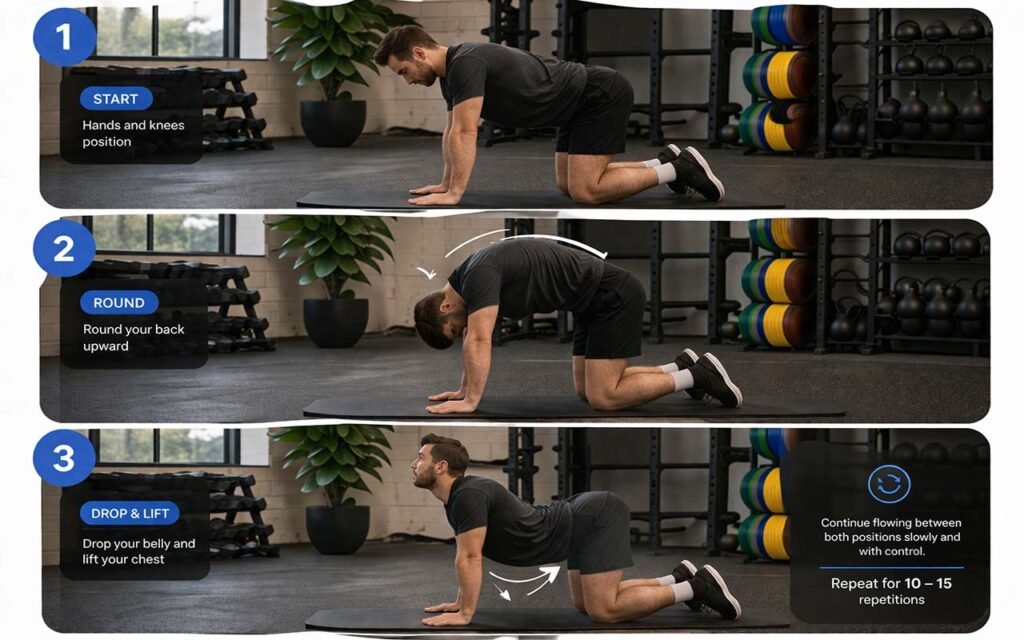
This is a smooth, flowing movement that improves spinal mobility and reduces stiffness.
How to do it
- Start on your hands and knees
- Slowly round your back upward
- Then gently drop your belly and lift your chest
- Continue moving between both positions
- Keep the movement slow and controlled
- Repeat for 10 to 15 repetitions
4. Forward hamstring stretch
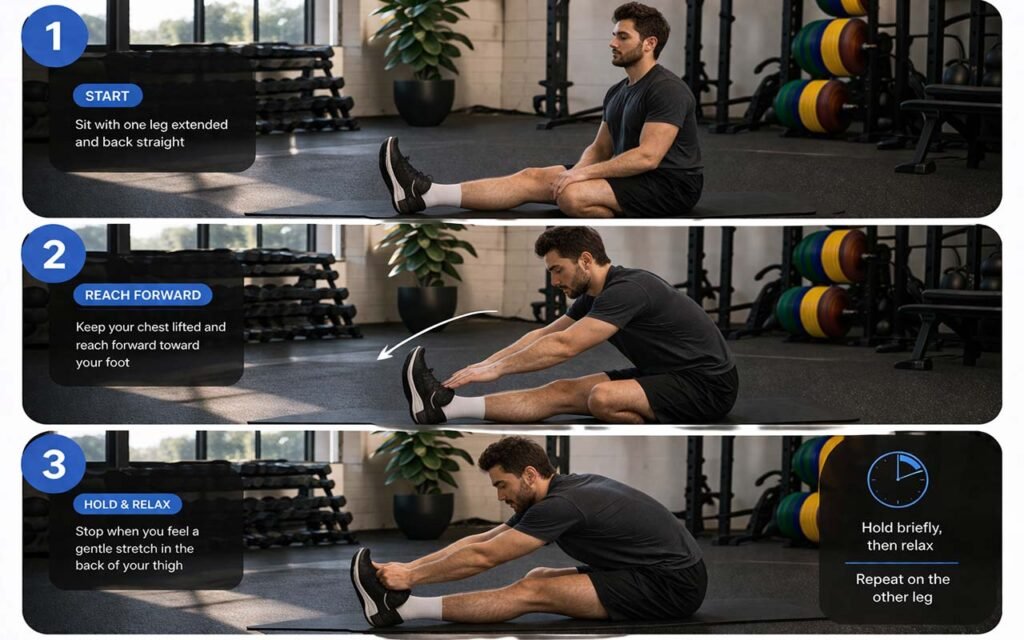
Tight hamstrings can place extra strain on your lower back. This stretch helps release that tension.
How to do it
- Sit with one leg extended in front of you
- Keep your chest lifted and back straight
- Reach forward toward your foot
- Stop when you feel a gentle stretch
- Hold briefly, then relax
- Repeat on the other leg
5. Core activation pelvic tilt
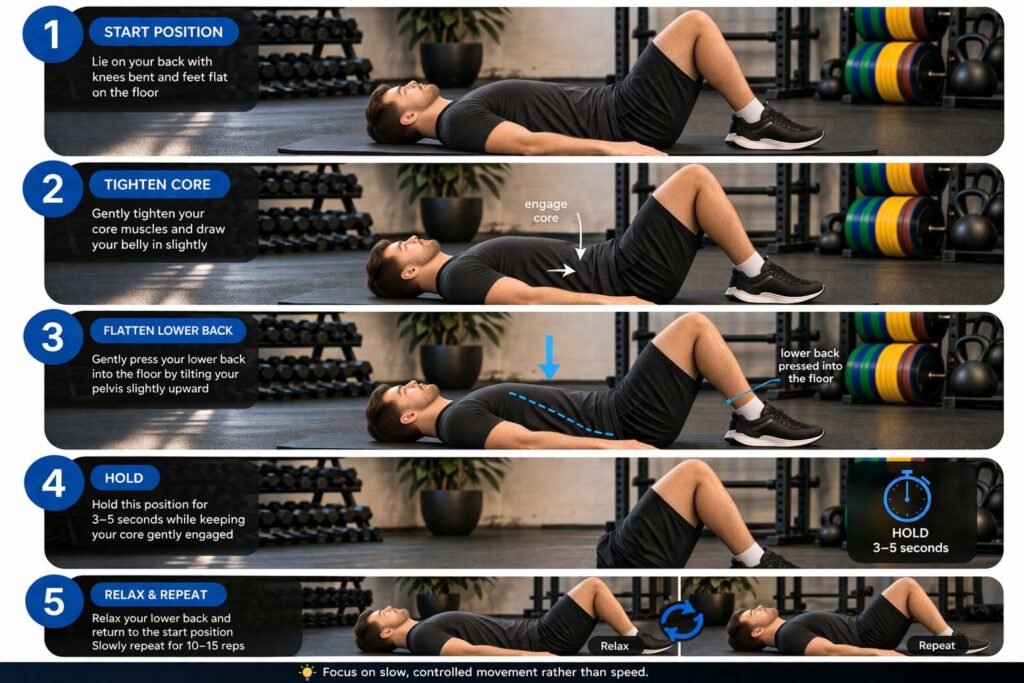
This exercise helps strengthen the muscles that support your spine and improves control.
How to do it
- Lie on your back with knees bent
- Gently tighten your core muscles
- Flatten your lower back into the floor
- Hold for a few seconds
- Relax and repeat
Focus on slow, controlled movement rather than speed.
6. Side lying rotation stretch
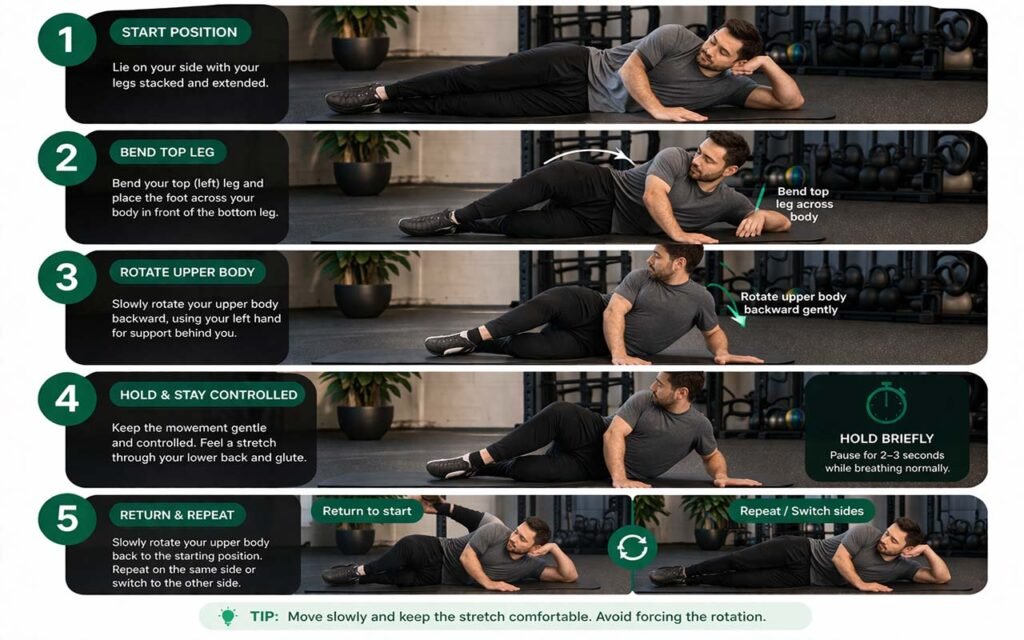
This stretch targets both the lower back and the glutes, helping improve overall mobility.
How to do it
- Lie on your side with your legs stacked
- Bend your top leg and place it across your body
- Slowly rotate your upper body backward
- Keep the movement gentle and controlled
- Return to the starting position and repeat
7. Supported hip bridge hold
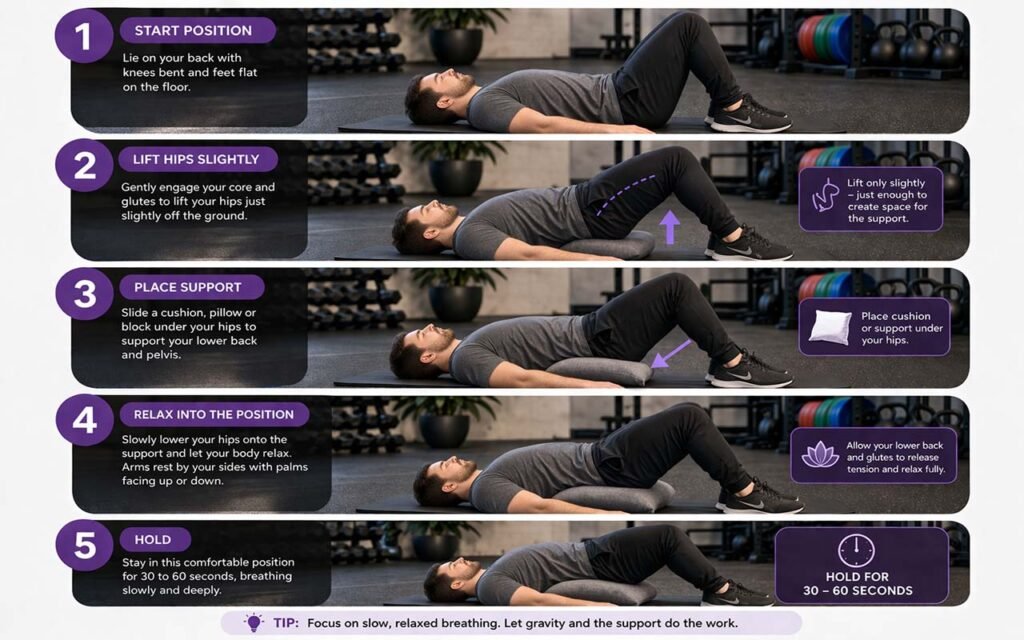
This position helps relieve pressure in the lower back while encouraging relaxation and stability.
How to do it
- Lie on your back with knees bent
- Lift your hips slightly off the ground
- Place a cushion or support under your hips
- Let your body relax into the position
- Hold for 30 to 60 seconds
8. Prone relaxation position
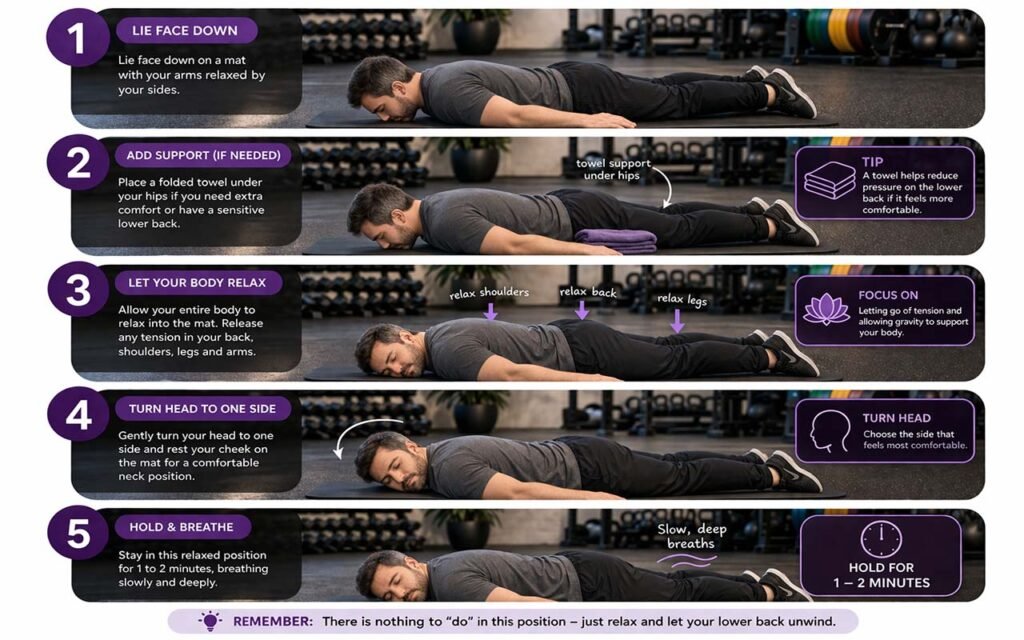
A simple but effective way to reduce tension and allow your lower back to relax.
How to do it
- Lie face down on a mat
- Place a towel under your hips if needed
- Let your whole body relax
- Turn your head to one side
- Stay in this position for 1 to 2 minutes
Frequently asked questions
What are the best exercises for lower back pain?
How often should I exercise if I have lower back pain?
Can exercise make lower back pain worse?
When should I see a professional for back pain?
Are gym workouts safe for lower back pain?
The bottom line
Lower back pain can limit your movement and affect your daily life. The right exercises for lower back pain can help you move better, feel stronger, and reduce discomfort over time.
Consistency is key. Even a few minutes of daily movement can make a noticeable difference.
If you are unsure where to start or want expert guidance, working with a qualified trainer can help you get better results safely.
At EFM Glenelg, our experienced trainers provide personalised support and structured training to help you move better, reduce pain, and build long-term strength.