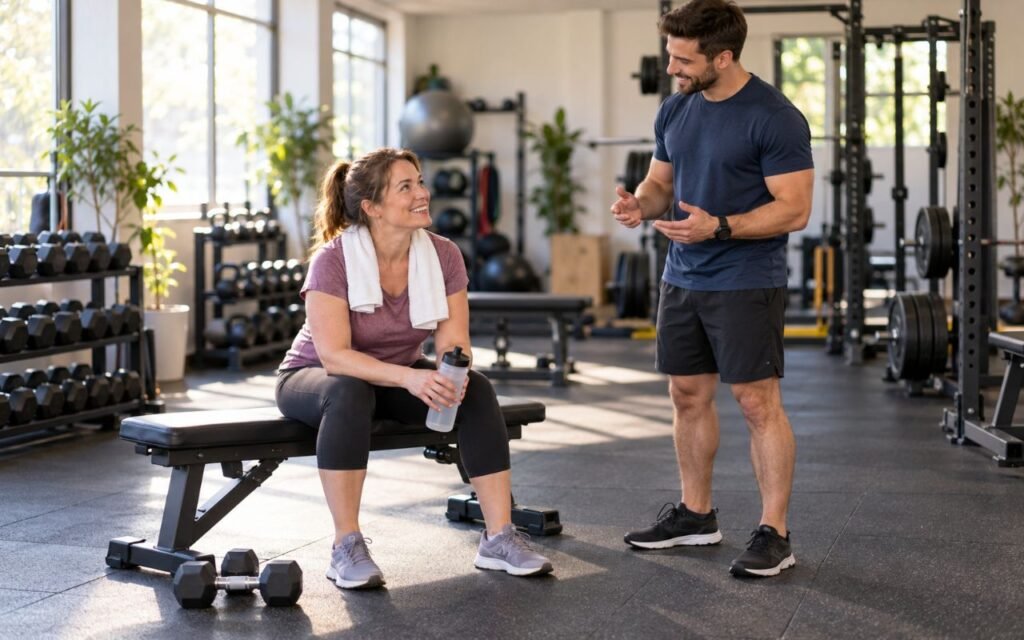
Finding the right fitness instructor can make a significant difference to the way you exercise. A good trainer does more than demonstrate movements or count repetitions. They help you understand your program, improve your technique, stay accountable and gradually progress towards realistic fitness goals.
If you are searching for a fitness instructor in Australia, there are plenty of options. The challenge is finding someone whose qualifications, experience and coaching style match what you actually need.
At EFM Glenelg, we have been helping people in the Glenelg community exercise for more than 15 years. During that time, we have worked with complete beginners, regular gym members and people with very different fitness goals.
We believe a good trainer should meet you at your current level rather than expecting you to fit into a generic program.
What Does a Fitness Instructor Do?
A fitness instructor helps people exercise safely and effectively within their professional scope. Depending on their qualifications and role, this can include demonstrating exercises, supervising gym sessions, planning group workouts and helping members understand how to use fitness equipment.
In Australia, professional roles can differ depending on qualifications.
AUSactive states that a Certificate III in Fitness can qualify someone to work as a gym or group exercise instructor, while Certificate IV in Fitness prepares professionals for personal training and the development of personalised exercise programs.
That distinction is worth understanding.
A group instructor may specialise in delivering structured sessions to several participants, while a personal trainer may provide more individualised programming and progression.
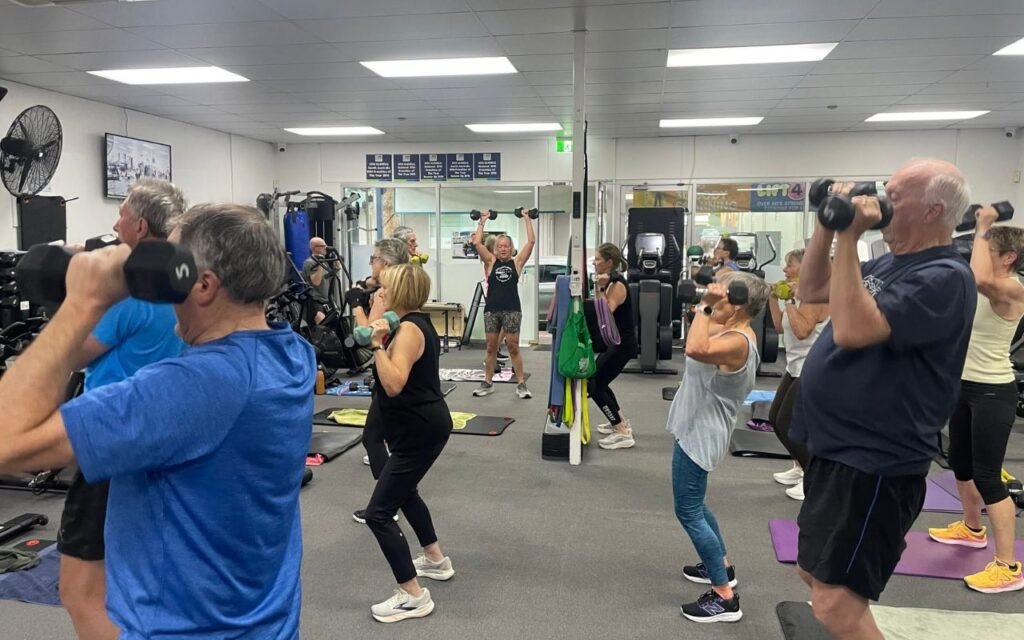
At EFM Glenelg, our coaching environment combines professional trainer support with group personal training and individual guidance. The objective is not simply to complete exercises. We want members to understand what they are doing and become more confident as their fitness improves.
What Makes a Good Fitness Instructor in Australia?
There is no reliable national award or ranking that identifies one person as the single best fitness instructor in Australia. A more useful approach is to identify the qualities that make a trainer right for you.
Qualifications are an important starting point, but they are only one part of good coaching.
A strong fitness professional should communicate clearly, listen to your goals and know when an exercise should be progressed or modified.
Look for someone who demonstrates qualities such as:
- Appropriate fitness qualifications
- Clear and patient communication
- Strong exercise technique
- Professional behaviour
- Ability to adapt exercises
- Genuine interest in individual progress
- Realistic goal setting
- Good listening skills
- Appropriate first aid and CPR credentials
- Ongoing professional development
AUSactive requires relevant qualifications and nationally recognised First Aid and CPR for its registered exercise professionals. Accredited professionals also have ongoing professional development requirements.
Qualifications create a foundation. How a trainer applies that knowledge to real people is what makes the difference.
Fitness Instructor Qualifications to Look For
When choosing a trainer, it is reasonable to ask about their qualifications. You are trusting this person to guide your exercise, so you should feel comfortable understanding their professional background.
AUSactive identifies nationally recognised fitness qualifications as part of professional registration in Australia. Current First Aid and CPR are also important requirements for registered professionals.
Here is a simple overview.
| Area to Check | Why It Matters |
|---|---|
| Fitness qualification | Establishes foundational training knowledge |
| First Aid and CPR | Important for responding to emergencies |
| Relevant experience | Helps with practical coaching situations |
| Professional registration | Provides another way to check credentials |
| Continuing education | Helps trainers maintain and develop knowledge |
| Coaching speciality | May align more closely with your goals |
| Communication style | Influences your overall training experience |
You do not need to become an expert in fitness qualifications before hiring a trainer.
Simply ask what they are qualified to do and whether their experience relates to your goals.
Why Experience Matters in Fitness Coaching
Qualifications teach important principles, but experience helps trainers understand how differently people respond to exercise.
Two people may arrive with the same goal of becoming stronger but require very different programs. One might be completely new to resistance training, while another has trained for several years.
A good trainer should recognise that difference.
At EFM Glenelg, we have worked with the local community for more than 15 years. That experience has reinforced something we see repeatedly. A program needs to work for the person completing it.
Training should take into account your experience, confidence, movement ability, schedule and goals.
This is why we avoid expecting everyone to perform exactly the same exercise at the same resistance.
An experienced fitness instructor should know when to challenge you and when to modify the session.
Progress comes from applying an appropriate training stimulus consistently, not from making every workout as difficult as possible.
Personalised Training Makes a Difference
Generic workout plans are easy to find online. The harder part is knowing whether those workouts actually suit you.
Personalised training considers where you are starting and what you are trying to achieve.
A beginner learning to squat may start with a bodyweight or supported variation. Someone with more experience might use additional resistance. Both people are training the same general movement pattern, but the challenge is appropriate to their ability.
This is where a knowledgeable fitness trainer can add real value.
They can help you choose exercises, monitor technique and adjust your program as you progress.
A good program should also fit your lifestyle.
There is little value in prescribing six workouts every week to someone who can realistically train three times. We would rather create a manageable routine that someone can follow consistently.
At EFM Glenelg, individual progression is one of the reasons we favour a more personalised training environment.
Why Good Communication Is Essential
Fitness knowledge is valuable, but a trainer also needs to communicate that knowledge effectively.
The best technical explanation is not useful if the person receiving it cannot understand what to do.
Good instructors explain movements in simple language and adjust their coaching when one cue does not work. They should also encourage questions rather than making people feel uncomfortable for asking them.
Listening is equally important.
Your trainer needs to understand how an exercise feels, whether something has changed since your previous session and whether your goals are still the same.
This creates a two-way relationship.
At EFM Glenelg, we believe members should understand the purpose of their training rather than blindly following instructions.
Over time, good communication helps people become more confident and independent in the gym.
Your trainer should provide guidance, but they should also help you build the knowledge needed to take greater ownership of your fitness.
Accountability Without Unnecessary Pressure
One reason people choose to work with a fitness instructor is accountability.
It can be much easier to skip a workout when nobody expects you to arrive. Knowing that your trainer and other members are familiar with your routine can provide an additional reason to stay consistent.
However, accountability should not mean guilt or unnecessary pressure.
A good trainer understands that real life changes. Work becomes busy, families need attention and some weeks simply do not go according to plan.
The aim is to help you return to your routine rather than make you feel that one missed session has ruined your progress.
We have seen many members achieve meaningful results through consistency rather than perfection.
Three sustainable sessions every week can be considerably more productive than repeatedly starting an extreme program and abandoning it after a few weeks.
A professional trainer should help you build habits that fit your life instead of creating expectations that are almost impossible to maintain.
Meet the EFM Glenelg Fitness Instructor Team
One of the strengths of EFM Glenelg is having trainers with different backgrounds, interests and areas of experience.
That diversity matters because people come to the gym for different reasons.
Some members want to become stronger. Others want to improve general fitness, return to regular exercise or simply feel more confident in the gym.
Our team environment allows members to receive guidance while still becoming part of a supportive local fitness community.
The trainer profiles below reflect the backgrounds and coaching interests that have helped shape the EFM Glenelg training environment.
Rather than claiming that one trainer is right for every person, we believe the best coaching relationship is one where experience, communication and training style align with the member.
That is why meeting the trainers and experiencing the gym environment can be valuable before deciding which approach works best for you.
Simon Dewar
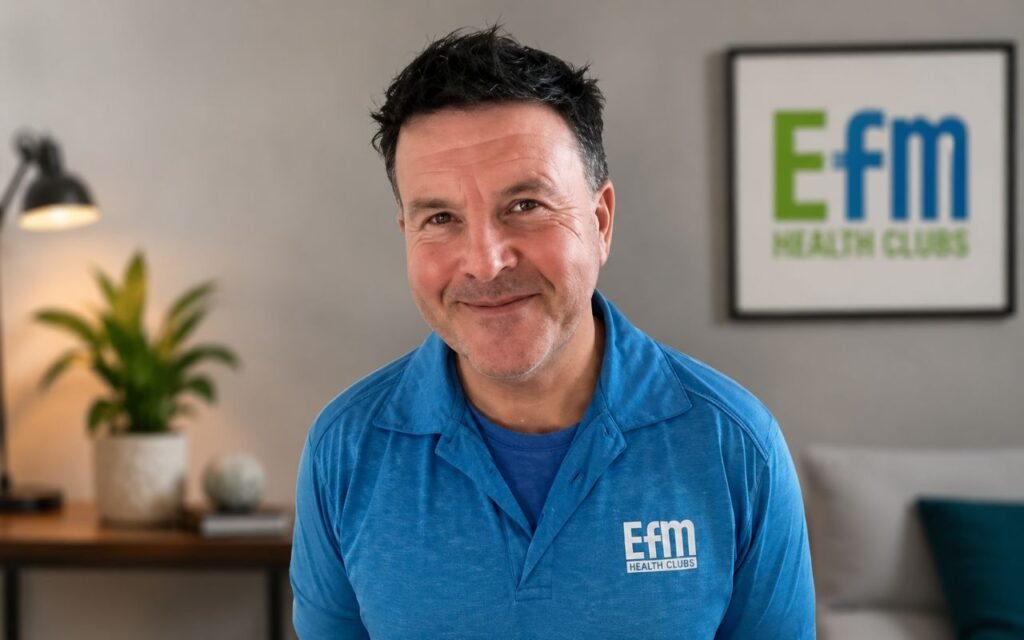
Simon Dewar is the owner and head trainer at EFM Glenelg. His training background includes areas such as strength, conditioning, CrossFit, rehabilitation and injury prevention.
An important part of Simon’s approach is creating a friendly environment where people can work hard without feeling that they need to arrive already fit.
Training should still be challenging. However, challenge needs to be appropriate to the person.
Technique and movement quality remain important as resistance or workout intensity increases.
Having additional trainer support available within a group environment can also make it easier for members to ask questions and receive assistance when needed.
Simon has played an important role in building the community-focused training culture at EFM Glenelg.
For members, that means fitness is not treated simply as access to machines. It is an environment where coaching, progression and consistent participation are central to the experience.
Dylan Hagen
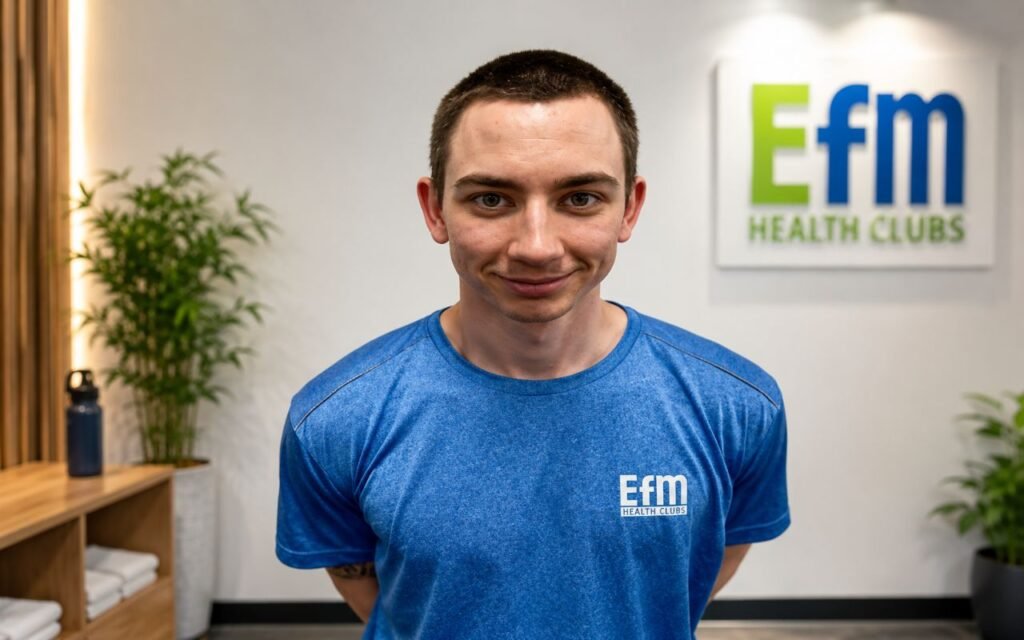
Dylan Hagen brings a strong interest in health, martial arts and strength training to his coaching.
His approach reflects an idea we strongly support at EFM Glenelg. Exercise should challenge you, but it should also be enjoyable enough that you want to continue.
This balance matters.
A workout that is difficult simply for the sake of being difficult does not necessarily provide better results. Training should have a clear purpose and allow progress to be measured over time.
Dylan focuses on helping people understand their fitness goals rather than simply moving from exercise to exercise without knowing why.
That understanding can help members become more engaged with their training.
Whether someone wants to improve strength, general fitness or consistency, having an instructor who can explain the process can make the journey easier to follow.
Fitness becomes much more sustainable when you understand what you are working towards and can recognise improvements along the way.
Bronwyn Overall
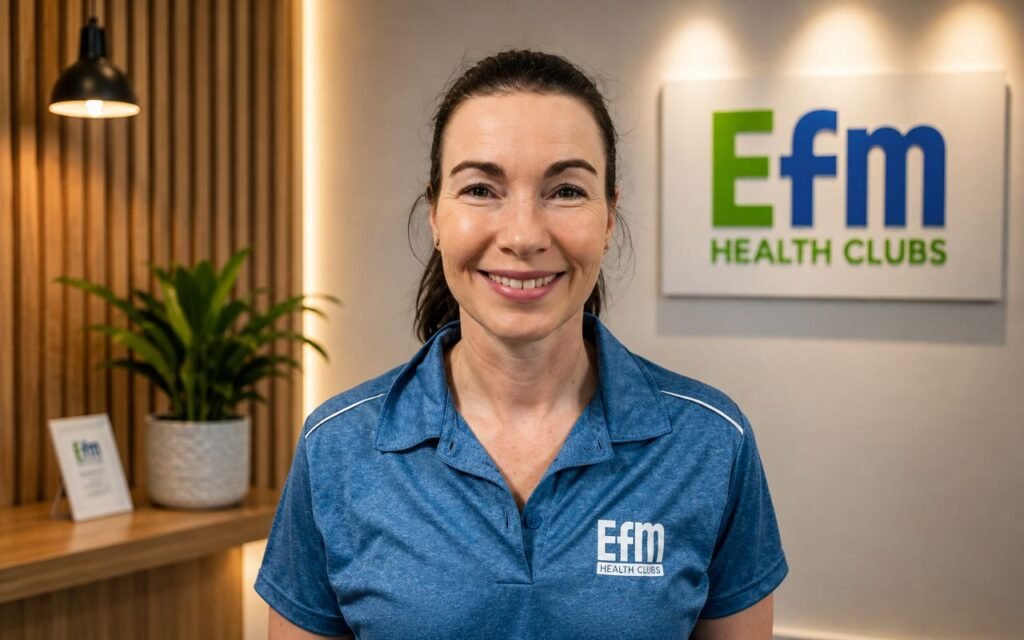
Bronwyn Overall brings extensive experience in Pilates, group fitness, health and wellness, along with an Allied Health background.
This broader perspective can be valuable when working with people whose goals extend beyond simply lifting more weight.
Fitness can involve strength, mobility, balance, confidence and maintaining the ability to complete everyday activities comfortably.
Bronwyn’s approach places importance on understanding individual needs before building an exercise plan.
That principle is central to good personal training.
Two members of the same age may have completely different training histories, goals and movement capabilities. Their programs should reflect those differences.
Having experience across both one-to-one and group training environments also provides flexibility in how members can receive support.
For people who value a more individual approach to movement and fitness, working with an instructor who considers the person rather than simply the workout can make training feel considerably more relevant.
Tom Stevens
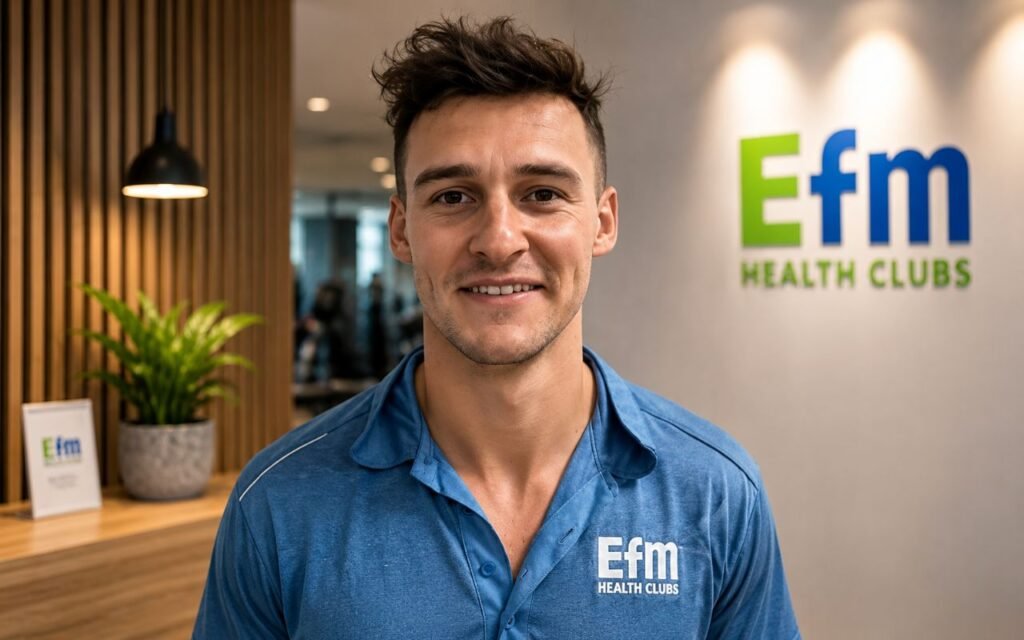
Tom Stevens brings experience as a personal trainer and group trainer, along with advanced study in strength and conditioning.
His background also includes experience within a professional Australian football environment through an internship with Port Adelaide Football Club.
A science-informed approach can be valuable when it remains practical.
Most gym members do not need complicated sports science terminology. They need a program that translates training principles into exercises they can perform consistently.
Strength and conditioning knowledge can help with exercise selection, progression, workload and recovery.
Tom’s approach reflects the importance of creating programs around the individual rather than relying on one standard routine.
That applies whether someone is pursuing sporting performance or simply wants to become stronger.
At EFM Glenelg, we value coaches who can combine technical knowledge with practical communication.
A well-designed program should make sense to the person completing it and develop as their strength, fitness and goals change.
Fitness Instructor or Personal Trainer
The terms fitness instructor and personal trainer are often used interchangeably in everyday conversation, but there can be differences in professional qualifications and scope.
AUSactive identifies Certificate III in Fitness as a pathway for gym and group exercise instruction. Certificate IV in Fitness provides the qualification pathway for personal trainers who design and deliver more individualised exercise programs.
In practical terms, your choice should depend on the type of support you need.
| If You Need | Consider |
| Help understanding gym equipment | Gym instructor |
| Structured group workouts | Group exercise instructor |
| Individual exercise programming | Personal trainer |
| Technique coaching | Appropriately qualified trainer |
| Regular accountability | Personal or group training |
| General supervised exercise | Fitness instructor |
| Goal-specific progression | Personal trainer |
Titles alone do not tell the entire story.
Always consider qualifications, experience and whether the trainer’s professional scope matches the service you are seeking.
What Should You Ask Before Choosing a Fitness Trainer?
Before committing to a trainer, have a conversation with them.
You should feel comfortable asking questions about qualifications, experience and how they would approach your goals.
Explain what you want to achieve and how much experience you already have.
You might ask about:
- Their fitness qualifications
- How long they have been coaching
- Their experience with people at your fitness level
- How programs are personalised
- How progress is measured
- What happens when an exercise does not suit you
- How frequently they recommend training
- Whether they offer group or individual coaching
Pay attention to the questions the trainer asks you as well.
A trainer who immediately gives you a detailed program without learning anything about your goals may not be providing a truly personalised approach.
Good coaching begins with understanding the person before deciding exactly how they should train.
Your First Fitness Consultation
Your first conversation with a trainer is an opportunity to discuss where you are now and where you would like to go.
At EFM Glenelg, we believe this initial conversation is important because fitness goals vary considerably.
You may want to build strength, improve cardiovascular fitness, become more active or regain confidence after spending time away from exercise.
Your current training experience matters too.
Someone who has never used resistance equipment needs a different starting point from an experienced gym member.
During an initial consultation, discuss your goals, exercise history and any information relevant to your training.
From there, a trainer can begin identifying an appropriate approach.
Do not worry if your goals are not extremely specific. Saying that you want to become fitter and feel stronger is still a useful starting point.
A good trainer can help turn broad goals into smaller, measurable steps that make progress easier to recognise.
Group Personal Training or One-to-One Training
Both one-to-one and group personal training can provide professional support. The right choice depends on how you prefer to exercise.
Individual sessions provide more direct attention and may suit someone who wants highly focused coaching.
Group personal training adds a social element while still allowing exercises to be modified according to individual ability.
At EFM Glenelg, we have seen group environments work particularly well for people who enjoy training around others but still want trainer guidance.
You do not need everyone in the group to perform exactly the same exercise.
One member might complete a bodyweight squat while another uses additional resistance. Both can train together at appropriate levels.
This flexibility allows people with different fitness backgrounds to share the same environment.
If you want to explore this training style, learn more about group personal training at EFM Glenelg.
How Often Should You Work With a Fitness Instructor?
There is no single number of training sessions that suits everyone.
Your ideal frequency depends on your goals, experience, schedule and how confidently you can exercise independently.
Some beginners benefit from more regular trainer contact while learning fundamental movements. As confidence improves, they may combine coached sessions with independent workouts.
Australian physical activity recommendations encourage adults to perform muscle-strengthening activities on at least two days each week and accumulate regular moderate to vigorous physical activity. Australian Government physical activity guidance provides more detail.
A trainer can help turn those general recommendations into something practical for your lifestyle.
Rather than choosing a training frequency that looks impressive, choose one you can realistically maintain.
Consistency remains one of the most important parts of long-term fitness progress.
Why Local Trainer Support Can Be Valuable
Searching for the best fitness instructor in Australia may lead you towards hundreds of trainers across the country.
In practice, the right instructor is often much closer to home.
A local gym reduces travel time and makes regular sessions easier to fit around work and family commitments. You also have the opportunity to develop an ongoing relationship with trainers who understand your progress.
This is one of the advantages of choosing a fitness instructor in Glenelg if you live or work nearby.
At EFM Glenelg, we have supported the local community for more than 15 years.
Members are not simply anonymous people using equipment. Trainers become familiar with their goals, training history and progress.
That continuity can make coaching much more useful.
If you are comparing local options, explore our guide to personal training in Glenelg to learn more about the support available.
Final Thoughts
Finding the right fitness instructor in Australia should not be about choosing the trainer with the biggest social media following or the most dramatic promises.
Look for appropriate qualifications, practical experience, good communication and a coaching style that makes you feel supported while still being challenged.
The right trainer should help you understand exercise, improve technique and build a routine that works around your actual lifestyle.
At EFM Glenelg, our team brings different backgrounds and areas of fitness experience together within a supportive local training environment. After more than 15 years serving the Glenelg community, we have seen that sustainable progress comes from combining good coaching with consistency.
If you are considering personal or group training, start by meeting the team and discussing your goals.
You do not need to arrive fit, experienced or confident. That is what the training process is for.
The best fitness instructor for you is someone who understands where you are starting, knows where you want to go and can help you make steady progress along the way.