If you want to learn how to improve posture, start with the parts of your day you repeat most. Time at a desk, long drives, phone use, and exercise all shape how you move and hold yourself.
You do not need to force your shoulders back all day. A more useful goal is to feel comfortable in a range of positions and build the strength to support your daily tasks.
At EFM Glenelg, we favour practical training habits that fit real life. This guide brings that approach to posture, with simple changes you can try at home, at work, and in the gym.
What Does Better Posture Actually Mean?
Posture describes how you hold your body when still or moving. It changes as you sit, walk, reach, lift, and rest. Your spine also has natural curves, so looking completely straight is not the goal.
There is no single position that suits every person or task. The Rotherham NHS Foundation Trust explains that evidence does not support one ideal posture or the idea that avoiding certain positions will prevent back pain. A slouched moment does not mean you have damaged your back.
Instead of checking your reflection all day, notice comfort and choice. Can you change position with ease? Can you sit, stand, and carry things without feeling you must brace constantly?
How to Improve Posture During Your Working Day
Start by making your workspace easier to use. Bring the keyboard and mouse close enough that you can reach them without leaning forward. Place your screen where you can read it without craning your neck.
Let the chair support you. Rest your feet on the floor or a footrest if needed, and allow your shoulders to relax. You should not have to hold a rigid pose to use your desk.
The National Library of Medicine’s guide to good posture recommends changing sitting positions, taking short walks, and using comfortable work surfaces.
Choose a reminder that fits your day. For example, stand after a call, walk when you refill your water, or change position between tasks. A reminder is a prompt to move, not a deadline after which sitting becomes dangerous.
Make phone use more comfortable
Try supporting your forearms or raising your phone when that feels easier. Change hands and take breaks during long scrolling sessions. You do not need to keep the screen at eye level every second.
How to Improve Posture With Strength Training
Strength training can help build the capacity to support and move your body. It should include more than pulling your shoulders back. Your legs, hips, trunk, and upper body all contribute to daily movement.
Start with exercises you can control. Choose a load that lets you breathe normally and finish each repetition without rushing. Increase the challenge gradually rather than chasing heavier weights from the first session.
Harvard Health’s article on improving posture discusses upper-back and core strengthening alongside stretching and changes to daily habits.
The exercises below are starting options for generally healthy beginners. They are not a treatment plan for pain or a way to change the shape of your bones. Ask a trainer to help choose suitable versions.
Four Simple Posture Exercises to Try
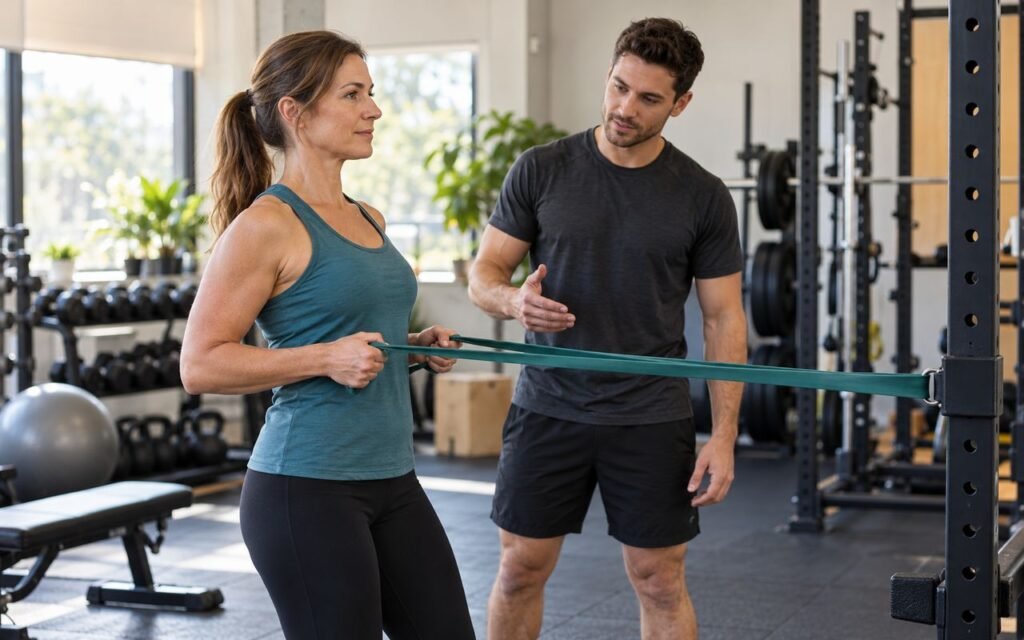
1. Light resistance-band row
Use a secure anchor and inspect the band before starting. Stand comfortably, hold the ends, and draw your elbows back beside your body. Return slowly without leaning backwards to finish the movement.
Keep your neck relaxed and avoid lifting your shoulders towards your ears. Try one set of eight controlled repetitions with a light band. Stop if the movement causes pain.
2. Supported chest stretch
Sit on a stable chair with your feet supported. Place your hands gently behind your hips or against the sides of the seat. Lift your chest slightly while keeping your neck comfortable.
You should feel a mild stretch across the front of your chest. Do not force your arms back or arch your lower back. Hold briefly, release, and repeat if comfortable.
3. Wall-supported plank
Place your forearms against a wall and step back a little. Keep your body comfortably aligned, then gently engage your trunk while breathing normally. Avoid letting your lower back sag.
Begin with a short hold of about ten seconds. Move closer to the wall to make it easier. This is an accessible way to practise control before trying harder floor-based versions.
4. Chair sit-to-stand
Use a stable chair that cannot slide. Place your feet comfortably apart, lean forwards slightly, and stand up. Sit back down with control. Use your hands for support when needed.
Try five slow repetitions. This movement adds leg work to your routine and practises a task you use throughout the day. Choose a higher seat if standing feels too difficult.
Build a Routine You Can Repeat
Start small enough that the routine feels manageable. You could practise two exercises on one day and the other two on another. Leave room for walking and activities you enjoy.
For example, plan a short gym visit on Monday and Thursday. Between visits, use a few work breaks to walk or change position. Write those choices in your diary rather than relying on motivation.
If you are new to training, read our guide to how often beginners should go to the gym. It can help you build a schedule without doing too much at once.
Keep a brief note of what you tried. Record the exercise, how it felt, and any change you want to make next time. Progress may mean better control before it means more repetitions.
Make the first week a trial. If a movement feels awkward, ask for a simpler version. A routine that suits your current ability is easier to practise with care and confidence.
Common Mistakes That Make Posture Work Harder
Holding yourself stiffly
Pulling your shoulders back and bracing all day can feel tiring. Use a gentle cue when helpful, then allow yourself to move normally. Your body needs options rather than constant correction.
Doing too much too soon
A long list of drills can make the plan hard to sustain. Pick a few movements and learn them well. Add more only when there is a clear reason.
Judging progress only from photographs
Camera angle, clothing, and the way you stand can change a photo. Also notice whether tasks feel easier, movements feel smoother, or your exercise technique feels more confident.
When to Seek Individual Advice
Get advice from a GP or physiotherapist for persistent or worsening pain, new weakness, numbness, or a marked change in your usual posture. A trainer can support exercise technique but cannot diagnose the cause of symptoms.
Seek urgent medical care for back pain with new bladder or bowel changes or numbness around the groin. People with osteoporosis, recent surgery, or a spinal injury should get guidance before starting unfamiliar exercises.
Frequently Asked Questions
How long does it take to improve posture?
There is no fixed timeline. Your starting point, health, and routine all matter. Review comfort and movement over time rather than expecting a visible change within a set number of days.
Can I work on posture at home?
Yes. Start with workspace changes, movement breaks, and exercises suited to your ability. Seek help if you are unsure about technique or have ongoing symptoms.
Should I stretch or strengthen?
Both may have a place. The right balance depends on what feels limited and what you want to do. Avoid assuming every rounded shoulder needs the same routine.
Final Thoughts
Learning how to improve posture starts with useful habits, not a perfect pose. Move often, build strength at a sensible pace, and choose positions that let you work and rest comfortably.
Ready to put the ideas into practice? Read our guide to using gym equipment for the first time, then explore personal training in Glenelg for support with exercise selection and technique.