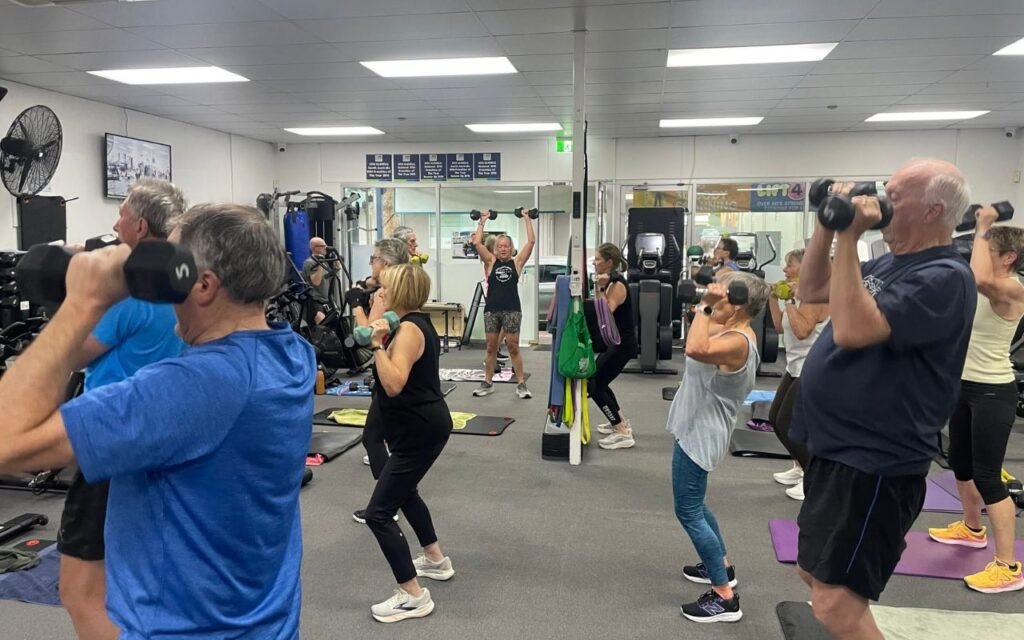
Choosing the right fitness class can make a significant difference to your strength, health, motivation, and ability to stay active long term. While many people begin exercising with plenty of enthusiasm, maintaining that routine for months and years is often the bigger challenge.
If you are searching for the best fitness classes Adelaide offers, look beyond workouts that simply promise to make you sweat. A quality program should provide structure, appropriate progression, professional coaching, and enough flexibility to fit around everyday life. The Australian Government recommends adults include regular moderate to vigorous physical activity, muscle-strengthening work, and activities that support mobility, balance, and coordination.
At EFM Glenelg, we have worked with members at different fitness levels for more than 15 years. In our experience, people are more likely to stay consistent when their training combines professional guidance with a welcoming community.
Why Fitness Classes Adelaide Residents Choose Are Changing
Fitness classes have changed considerably. Many people are no longer looking for a workout that simply pushes them as hard as possible for 45 minutes. They want training that has a clear purpose and can become part of their normal lifestyle.
That shift makes sense when you look at Australian activity patterns. Australian Institute of Health and Welfare data reported that 41% of Australian adults did not meet the physical activity guideline in 2022, while 76% did not meet the muscle-strengthening guideline.
Structured classes can help address some of the practical barriers people experience. Your session is planned, there is someone available to guide you, and training alongside others can create useful accountability.
We see this regularly at EFM Glenelg. Members do not necessarily need more complicated workouts. They often need an environment that makes showing up and exercising consistently easier.
What Makes a Good Fitness Class?
Not every fitness class provides the same experience. Some programs focus heavily on intensity, while others place more emphasis on strength, technique, progression, or cardiovascular conditioning.
A good program should have a clear structure while still recognising that everyone in the room is different.
Someone beginning exercise after several years away should not necessarily perform the same movements, resistance, or intensity as an experienced member.
Qualified trainers can help bridge that gap by modifying exercises and providing feedback when required.
Programming matters too. Repeating exactly the same workout with the same resistance for months gives your body little reason to adapt. As your fitness improves, the program should gradually evolve.
The best fitness classes therefore combine several qualities. They challenge you without making every workout unnecessarily exhausting, provide appropriate coaching, and make it realistic to keep training consistently.
Types of Fitness Classes Available in Adelaide
Adelaide has plenty of fitness options, so the best choice depends on what you want from your training.
Someone interested primarily in cardiovascular conditioning may enjoy HIIT or circuit sessions. A person wanting to become stronger may prefer structured resistance training. Others want a combination of strength, cardiovascular fitness, mobility, coaching, and social interaction.
Here is a simple comparison.
| Fitness Class | Best Suited For | Main Benefit |
|---|---|---|
| Group personal training | Overall fitness | Coaching with group motivation |
| Strength training | Building strength | Progressive resistance |
| HIIT | Cardiovascular conditioning | Time-efficient intensity |
| Functional training | Everyday movement | Strength, balance and mobility |
| Circuit training | General conditioning | Full-body workout variety |
| Small group training | Personal support | More individual coaching |
There is no single class that is automatically best for everybody.
Your training experience, goals, schedule, and personal preferences should all influence your decision.
The Benefits of Group Personal Training
Group personal training sits somewhere between conventional personal training and a large group exercise class.
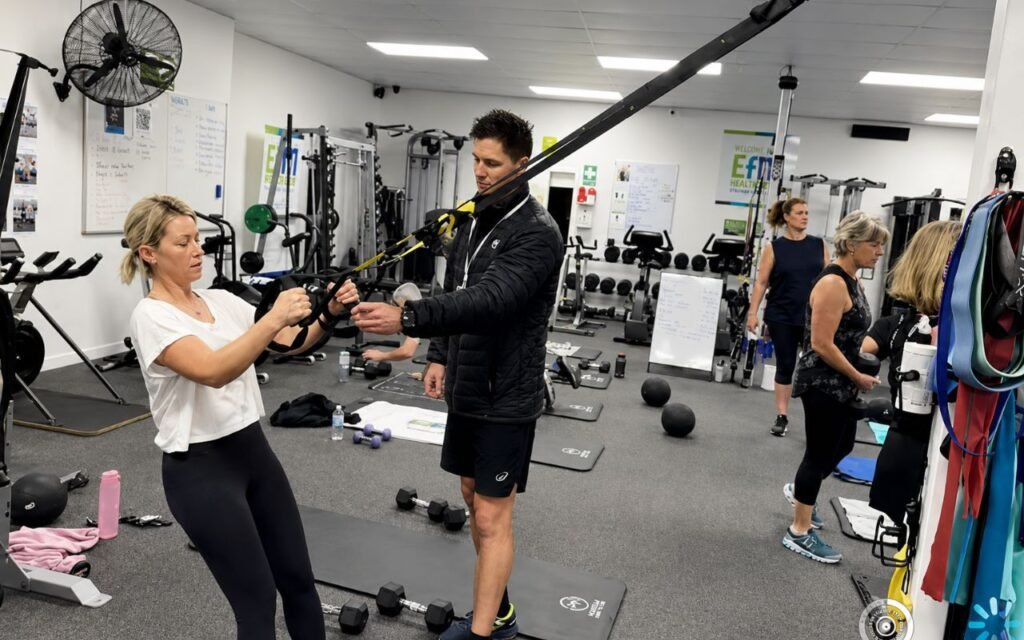
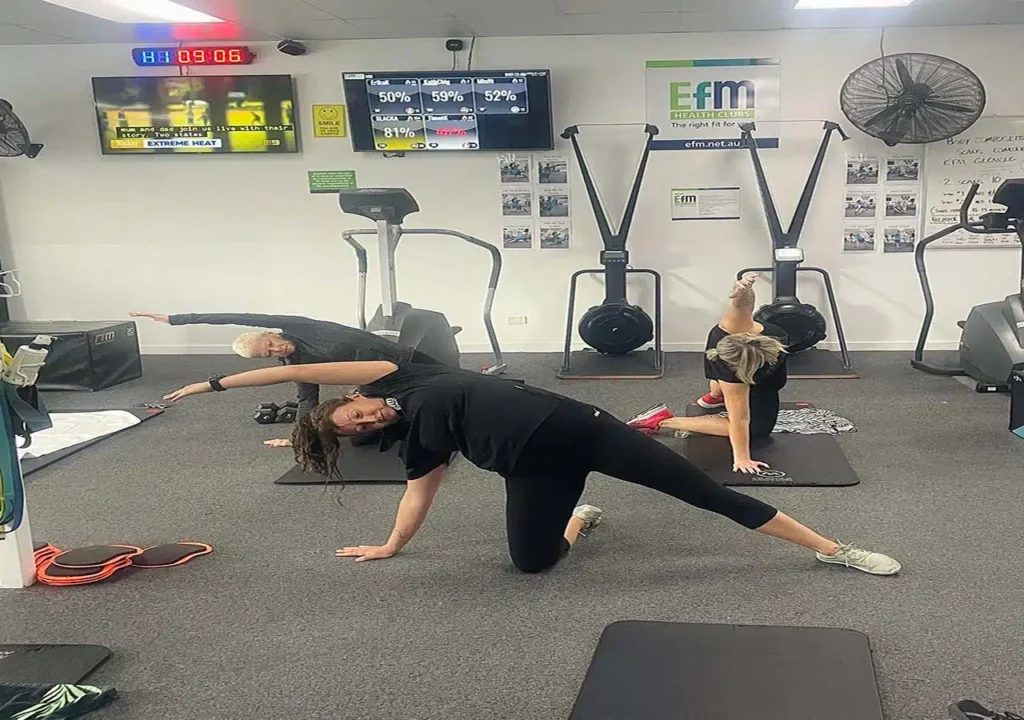
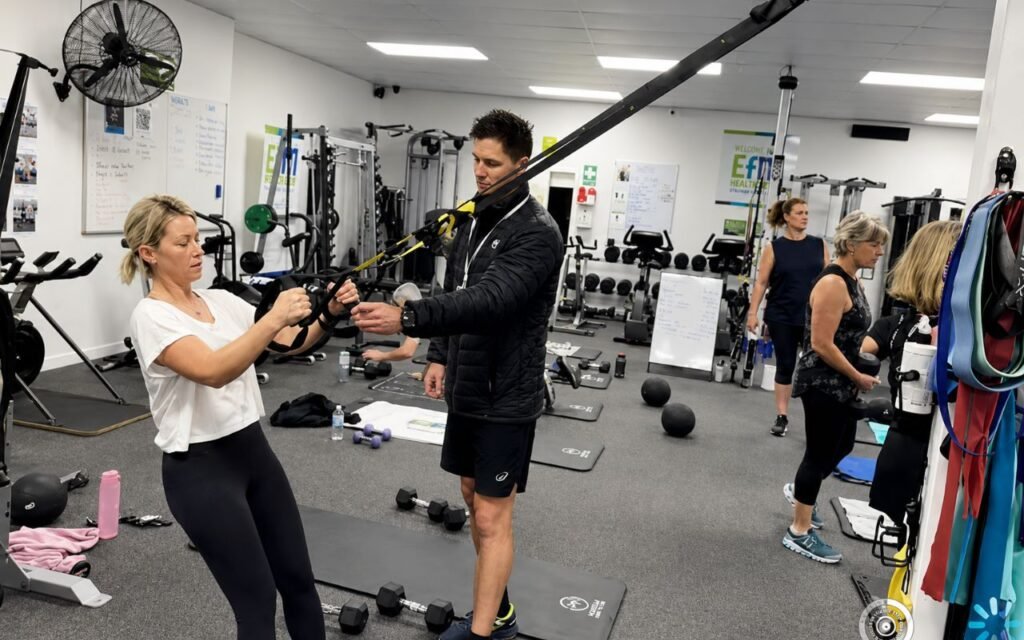
You still get the energy and social atmosphere of exercising around other people, but trainers can provide more individual guidance within the session.
This is particularly useful when members have different abilities.
One person may perform a standard squat while another uses a modified version. An experienced member might increase resistance, while a beginner works on technique with a lighter load.
The workout does not have to be identical for everyone to train successfully together.
At EFM Glenelg, we have found this approach helps create an environment where members can challenge themselves without feeling that they have to keep up with somebody else.
For many people, that balance between individual attention and group motivation makes group personal training an enjoyable and sustainable way to exercise.
Professional Coaching Makes a Difference
Having a trainer present is not simply about someone telling you which exercise comes next.
Good coaching involves observing movement, explaining technique, modifying exercises, tracking progression, and helping members understand why they are performing particular movements.
This becomes particularly important during resistance training.
If you are learning squats, presses, rows, deadlifts, or other compound movements, small technique adjustments can make an exercise feel very different. A trainer can also recognise when increasing resistance is appropriate and when maintaining the current weight is the better choice.
At EFM Glenelg, our coaching approach is based on meeting members where they are.
Some people need encouragement to increase the challenge. Others need to slow down and develop better control before progressing.
Effective coaching is about recognising that difference rather than applying the same approach to everyone.
Fitness Classes Can Make Accountability Easier
Motivation is useful, but it is unreliable.
You may feel highly motivated when you first start exercising, but work deadlines, family commitments, poor weather, and busy weeks can quickly interrupt your routine.
This is where accountability becomes important.
When you regularly train in the same environment, your workout becomes part of your weekly schedule rather than something you do only when motivation appears.
There is also a social element.
Seeing familiar trainers and other members can make exercise feel less like an individual obligation and more like part of your normal routine.
The Australian Sports Commission’s latest AusPlay releases continue to track participation in hundreds of sports and physical activities, with fitness and gym activity among the most popular activities for Australians aged 15 and over.
The challenge is not simply starting. The goal is finding an approach you can maintain.
Strength Training Should Be Part of the Picture
When people think about fitness classes, they sometimes picture fast-paced cardio workouts. Cardiovascular fitness is important, but resistance training deserves a place in a balanced program as well.
Current Australian guidance recommends muscle-strengthening activities on two or more days each week for adults.
Strength training can involve dumbbells, barbells, resistance machines, kettlebells, bodyweight exercises, or other forms of resistance.
The important factor is appropriate progression.
As movements become easier, resistance, repetitions, sets, or exercise complexity can gradually change. This gives your muscles a reason to adapt without needing to make dramatic increases from one session to the next.
We encourage members to think beyond short-term calorie burning. Building strength can support everyday movement and physical capability, making it a valuable part of long-term fitness.
How to Choose the Right Fitness Classes in Adelaide
Before choosing a fitness class, start with your own goals rather than whatever program happens to be popular.
Ask yourself what you actually want to improve.
Are you trying to become stronger? Improve cardiovascular fitness? Return to exercise after a long break? Build a consistent routine? Or would you simply like more energy and confidence when exercising?
Once you understand the goal, consider the practical details.
Look at whether the timetable works with your lifestyle, how much coaching is available, whether exercises can be modified, and whether the environment feels welcoming.
A trial session can be particularly helpful because fitness facilities can feel very different in person compared with what you see online.
Pay attention to how trainers communicate with members. Good coaching should make you feel supported and informed rather than pressured to perform beyond your current ability.
Common Mistakes When Choosing Fitness Classes
One common mistake is choosing a class entirely according to price. Cost matters, but value depends on what you receive for your membership.
Another mistake is choosing whatever training style is currently popular without considering whether you actually enjoy it.
The best exercise program has limited value if you dislike it enough to stop attending after several weeks.
We also see people focus too heavily on intensity.
A workout does not need to leave you completely exhausted to be productive. Progress comes from applying an appropriate training stimulus repeatedly and allowing enough recovery between demanding sessions.
Finally, do not ignore scheduling.
A fantastic class at an inconvenient time may be difficult to maintain. If work and family responsibilities frequently conflict with the timetable, consistency becomes harder.
Your fitness program needs to work in real life, not just look good on paper.
Why Flexibility Matters for Long-Term Fitness
Life does not always follow a perfect weekly schedule.
Work runs late. Family plans change. Appointments appear unexpectedly. This is why flexibility can be an important factor when selecting fitness classes Adelaide residents can realistically maintain.
Australian Sports Commission insights have identified lack of time and other commitments as barriers to activity among some adult groups.
At EFM Glenelg, we understand that members need training to fit around life rather than the other way around.
Flexible access can remove some of the friction associated with exercising at one fixed time.
This does not mean training should be unstructured. You still need a plan and some consistency.
The ideal balance is having enough structure to keep progressing while maintaining enough flexibility to adjust when life changes.
When those two elements work together, regular exercise becomes much easier to sustain.
Expert Insight From EFM Glenelg Trainers
After working with members across different fitness levels, one pattern becomes very clear. Sustainable results rarely come from extreme training.
The people who progress well over the long term tend to develop simple habits and repeat them consistently.
They attend regularly, learn good exercise technique, gradually increase the challenge, and accept that not every workout needs to be their best workout.
Progress also looks different for different people.
For one member, success may mean lifting a heavier weight. For another, it might mean completing a session without needing as many breaks. Someone else may simply be proud that exercise has become part of their weekly routine.
This is why individualisation matters even within a group environment.
Fitness should provide enough challenge to encourage improvement without becoming so demanding that you cannot realistically maintain it.
Consistency creates the foundation. Progression builds on it.
Why EFM Glenelg Stands Out for Fitness Classes
EFM Glenelg has been serving the Glenelg community for more than 15 years, providing a combination of group personal training and gym access.
Our approach is different from simply putting everyone through exactly the same workout.
Members have different goals, abilities, training histories, and preferences. Our trainers can adjust movements and intensity while keeping everyone part of the same supportive training environment. This approach is central to the original article and EFM Glenelg’s positioning.
We also place a strong emphasis on community.
Walking into a fitness environment where people know your name and trainers understand your goals can make regular exercise much more enjoyable.
EFM Glenelg has also received multiple franchise awards over the years, reflecting the long-standing commitment behind the studio.
For us, however, the real measure of success is helping members develop fitness habits they can maintain.
Fitness Trends Across Adelaide and Australia
Australian fitness habits continue to evolve.
The Australian Sports Commission reported fitness and gym activity among the most popular activities for Australians aged 15 and over in its 2024–25 AusPlay results. Pilates was also among the activities showing strong growth.
At the same time, the focus of fitness is gradually becoming broader.
People are interested in strength, mobility, cardiovascular health, mental wellbeing, and staying physically capable as they get older rather than focusing exclusively on appearance.
We see the same shift at EFM Glenelg.
Members increasingly want coaching and structure without giving up flexibility. They want to understand what they are doing rather than simply following instructions.
This makes adaptable group personal training particularly relevant because it can combine social exercise with individual progression.
Trends will continue to change, but sustainable training principles remain remarkably consistent.
How Often Should You Attend Fitness Classes?
There is no perfect weekly number that applies to everybody.
Your ideal training frequency depends on your goals, current fitness, workout intensity, recovery, and other physical activity.
For Australian adults aged 18 to 64, current government recommendations include at least 30 minutes of moderate to vigorous activity on most days, muscle-strengthening activity on two or more days each week, and functional activities involving mobility, balance, and coordination on three or more days.
That does not mean every session needs to be a hard gym workout.
Walking, recreational activities, structured fitness sessions, resistance training, and other forms of movement can all contribute to an active lifestyle.
For many gym members, three or four well-planned training sessions each week can provide a practical routine, depending on the program.
Recovery matters too. More training is not automatically better if you cannot recover sufficiently between sessions.
Frequently Asked Questions
What are the best fitness classes Adelaide offers for beginners?
Beginners often benefit from classes that provide professional coaching, exercise modifications, and gradual progression. Group personal training can work particularly well because you can train alongside others while still receiving individual guidance. Look for an environment where trainers take time to explain technique rather than expecting everyone to perform at the same level.
Can fitness classes help me lose weight?
Regular fitness classes can support weight management by increasing physical activity and helping build a consistent exercise routine. Nutrition, sleep, daily activity, and other lifestyle factors also influence body weight. A balanced approach is usually more sustainable than relying on very intense workouts alone.
Are group fitness classes better than training alone?
Neither option is automatically better. Independent training offers freedom, while group sessions can provide coaching, structure, accountability, and social motivation. The right choice depends on your experience, goals, and personality.
How many fitness classes should I attend each week?
Frequency depends on your program and recovery. Rather than chasing a particular number, aim for a schedule you can maintain while incorporating strength, cardiovascular activity, mobility, and adequate recovery.
Final Thoughts
Finding the best fitness classes Adelaide has to offer is not about discovering the hardest workout in the city. It is about choosing a training environment where you can exercise consistently, receive appropriate guidance, and continue progressing as your fitness improves.
At EFM Glenelg, our experience has shown us that sustainable fitness comes from combining professional coaching, progressive training, flexibility, and a supportive community.
Whether you are completely new to exercise, returning after time away, or looking for more structure in your current routine, the right environment can make your next step much easier.
Physical activity has meaningful long-term health benefits. Recent AIHW modelling found that Australia’s existing level of physical activity contributes substantial health and economic benefits over time.
The goal is not to train perfectly every week. It is to build a routine you can genuinely continue. For many people in Glenelg and across Adelaide, that starts with finding a fitness community where they feel comfortable showing up, learning, and making steady progress.