Starting a new fitness routine often brings one important question. How long will it take before all this effort begins to show?
Most people notice early changes in energy, mood, and workout confidence within two to four weeks. Improvements in strength and fitness may become clearer after four to eight weeks. More visible changes in muscle definition or body composition often require eight to twelve weeks or longer.
If you are wondering how long to see gym results, remember that there is no single timeline that applies to everyone. Your starting fitness level, training plan, nutrition, sleep, age, health, and consistency all influence your progress.
The encouraging part is that positive changes often begin before you can see them in the mirror.
A Realistic Gym Progress Timeline
Gym results happen gradually. During the first few weeks, your body learns new movement patterns and becomes more efficient at responding to exercise. Strength, cardiovascular fitness, muscle development, and fat loss then progress at different rates.
During the first 1 to 2 weeks, you may notice a better mood, improved focus, mild muscle soreness, and greater awareness of how your body moves. These early changes show that your body is beginning to adjust to regular exercise.
Between weeks 2 and 4, your energy levels may improve, and workouts may begin to feel more manageable. You may also become more confident using gym equipment and performing exercises with better technique.
From weeks 4 to 8, strength gains and fitness improvements often become more noticeable. You may recover faster between sessions, lift heavier weights, complete more repetitions, or notice subtle changes in how your clothes fit.
Between weeks 8 and 12, some people begin to see clearer changes in muscle tone and body composition. Your ability to complete longer or more challenging workouts may also improve during this stage.
After 3 to 6 months of consistent training, improvements in strength, fitness, mobility, and physical appearance are often easier to recognise. Beyond 6 months, regular exercise can produce more substantial and sustainable changes in fitness, performance, strength, and body composition.
These timeframes are general estimates rather than guaranteed outcomes. Your progress will depend on your starting fitness level, training routine, nutrition, sleep, recovery, and consistency. Someone returning to exercise after a break may progress differently from a beginner or an experienced gym member.
How Long to See Gym Results From Strength Training
Many beginners notice strength improvements within the first four to six weeks of regular training. Early gains often occur because the nervous system becomes better at coordinating movement and using the muscles involved.
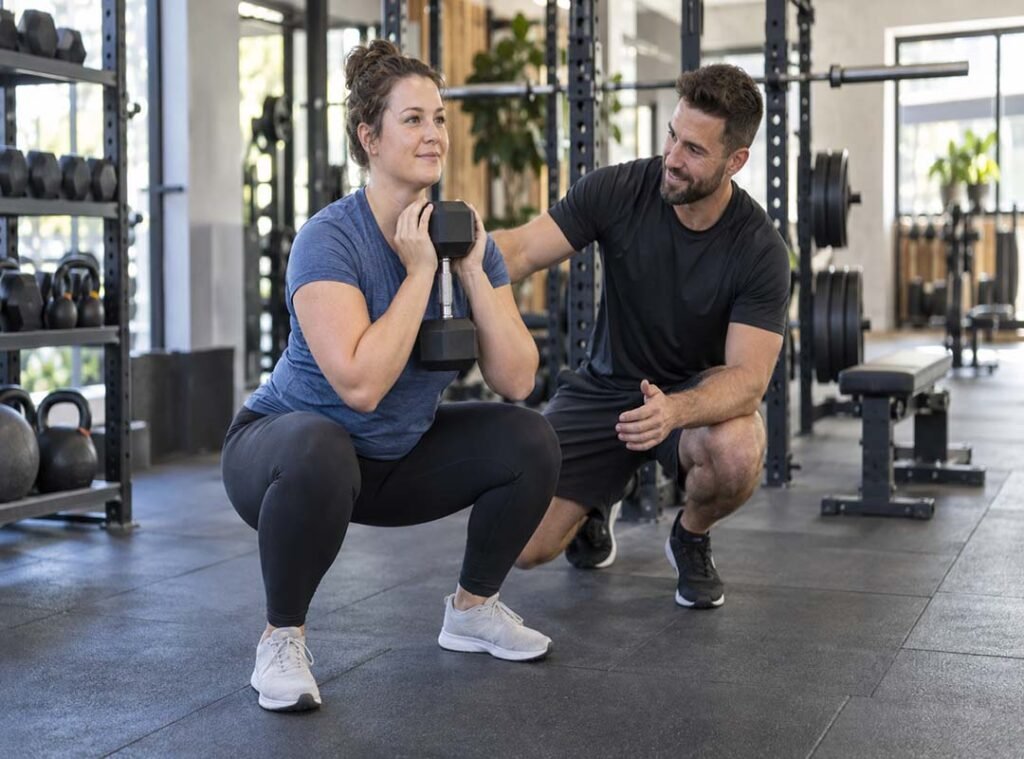
For example, a beginner may find squats difficult during the first week. After several sessions, the same movement may feel smoother and more stable. They may be able to add a little weight or complete more repetitions without losing good form.
This does not always mean there has already been a large increase in muscle size. The body is becoming more skilled and efficient at the exercise.
Visible muscle development usually takes longer. With a structured program, suitable nutrition, and enough recovery, some people may notice changes after eight to twelve weeks. More meaningful muscle growth usually requires several months of consistent resistance training.
In our experience, beginners sometimes underestimate improvements because they only look at appearance. Better technique, increased resistance, and improved control are all genuine results.
How Long Does It Take to Improve Cardiovascular Fitness?
Cardiovascular fitness can begin improving within a few weeks. A walk, bike ride, or cardio session that initially feels demanding may become more manageable after three to six weeks of regular exercise.
You might notice that you can exercise for longer, recover more quickly, or climb stairs without becoming as breathless. Your resting heart rate may also change as your fitness develops, although this varies between individuals.
The Australian physical activity guidelines recommend that adults work toward 150 to 300 minutes of moderate physical activity each week. They also recommend muscle-strengthening activities on at least two days each week. You can read the broader recommendations through the Australian Department of Health and Aged Care.
Beginners do not need to reach the full amount immediately. Starting with manageable sessions and building gradually can make the routine easier to maintain.
How Long to See Gym Results for Weight Loss
Weight loss does not follow an exact weekly schedule. Your results will depend on energy intake, activity levels, sleep, stress, medications, health conditions, and your starting point.
A gradual rate of around 0.25 to 0.75 kilograms per week may be realistic for some people. Others may lose weight more slowly. Short-term changes on the scale can also reflect water, food intake, hormones, or digestion rather than changes in body fat.
It is important not to judge progress from a single weigh-in. Look for a trend over several weeks.
Strength training can also make scale weight harder to interpret. A person may lose some body fat while maintaining or developing muscle. Their weight may change very little, even though their waist measurement, strength, and clothing fit have improved.
If weight management is your main goal, our guide on how to lose weight with gym training provides additional practical advice.
What Affects How Quickly You See Results?
Two people can follow similar programs and still progress at different rates. Several factors influence when you will see results from working out.
Your starting fitness level
Someone new to structured exercise may notice early strength and fitness improvements quickly. A more experienced person may need a carefully planned program to keep progressing.
People returning after a long break may also regain certain abilities faster than complete beginners. However, they should still increase training gradually.
Training frequency
One session per week is better than no exercise, but it may produce slower results than two or three well-planned sessions.
More training is not always better. The right number of sessions depends on your goals, recovery, schedule, and experience. A realistic routine that you follow consistently is more useful than an intense plan you abandon after two weeks.
Exercise selection
Your program should match the result you want.
Resistance exercises help improve strength and support muscle development. Cardio training improves endurance and cardiovascular fitness. Mobility and balance exercises can support movement quality and confidence.
A balanced program often combines several types of exercise. Beginners can start with a simple upper-body workout while also including lower-body movements and suitable cardio activity.
Progressive overload
Your body needs a reason to adapt. Progressive overload means gradually increasing the challenge as your ability improves.
This may involve:
- Adding a small amount of resistance
- Completing another repetition
- Improving your exercise technique
- Increasing your range of motion
- Performing an extra set
- Reducing unnecessary rest time
- Exercising for a little longer
Progress does not require making every workout harder. Small, planned changes over time are usually more sustainable.
Nutrition
Training provides the stimulus, but your body also needs suitable nutrition to recover and adapt.
Protein supports muscle repair and development. Carbohydrates can provide energy for training, while dietary fats contribute to general health. Total energy intake is also important, particularly when the goal involves fat loss or muscle gain.
There is no need to follow an extreme diet. Regular meals built around nutritious foods can support both health and training performance.
People with specific medical conditions or dietary needs should seek advice from a qualified health professional or accredited practising dietitian.
Sleep and recovery
Muscles need time to recover between challenging sessions. Poor sleep can also affect energy, exercise performance, appetite, and motivation.
Most adults should aim for regular, good-quality sleep. Recovery may also include rest days, light movement, suitable hydration, and changes to training intensity when needed.
The Centers for Disease Control and Prevention explains that regular physical activity can support sleep, brain health, heart health, and everyday function. These benefits matter even before a major visible transformation occurs.
Age and health
People can improve strength and fitness at many ages. However, recovery needs and the most suitable training approach may change over time.
Existing injuries, health conditions, medications, pregnancy, and long periods of inactivity can also influence progress. Speak with an appropriate health professional before beginning a new program if you have concerns about exercising safely.
Why You May Not Be Seeing Gym Results
A lack of visible change does not always mean your workouts are ineffective. It may simply mean you are measuring the wrong result or need more time.
However, progress can slow when the training routine is inconsistent or poorly matched to the goal.
Common reasons include:
- Frequently missing planned workouts
- Repeating the same weights and repetitions for months
- Changing programs too often
- Training without a clear goal
- Doing too much too soon
- Not allowing enough recovery
- Following an eating pattern that conflicts with the goal
- Comparing your progress with someone else
- Measuring results only through body weight
A useful program should be challenging enough to create change but manageable enough to continue.
We often see better long-term progress when people stop searching for the perfect workout and focus on completing a suitable plan each week.
How to Measure Your Gym Progress
The bathroom scale provides only one piece of information. It does not measure improvements in strength, endurance, balance, confidence, or exercise technique.
Use several measures to create a clearer picture.
You could track:
- Weights used for major exercises
- Repetitions completed with good form
- Workout duration
- Walking, running, or cycling distance
- Recovery time between sets
- Waist or other body measurements
- Progress photographs taken under similar conditions
- Energy levels
- Sleep quality
- How your clothes fit
- Ease of everyday activities
Record your starting point and review your progress every four weeks. Daily checks can make normal fluctuations feel more important than they are.
For example, imagine that your body weight remains stable for one month. During that time, you add ten kilograms to your squat, complete more repetitions, and recover faster between sets. That is meaningful progress even if the scale has not moved.
How to Get Better Results From Your Gym Routine
The best plan is not necessarily the most complicated one. It is the plan you can perform safely, repeat consistently, and adjust as you improve.
Choose a clear goal
Decide whether your main priority is strength, cardiovascular fitness, body composition, mobility, confidence, or general health.
You can work toward more than one outcome, but a clear priority makes it easier to design and measure your training.
Follow a structured program
Avoid choosing random exercises every time you enter the gym. A structured plan helps you train important movement patterns and monitor your improvement.
Your program should reflect your experience, ability, schedule, and goals.
Train consistently
Two or three suitable sessions each week can produce better results than an intense week followed by a long break.
Plan sessions around your real schedule. Consistency becomes easier when exercise has a regular place in your week.
Track your workouts
Record the exercises, resistance, repetitions, and sets you complete. This provides evidence of progress and helps you decide when to increase the challenge.
Review the plan
If you have followed a suitable program consistently for eight to twelve weeks without measurable improvement, review your training, nutrition, recovery, and expectations.
A coach can help identify whether the issue is exercise selection, technique, training intensity, or program structure.
When Should You Ask a Personal Trainer for Help?
Consider seeking professional support if you are unsure how to start, feel uncomfortable using equipment, or have stopped making progress.
A trainer can help you:
- Set realistic goals
- Learn safe exercise technique
- Choose suitable exercises
- Build a structured weekly program
- Adjust the plan as you improve
- Track meaningful measurements
- Stay accountable and consistent
The aim is not to rush the process. It is to make each session more purposeful and suitable for you.
If you experience chest pain, severe shortness of breath, dizziness, or unusual pain during exercise, stop and seek medical advice. Exercise should challenge you, but it should not require you to ignore warning signs.
Frequently Asked Questions
Can you see gym results in two weeks?
You may feel early improvements in energy, mood, confidence, and exercise technique within two weeks. Large visible changes in muscle or body composition are less likely in such a short period.
Is three gym sessions a week enough?
Three well-planned sessions per week can be enough for many beginners and general fitness goals. The quality of the program, your effort, and your consistency are more important than simply attending every day.
Why do I feel stronger but look the same?
Early strength gains often come from improved coordination and exercise skill. Visible muscle development and body composition changes usually take longer.
When will other people notice my gym results?
This varies greatly. You may feel changes before they are visible to other people. Depending on your goal and starting point, noticeable physical changes may take eight to twelve weeks or several months.
Should I work out every day to get faster results?
Not necessarily. Daily intense exercise can reduce recovery and make consistency harder. Your body needs time to adapt, especially after strength training.
Keep Your Progress in Perspective
The answer to how long it takes to see gym results depends on the result you want. Energy and confidence may improve within weeks. Strength and cardiovascular fitness may become measurable after four to eight weeks. More visible physical changes often take eight to twelve weeks or longer.
Try not to judge your progress from one workout, one photograph, or one number on the scale. Track several measures and focus on what you can repeat each week.
A realistic program, regular training, suitable nutrition, and enough recovery create the foundation for lasting improvement.
Get Support With Your Training
If you want a structured plan and expert guidance, learn more about personal training in Glenelg. EFM Glenelg can help you set realistic goals, learn effective exercises, and track progress with a program suited to your current ability.
Final Thoughts
Gym results do not appear overnight, but progress often begins sooner than you think. Better energy, improved technique, and greater confidence may develop within the first few weeks. Strength, fitness, and visible physical changes usually take longer.
Focus on consistent training, balanced nutrition, quality sleep, and gradual improvement. Track more than body weight, and give your body enough time to adapt. Small changes completed regularly can produce meaningful and lasting results.
If you need help creating a routine that matches your goals and experience, explore personal training in Glenelg. The right guidance can help you train safely, measure your progress, and stay consistent.