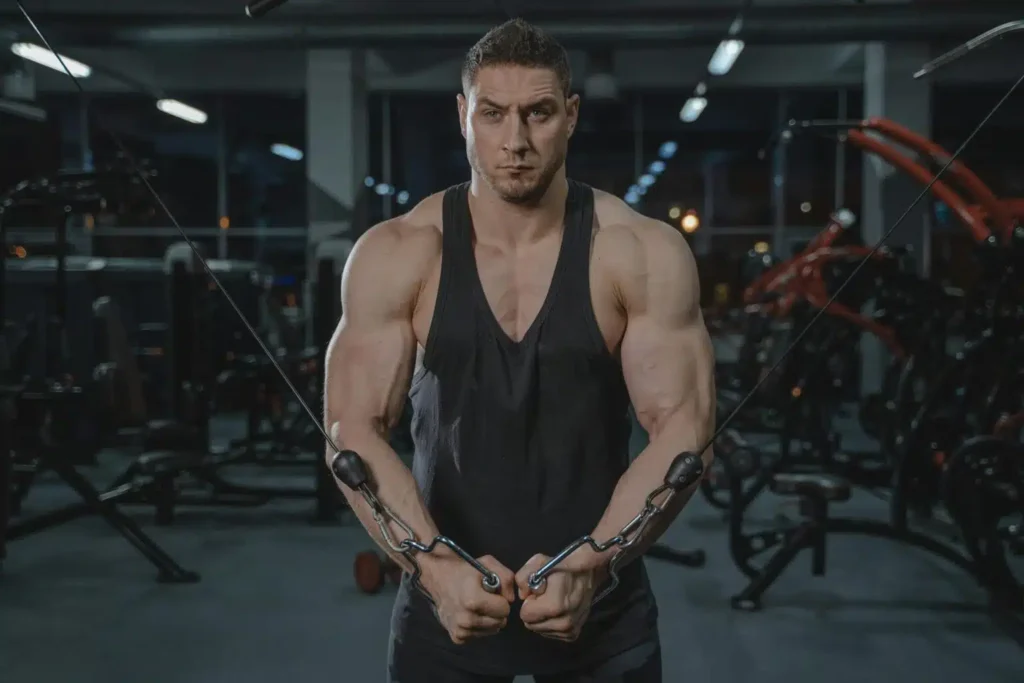
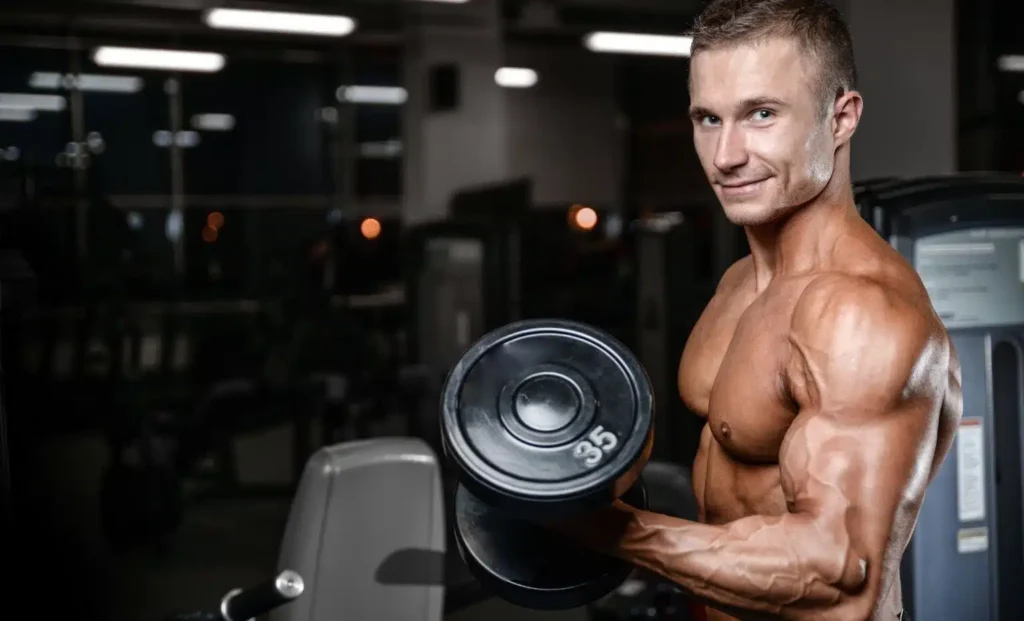
Building muscle is about much more than looking stronger. Increasing muscular strength can support everyday movement, improve physical performance and help you maintain lean muscle as you get older.
The challenge is knowing where to start. With hundreds of exercises available, it is easy to make a muscle-building program more complicated than necessary. In our experience, the most effective workouts for muscle gain are usually built around proven movements that train several major muscle groups and can be progressively adjusted as you become stronger.
At EFM Glenelg, we regularly work with people at different fitness levels, from complete beginners to experienced gym members. While every program should reflect the individual, several exercises consistently provide a strong foundation.
Below, we look at seven effective muscle-building exercises and explain how to use them safely and productively.
How Does Strength Training Build Muscle?
Muscle growth, also known as muscular hypertrophy, occurs when resistance training provides a sufficient stimulus and the body adapts during recovery. That means simply lifting weights is not enough. Your training needs appropriate resistance, sufficient volume, good technique and gradual progression.
One useful concept is progressive overload. As you become stronger, your muscles need a suitable challenge to continue adapting. This could mean adding resistance, completing more repetitions, improving your range of motion or performing an exercise with better control.
Training volume also matters. Research from the American College of Sports Medicine supports progressive resistance training as an effective method for improving muscular strength and hypertrophy. Read the ACSM resistance training guidance.
From what we see with members, the best results rarely come from chasing the heaviest weight possible. Good technique, consistency and sensible progression usually create a much stronger foundation.
7 Best Workouts for Muscle Gain
An effective muscle-building program should train the major movement patterns rather than focusing only on individual muscles. Squatting, hinging, pushing and pulling movements allow you to train several areas efficiently.
Here is a quick overview of our seven best exercises for muscle gain.
| Exercise | Main Muscles Worked | Beginner Alternative |
|---|---|---|
| Squat | Quads, glutes, hamstrings | Goblet squat |
| Deadlift | Glutes, hamstrings, back | Dumbbell Romanian deadlift |
| Bench press | Chest, triceps, shoulders | Dumbbell chest press |
| Pull-up | Lats, biceps, upper back | Assisted pull-up |
| Overhead press | Shoulders, triceps | Seated dumbbell press |
| Barbell row | Lats, upper back, biceps | Dumbbell row |
| Dip | Chest, triceps, shoulders | Assisted dip |
These exercises are not the only movements capable of building muscle. Their value comes from being easy to progress and effective at training multiple muscle groups.
The right variation should always match your current strength, mobility and experience.
1. Squats for Lower Body Muscle and Strength
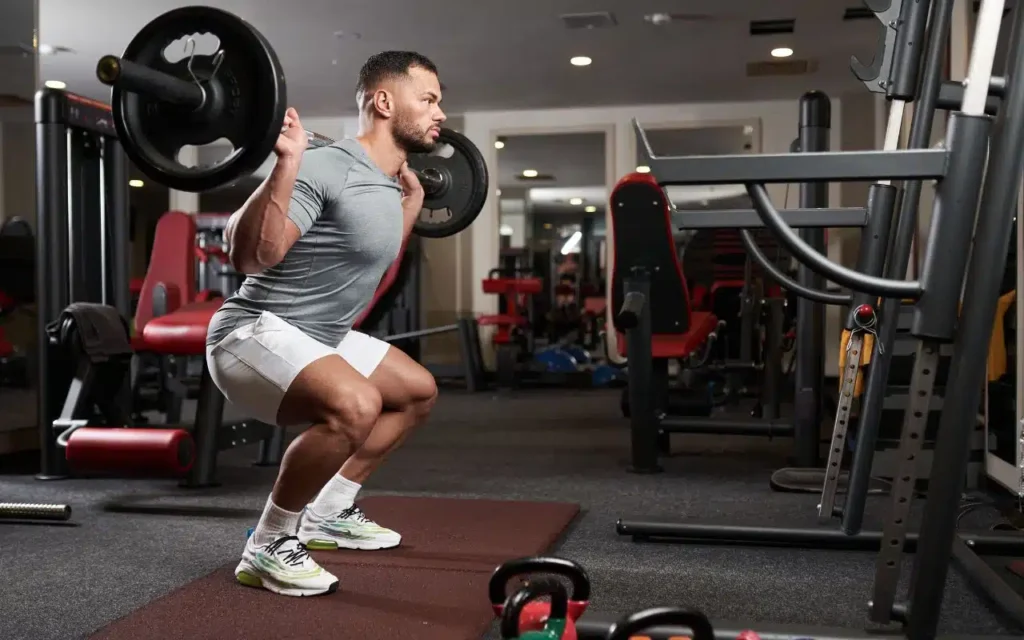
Squats deserve a place in many workouts for muscle gain because they train several of the body’s largest muscle groups at the same time. Depending on the variation, your quadriceps, glutes, hamstrings and core all contribute to the movement.
A barbell back squat can be highly effective, but it is not necessarily where beginners should start. We often prefer teaching the movement pattern first. Bodyweight or goblet squats can help someone develop control and confidence before progressing to heavier resistance.
Your stance will vary slightly depending on your body structure and mobility. Keep your feet stable, control the descent and allow your knees to track naturally in line with your feet.
As your technique improves, resistance can gradually increase. Remember that progression does not always mean adding more weight. Greater control, additional repetitions and improved range of motion can all represent meaningful progress.
2. Deadlifts for Full-Body Strength
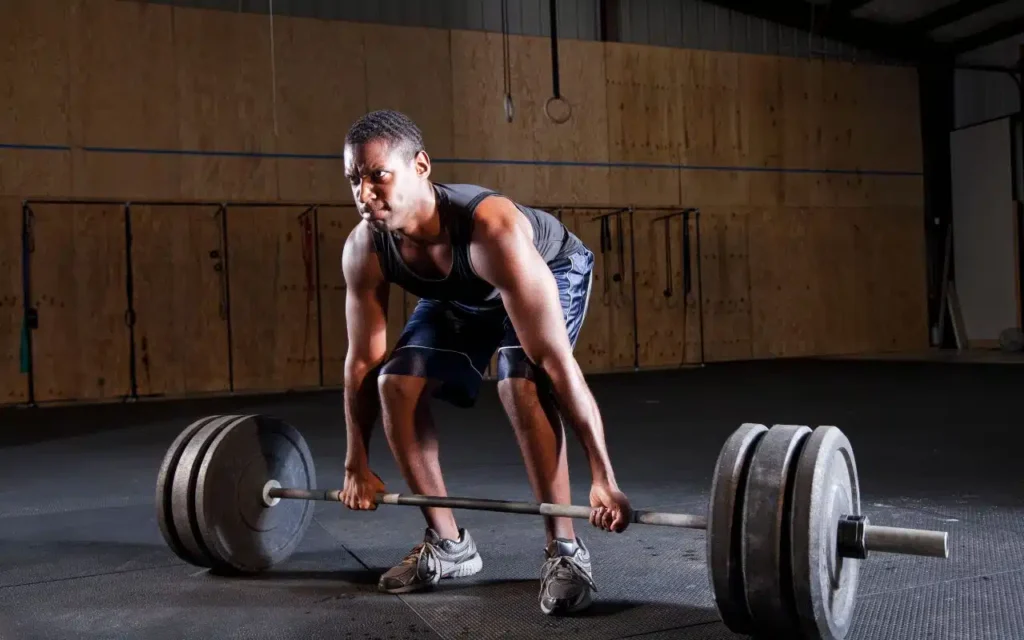
Deadlifts are one of the most useful compound exercises for developing strength through the posterior chain. Your glutes, hamstrings and back are heavily involved, while your core, upper back and grip help stabilise the movement.
The key to effective deadlifting is learning how to hinge correctly at the hips. Rather than simply bending down and pulling the weight from the floor, you want to create tension through your body before beginning the lift.
Keep the load close to your body and maintain a controlled position throughout each repetition. Technique should determine how much weight you use, not the other way around.
There are also several useful variations. Romanian deadlifts can place greater emphasis on the hamstrings, while dumbbell variations may be easier for beginners to learn.
When programmed appropriately, deadlifts can contribute to strength training for muscle growth while developing practical strength that carries over to many other movements.
3. Bench Press for Chest and Upper Body Development
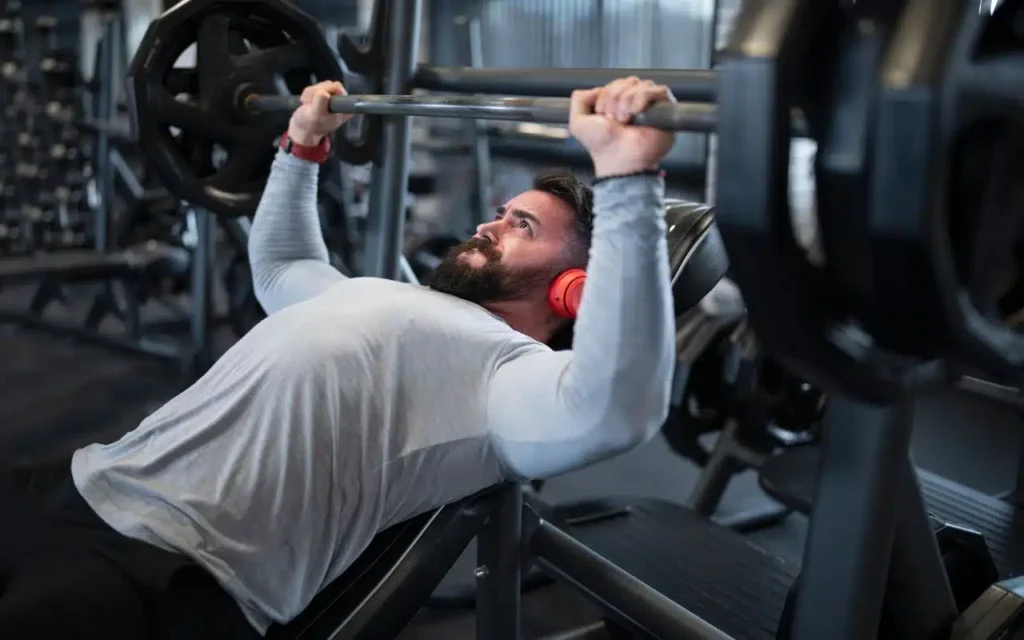
The bench press remains one of the most recognised muscle building exercises, and there is a good reason for that. It primarily trains the chest while also involving the triceps and front of the shoulders.
Good positioning makes a significant difference. Your feet should feel secure on the floor, your upper back should remain stable against the bench and the weight should move under control. Avoid bouncing the bar from your chest or sacrificing technique simply to lift more weight.
Different variations can also be useful. Incline pressing changes the emphasis across the upper body, while dumbbells allow each arm to work independently and may provide a comfortable alternative for some people.
You do not need to test your maximum bench press regularly to build muscle. Controlled repetitions with an appropriate load can provide an excellent training stimulus.
When training alone with heavier weights, use suitable safety equipment or ask for assistance.
4. Pull-Ups and Chin-Ups for Back and Biceps

Pull-ups and chin-ups use your own body weight to develop upper-body pulling strength. They primarily work the latissimus dorsi and other upper-back muscles while also placing significant demand on the biceps and forearms.
The difference between the two is mainly hand position. Pull-ups generally use an overhand grip, while chin-ups typically use an underhand grip. Both can have a useful place in a muscle-building program.
Many beginners cannot perform an unassisted pull-up straight away, and that is completely normal. Assisted pull-up machines and resistance bands can reduce the load while you develop the necessary strength.
Focus on controlling both phases of the exercise rather than simply getting your chin above the bar. The lowering portion of the repetition is still valuable.
Once bodyweight repetitions become comfortable, additional resistance can eventually be introduced, although maintaining good technique should remain the priority.
5. Overhead Press for Stronger Shoulders
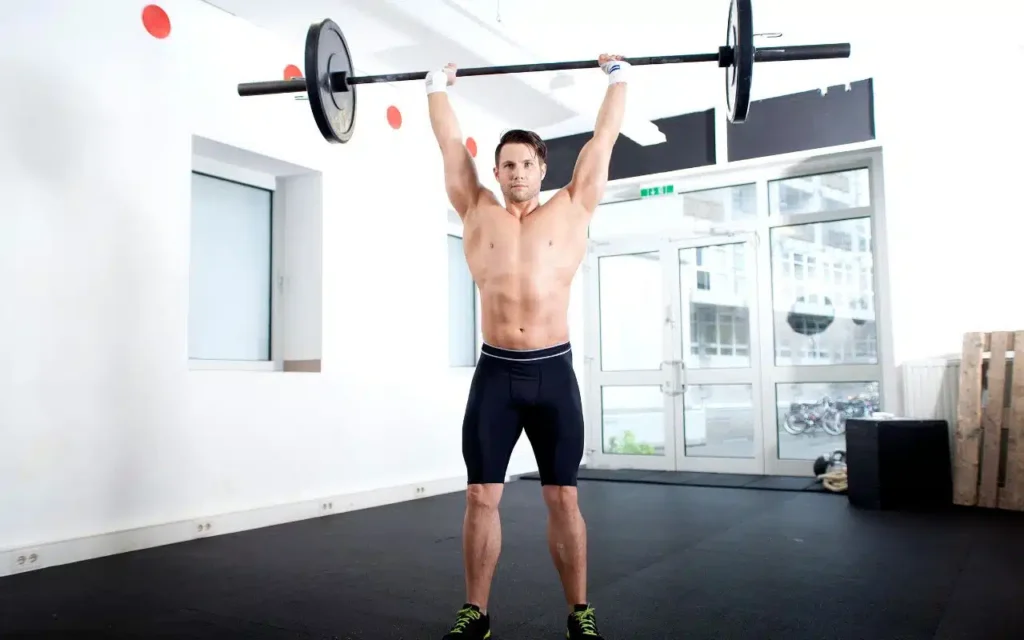
The overhead press is an effective vertical pushing exercise that primarily targets the shoulders while also training the triceps and requiring your core to stabilise your body.
You can perform the movement standing or seated using dumbbells, a barbell or suitable resistance equipment. The best option depends on your experience, mobility and individual training needs.
When pressing overhead, avoid excessively arching your lower back to move the weight. Keep your core engaged and move through a comfortable range of motion. If you cannot maintain a stable position, reducing the load is usually more productive than forcing heavier repetitions.
We often use dumbbells when introducing overhead pressing because each arm can move independently and the resistance can be adjusted easily.
Shoulder training should also be balanced with pulling exercises. Combining presses with movements such as rows and pull-ups creates a more complete upper-body program rather than concentrating entirely on pushing strength.
6. Barbell Rows for Back Strength and Muscle
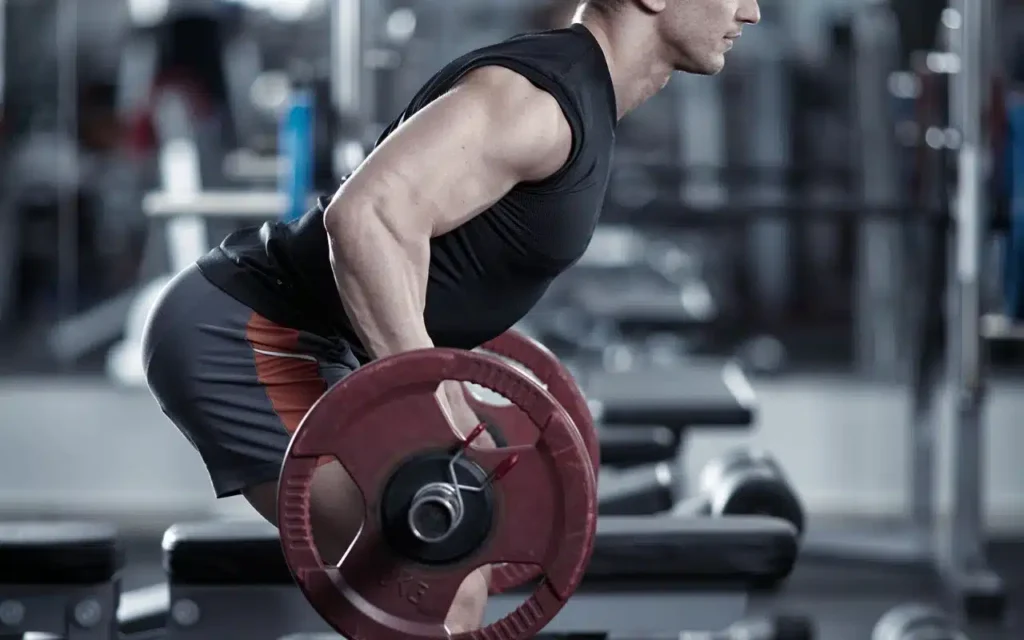
Rows are another important component of well-designed workouts for muscle gain. A barbell row trains the lats, rhomboids, traps, rear shoulders and biceps, making it an efficient exercise for developing the back.
Start by hinging at your hips and establishing a strong torso position. From there, pull the bar towards your body without using excessive momentum. The movement should remain controlled on the way up and down.
One mistake we often see is choosing too much weight and turning the exercise into a full-body swing. If maintaining position becomes difficult, reduce the resistance and concentrate on making the target muscles perform the work.
Barbell rows are not your only option. Dumbbell rows, cable rows and chest-supported rows can all provide excellent muscle-building stimulus.
Using different rowing variations over time can also help you train comfortably while continuing to develop upper-body pulling strength.
7. Dips for Chest and Triceps Development
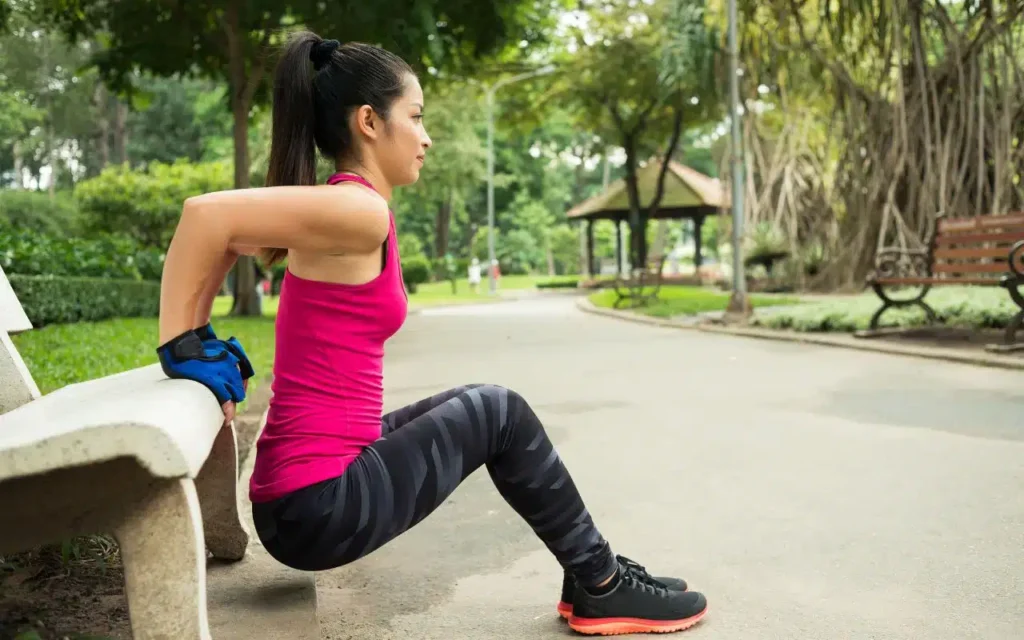
Dips can be an excellent compound movement for building the triceps, chest and shoulders. Because several joints and muscle groups work together, they provide an efficient addition to an upper-body strength program.
However, bodyweight dips can be challenging for beginners. There is no need to force the full movement before you are ready. Assisted dip machines or other pressing exercises can help develop the required strength first.
When performing dips, keep the movement controlled and work within a comfortable range. Your shoulder position and individual mobility should determine how deeply you lower yourself rather than trying to reach an arbitrary depth.
As you become stronger, assistance can gradually decrease. More advanced trainees may eventually add resistance, provided their technique remains solid.
We view dips as one option rather than an essential exercise for everyone. If the movement causes discomfort, another pressing variation can train similar muscle groups effectively.
How Many Sets and Reps Should You Do for Muscle Gain?
There is no single repetition range that everyone must use to build muscle. Research shows that muscle growth can occur across different resistance loads when sets provide an appropriate training stimulus.
For practical gym programming, moderate repetition ranges are often useful because they allow you to accumulate training volume without needing extremely heavy loads for every exercise.
A simple starting framework may look like this:
- Compound exercises such as squats, presses and rows can often be performed for 3 to 4 sets of around 6 to 12 repetitions.
- Accessory exercises may use moderate or higher repetition ranges depending on the movement.
- Allow approximately 1 to 3 minutes of recovery between sets depending on exercise intensity.
- Train each major muscle group consistently across the week.
- Increase the challenge gradually as your performance improves.
These are general guidelines rather than fixed rules. Training age, goals, recovery and exercise selection all affect the right program.
Quality repetitions should come before simply completing more sets.
Progressive Overload and Why It Matters
You cannot expect your muscles to continue adapting indefinitely if your training challenge never changes. This is where progressive overload becomes important.
Suppose you currently perform three sets of eight repetitions with a particular resistance. After several weeks, that same workload may become easier. You could then add a small amount of weight, perform another repetition or improve your control and range of motion.
Progress should be gradual. Increasing resistance too quickly can cause technique to deteriorate and may create unnecessary fatigue.
Keeping a basic training record is extremely useful. Write down the exercise, weight, repetitions and sets you complete. This gives you objective information instead of relying on memory.
At EFM Glenelg, we find that measurable progress can also improve motivation. Small improvements from month to month might not feel dramatic, but accumulated over six or twelve months they can produce substantial changes in strength and physical capability.
Nutrition for Building Muscle
Training provides the stimulus for muscle development, but your body also needs adequate nutrition to recover and adapt. Protein is particularly important because it supplies amino acids used in muscle protein synthesis.
The International Society of Sports Nutrition states that approximately 1.4 to 2.0 grams of protein per kilogram of body weight per day is sufficient for most exercising individuals looking to build or maintain muscle. Read the ISSN position stand on protein.
Protein is only one part of the picture. Your body also needs sufficient overall energy, carbohydrates, dietary fats, vitamins, minerals and fluids.
Rather than relying heavily on supplements, start by building a balanced eating pattern around nutritious foods.
Individual nutritional needs can vary considerably. If you have specific dietary requirements, health concerns or performance goals, advice from an appropriately qualified nutrition professional can help you develop a more personalised approach.
Rest and Recovery Are Part of Muscle Growth
More training is not automatically better training. Your body needs time to recover from resistance exercise, particularly after demanding sessions.
Sleep is one of the most important parts of that process. Australian health guidance recommends that adults generally aim for 7 to 9 hours of good-quality sleep each night. Recovery can also be influenced by nutrition, hydration, stress and your overall training volume.
Training the same muscles intensely every day is usually unnecessary. A structured program can distribute exercises throughout the week so that muscle groups receive an appropriate stimulus while still having time to recover.
Pay attention to how you feel between sessions. Persistent soreness, declining performance or unusual fatigue may indicate that your training and recovery are out of balance.
The goal is not to leave the gym exhausted every time. A successful program creates enough challenge to encourage adaptation while still allowing you to return and train productively again.
Common Muscle-Building Mistakes to Avoid
After working with gym members for many years, we have seen that muscle-building progress is often slowed by simple mistakes rather than a lack of effort. One of the biggest is changing exercises constantly. Your body needs enough time with a movement for you to improve technique and progressively increase the challenge.
Another common mistake is lifting more weight than you can properly control. Moving a heavier bar might feel like progress, but poor technique can reduce the quality of the exercise.
Nutrition and recovery are also frequently overlooked.
A good muscle-building routine should avoid:
- Increasing weights before technique is established
- Training without a clear progression plan
- Neglecting major muscle groups
- Copying advanced programs too early
- Consistently sacrificing sleep for additional workouts
- Expecting visible changes after only a few sessions
Muscle growth takes time. Consistency over several months is much more important than finding a supposedly perfect workout.
How to Build a Muscle Gain Routine That Lasts
The best exercises for muscle gain only work when they are part of a program you can maintain. A complicated six-day routine might look impressive on paper, but it offers little value if your schedule only allows you to train three times per week.
Start with your realistic availability. Two or three full-body strength sessions can provide a useful foundation for beginners, while experienced trainees may benefit from a different training split.
Your program should include lower-body movements, pushing exercises and pulling exercises while giving each muscle group appropriate training and recovery.
We also recommend tracking performance rather than relying entirely on visual changes. Strength improvements can provide useful evidence that your program is progressing even before significant changes in appearance become obvious.
Most importantly, give the process time. Building muscle is gradual. A sustainable routine performed consistently will usually take you further than an aggressive program that you cannot maintain.
Start Building Strength at EFM Glenelg
The seven exercises covered here, including squats, deadlifts, bench presses, pull-ups, overhead presses, rows and dips, can provide a strong foundation for strength training for muscle growth. However, there is no rule saying every person must perform every exercise.
Your training should suit your body, goals, experience and current ability.
At EFM Glenelg, we have been helping people in the Glenelg community train for more than 15 years. Our approach combines structured exercise with personal guidance so members can learn proper technique, progress at an appropriate pace and build confidence in the gym.
If your goal is to gain muscle, start with consistency. Choose exercises you can perform well, gradually increase the challenge, eat appropriately and give your body enough recovery.
For more practical fitness advice, explore our other EFM Glenelg articles and learn how a well-planned training routine can help you become stronger over the long term.
Final Thoughts
Building muscle does not require complicated workouts or constantly changing your training routine. The most effective approach is to focus on proven workouts for muscle gain, use good technique and gradually increase the challenge as your strength improves. Squats, deadlifts, bench presses, pull-ups, overhead presses, rows and dips can all provide a strong foundation when they are programmed correctly.
Just as importantly, muscle growth happens outside the gym too. Eating enough nutritious food, getting adequate protein, sleeping well and allowing time for recovery all contribute to your progress.
At EFM Glenelg, we have seen that consistency usually delivers better results than trying to train perfectly. Start at a level that suits your current ability and focus on steady improvement.
If you want more structure and support with your training, our experienced EFM Glenelg trainers can help you build a practical program around your fitness level, lifestyle and muscle-building goals.